NASA Cloud-Based Platform Could Help Streamline, Improve Air Traffic
Science & Technology

NASA Cloud-Based Platform Could Help Streamline, Improve Air Traffic

NASA Space Technology Just like your smartphone navigation app can instantly analyze information from many sources to suggest the best route to follow, a NASA-developed resource is now making data available to help the aviation industry do the same thing.To assist air traffic managers in keeping airplanes moving efficiently through the skies, information about weather, potential delays, and more is being gathered and processed to support decision making tools for a variety of aviation applications.Appropriately named the Digital Information Platform (DIP), this living database hosts key data gathered by flight participants such as airlines or drone operators. It will help power additional tools that, among other benefits, can save you travel time.Swati SaxenaNASA Aerospace Engineer“Through DIP we’re also demonstrating how to deliver digital services for aviation users via a modern cloud-based, service-oriented architecture,” said Swati...
Continue reading
Sols 4241–4242: We Can’t Go Around It…We’ve Got To Go Through It!
Science & Technology

Sols 4241–4242: We Can’t Go Around It…We’ve Got To Go Through It!

NASA Space Technology Earth planning date: Wednesday, July 10, 2024Curiosity is currently trekking across Gediz Vallis channel because, as my nephew’s favorite book says, if we can’t go around it... we’ve got to go through it! Recently we’ve been parked for a while on the channel to drill “Mammoth Lakes,” (https://science.nasa.gov/blogs/sols-4222-4224-a-particularly-prickly-power-puzzle/) and are now on the move once again exploring the rubbly rocks. Today the science team planned two sols of activity for Curiosity as we venture on through and across Gediz Vallis channel.On the first sol we undertake nearly two hours of planned science. This includes Navcam deck monitoring and a Mastcam tau, to measure dust in the atmosphere as part of our atmospheric and environmental activities, alongside some geology-focused observations. MAHLI is taking a close up image of “Donohue Pass” that we targeted...
Continue reading
NASA to Commemorate 55th Anniversary of Apollo 11 Moon Landing
Science & Technology

NASA to Commemorate 55th Anniversary of Apollo 11 Moon Landing

NASA Space Technology Tiernan P. DoyleJul 12, 2024As the agency explores more of the Moon than ever before under the Artemis campaign, NASA will celebrate the 55th anniversary of the first astronauts landing on the Moon through a variety of in-person, virtual, and engagement activities nationwide between Monday, July 15, and Thursday, July 25.Events will honor America’s vision and technology that enabled the Apollo 11 crewed lunar landing on July 20, 1969, as well as Apollo-era inventions and techniques that spread into public life, many of which are still in use today. Activities also will highlight NASA’s Artemis campaignwhich includes landing the first woman, first person of color, and first international astronaut on the Moon, inspiring great achievements, exploration, and scientific discovery for the benefit of all.NASA’s subject matter experts are available for a limited...
Continue reading
Two Years Since Webb’s First Images: Celebrating with the Penguin and the Egg
Science & Technology

Two Years Since Webb’s First Images: Celebrating with the Penguin and the Egg

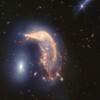
NASA Space Technology Monika LuabeyaJul 12, 2024To celebrate the second science anniversary of NASA’s James Webb Space Telescope, the team has released a near- and mid-infrared image on July 12, 2024, of two interacting galaxies: The Penguin and the Egg.Webb specializes in capturing infrared light – which is beyond what our own eyes can see – allowing us to view and study these two galaxies, collectively known as Arp 142. Their ongoing interaction was set in motion between 25 and 75 million years ago, when the Penguin (individually cataloged as NGC 2936) and the Egg (NGC 2937) completed their first pass. They will go on to shimmy and sway, completing several additional loops before merging into a single galaxy hundreds of millions of years from now.Learn more about the Penguin and the Egg.Image Credit: NASA, ESA,...
Continue reading