
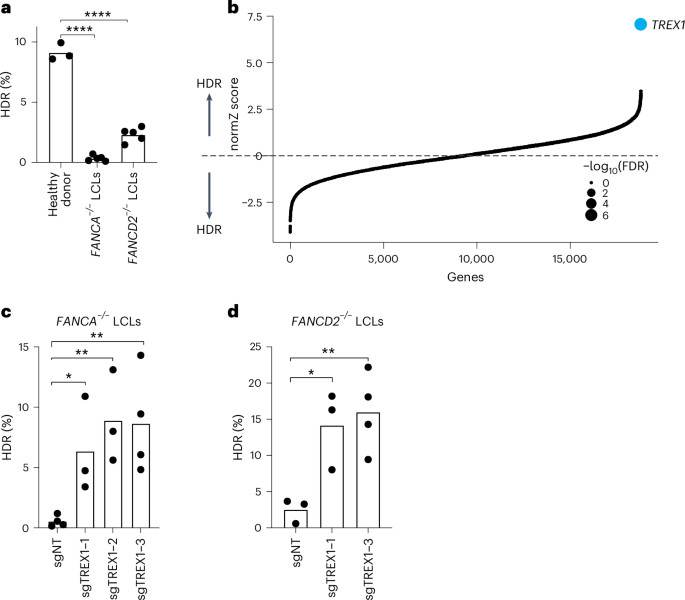
Removal of TREX1 activity enhances CRISPR–Cas9-mediated homologous recombination

Technology tamfitronics MainRepair of CRISPR–Cas9-induced double-strand breaks (DSBs) occurs by one of two main mechanisms: non-homologous end joining (NHEJ) or homology-directed repair (HDR)1,2,3. The HDR pathway is used to introduce sequences of up to 2–3 kilobases (kb) into the genome that are supplied on an exogenous DNA template. In most human cells, the efficiency of HDR is very low relative to NHEJ4,5. Cellular context plays an important role in HDR efficiency. HDR is cell cycle limited and most active in S/G2 (refs. 6,7,8). Differential expression, cellular background and/or mutational burden can also affect efficiency. CRISPR–Cas9-mediated targeting of the same locus with identical reagents in various cell types can result in variable efficiency, ranging from 30%...