Tag: planning

  • Planning our lunar return? Get a telescope

    Planning our lunar return? Get a telescope

    NASA Space Technology

    Perhaps you’re a propulsion engineer making lunar landers as part of NASA’s CLPS program. Perhaps you’re a lawyer specializing in the OST. Or you are a chemist cracking the codes of lunar ISRU.

    If you are any of these things or even if you just know what those acronyms mean, you’re part of the lunar revival, our return to the dramatic wilds of the moon, a return for science and industry and, just maybe, helping to make life multi-planetary.

    I absolutely support those goals, but I also have a telescope. Anyone planning our lunar future should have one too or, at least, regular access to one. Why? Because we won’t have a lunar future worth having if we don’t really see the moon. And if we don’t really see the moon, we’ll miss how its beauty can guide us when we return.

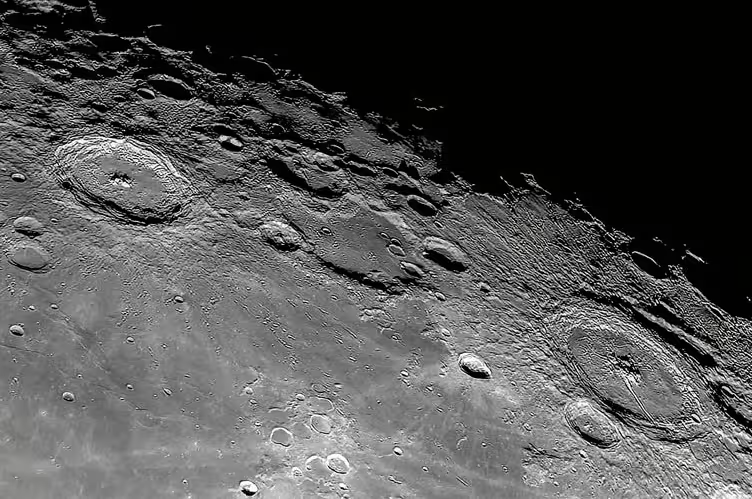
    I thought about that one recent pre-dawn morning, huddled over my 10-inch telescope with a cup of coffee and a view of the moon. Puffy jacket on, ducks chortling in the nearby canal that runs through our neighborhood, I magnified the badlands between Lacus Mortis and the twin complex craters Aristoteles and Eudoxus. This rough region fairly glittered with sun-tipped terrain as I looked from the bottom of a twitchy atmosphere. Then I stared for a long time at the gloomy majesty of the Arago volcanic domes as lunar sunset loomed at the terminator, the sharp divide between day and night on the moon, low wrinkle ridges to the east like subtle reminders. And I flew above the heavily impacted Southern Highlands, my eye heading toward the south polar limb.

    That’s where we’re going. To the permanently shadowed regions that harbor water ice.

    For several years, while working on a book about the moon, I used my telescope, a map and some atlases, not to just glance at craters but to explore and learn the lunar surface. I fell quickly in love with that austere and sublime landscape, at once alien and somehow akin to parts of the American West. In fact, science writer Walter Sullivan once compared the famous Lunar Orbiter oblique view of Copernicus crater to western front of the Wasatch. That’s my mountain range here in Utah.

    I have looked at the moon from backyards and deserts and canyons in Arizona and Utah. Now I can find my way around without maps. I love seeking out tiny details — like that hard-to-see volcano in Petavius — and I understand the physical manifestations of the moon’s geology. Such views brought me to a journey with that world’s importance to global cultures, the birth of modern science, dreams of lunar life (alas, dashed) and even the positive neurochemistry of awe. I once made a pilgrimage to Mt. Wilson’s historic 60-inch reflector to see the moon in shocking hugeness.

    I don’t expect most people — even lunar scientists who know the moon’s cosmochemistry but who couldn’t find the dark sheen of Endymion if their lives depended on it — to go as deep as I have.

    You don’t have to. Just looking at the moon provokes one into quiet, personal exploration. Beyond what can become a numbing profusion of holes (there are a lot of craters!) lunar looking and just a bit of knowledge becomes a way of seeking wilderness and cosmic context from one’s own comfort. It’s a sweet and instructive paradox to travel to an airless world while breathing in a cold, autumn morning.

    It’s one thing to know the moon from spreadsheets, diagrams, PowerPoints and white papers. It’s another thing to experience it as though you yourself are in close orbit. Yet another to do so with some historical depth. We’ve done a lot of damage to Earthly places by abstracting them — by not seeing or knowing them as literal places. Applied from a distance, what could be well-crafted exploration and use often becomes blunt force.

    The great 20th century conservationist Aldo Leopold once wrote, “We abuse land because we see it as a commodity belonging to us. When we see land as a community to which we belong, we may begin to use it with love and respect.” That same applies to the moon, as astronomer Jessica Heim and others are arguing in their research and papers. Leopold isn’t saying the land is beyond use. He’s suggesting that a sensory and intellectual relationship to it — in this case, the moon — lays the necessary foundation for careful and caring use.

    I want us to return to the moon, this time to stay. To sustainably utilize its gifts of water ice to craft a vibrant lunar community and to help us explore the rest of the solar system. To spread, where appropriate, the electrical net of a radio telescope to probe the origins of the universe. To study the moon’s composition to help us understand its formation and its role in the early solar system. To look deep and to look far.

    I’d like to think that our lunar return will help us forge an aspiration, even if impossible, to try to solve problems without creating new ones. Or, at least, build scientific and industrial infrastructure that isn’t ugly. That would be a start. Perhaps we’ll agree to bury waste instead of dumping it in the open. Perhaps we’ll even agree to leave swaths of the moon alone because not every patch of moondust needs a bootprint. Perhaps we’ll commit to treating each other with more dignity than we do now, given the anonymity and rapid-fire reactivity of our 24/7 online world.

    And rather than consider these questions from abstractions, why not take a few minutes each month and magnify the very real moon through the eyepiece of a decent telescope? The views may be choppy. They won’t be high-def like the astounding Lunar Reconnaissance Orbiter photos. Clouds will interfere. Texts will ping, demanding attention. Our lives are not designed for this kind of quiet or reflection. But, if for nothing other than well-being, we can carve it out. And if you don’t have a telescope, hundreds of public libraries have them to lend. Who knows, maybe, like me, you’ll work through a lunar-observing program like the ones offered by the Astronomical League, a way to meld exploration with personal growth and a sense of balance. That sense of wonder so many of us find in science fiction, it’s above us every month.

    Places don’t care. But places deserve care. Places deserve care because we deserve care. The moon’s beauty is as much a resource as water ice.

    Not long ago, I noticed a crater, Lilius, that I’d never paid attention to before. Lilius is worn down but fresh enough that it sports a central peak. Most of the crater was in the cave-dark lunar night. But the mountain top was sun-lit. I imagined standing there, seeing the strong curve of the horizon, then following down a marked trail, helmet lights switched on, to one of a handful of pressurized huts the Lunar Tourist Authority allows, marveling that the thousands and thousands of square miles we’d left alone were testament to the fact that we’d arrived and that, because we want things to last, we were practicing temperance.

    Christopher Cokinos is the author of “Still as Bright: An Illuminating History of the Moon from Antiquity to Tomorrow.” His account of an all-artists lunar surface analog mission at Biosphere 2 was published at Esquire. His feature on fighting light pollution was the July cover story for Astronomy magazine.

  • Kelis was planning to visit Kenya for a month. After the better part of a year, she’s still there and has bought farmland

    Kelis was planning to visit Kenya for a month. After the better part of a year, she’s still there and has bought farmland

    Top Stories Tamfitronics

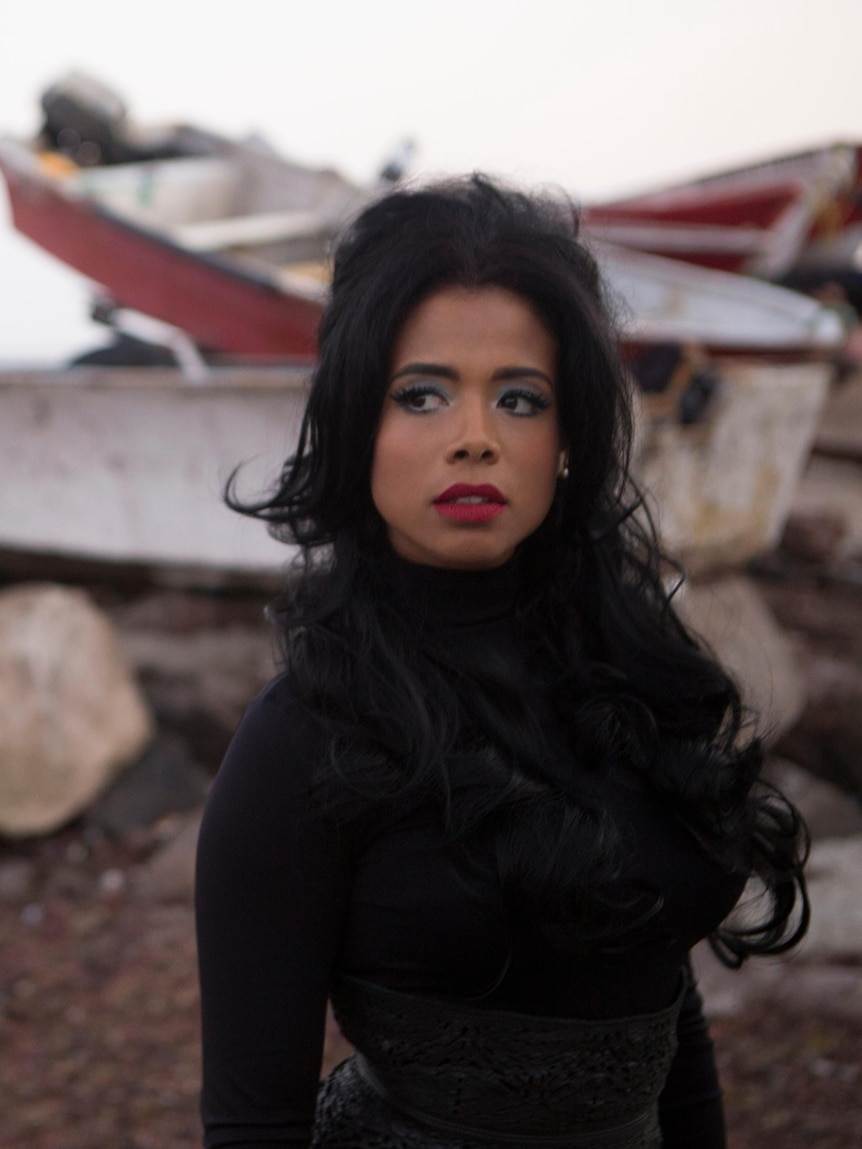
    When Kelis spoke to ABC News, she was doing so from Kenya in East Africa, where a short visit has grown to seven months and counting.

    She had been to Africa before, about six years ago.

    “I just felt drawn to it,” Kelis said.

    “It feels like it’s so rich and going through this kind of resurgence of energy and excitement.

    “And I just think it’s time.

    “I wanted to be a part of its growth and of this new era that I believe is coming here.

    “It’s already starting.”

    The star is known for the hit Milkshake and has a catalogue that includes earworm singles such as Bossy, Trick Me, and Caught Out There, as well as the critically acclaimed album Food.

    She says her trip to Kenya was only supposed to last a month.

    “I brought my whole family, like, literally, my whole family, like my mum, my auntie, my kids, my sister,” she laughed.

    “I was like, ‘we’re all going’ and then, yeah, you know, now it’s seven months later, and I’m still here.

    “I think that as Black people, we all should be here at some point in our lives, even if it’s just to visit, but just to put your feet in the dirt and on the ground.

    “This is kind of where everything started. And I love that.

    “And I’ve just learned so much, and I’ve fallen in love with the people and with all the different cultures and foods and languages, and it’s really just so robust here, you know?”

    Top Stories Tamfitronics Kelis standing outside in front of a bar, she's wearing a figure hugging off the shoulder dress that's black, blue, red, orange

    Kelis has spent the majority of the year in Kenya. (Supplied: Estevan Oriol)

    ‘It’s never been farmed or anything’

    This is an artist with her finger on the pulse.

    The UN estimates that by 2050, one in four people will be African, and many from the diaspora are taking the opportunity to journey to the motherland.

    Kelis, who is also a farmer, has bought land in Kenya.

    “It’s just raw land now and it’s never been farmed or anything,” she said.

    “We need more farmers that look like us.

    “And, yeah, you just gotta do it. You gotta get your hands in the dirt. So that’s what I’m doing.”

    Top Stories Tamfitronics Kelis with blonde curly hair piled on top of her head, red lipstick, white top, with red roses on it

    Kelis has bought farming land in Kenya. (Supplied)

    When she’s not in Kenya, she’s is in Temecula, California, where she lives with her family on a 26-acre farm.

    Kelis Rogers was born and raised in Harlem in New York City to an African American jazz musician, then Pentecostal minister father Kenneth and a Chinese-Puerto Rican fashion designer mother Eveliss.

    Her name is a portmanteau of their names.

    Faith, ‘the centre’ of her life

    Kelis grew up in the church.

    “I am a woman of faith now, not Christian the way that I grew up, but definitely clear about what I believe,” she said.

    “I’m Hebrew and so for me, how I position myself and how I see myself, and how I understand human beings and creation and where we come from, and all of that stuff is definitely a huge part of my life.

    “It’s the centre of my life, really.”

    The 45-year-old is still celebrating her August 21 birthday, as she was in the lead-up to it.

    “I think as a woman, the older we get … I think you get really solid, and you get really clear,” she said.

    “I think no-one ever talks about that either. We talk about looking young and feeling good, which is also really important.

    “But I think, the older we get, if you’re doing things the right way, I think the goal is to be really settled and really clear and really confident and really comfortable in your own skin.

    “And faith and all those things are all a part of that.”

    Musician, farmer, chef, author

    The musician is blending more than just milkshakes these days. She’s a Le Cordon Bleu-trained chef, and author of My Life on a Plate: Recipes from Around the World.

    Top Stories Tamfitronics Kelis with a big head of curls, hoop earrings and tartan shirt holding up a plate of food

    Kelis is the author of My Life on a Plate: Recipes from Around the World. (Supplied)

    “I’m a chef, so I’m a sponge, I learn things every day,” she said.

    “I’m trying new ingredients all the time.

    “I think being a chef is like being a translator, right?

    “So, it’s like I’m translating how I understand this particular ingredient or this particular culture or this particular sentiment.

    “And it’s like, how do I see it?

    “And I think those are the best chefs that are able to take things and present them in a way that is personal.”

    Top Stories Tamfitronics Kelis carrying plate of meat, she's wearing a tartan shirt, has curly hair and is smiling

    Kelis says food connects us all. (Supplied)

    She says travelling the world has re-iterated to her that we’re all the same.

    “We all eat the same food, right?” she said.

    “Especially as Black and brown people around the world. We eat the same food, and we have the same sensibilities, I think.

    “By design, we’ve been so separated that we don’t realise how we are all one people and how we have so many similarities, right?

    “And we have so many things that connect us.

    “And I always say that food and music, they are really the universal language. I used to think it was music first, but it’s not. It’s food.

    “Food is the one solitary thing that connects us the very most.”

    Top Stories Tamfitronics Kelis with blondish curly hair, smiling, while holding up an ice cream cone

    Kelis says food and music are part of the universal language. (Supplied)

    Fans can rest assured there’s new music coming from the artist who has sold millions of albums and been nominated for two Grammys, with her song Midnight Snacks a potential taster for what’s to come.

    “I do have an album coming out,” she said.

    “I’m working on it. I’m about 80 per cent done.”

    On returning to Australia

    Kelis’s travels will continue when she heads to Australia to deliver the major keynote at BIGSOUND, which has a massive conference and festival schedule planned.

    She’ll also perform live at Sweet Relief! in an Australian exclusive.

    “Australia is definitely one of those places that … it always feels special,” she said.

    Top Stories Tamfitronics Kelis wearing a big pink head cover, she has locs, is not smiling, mouth slightly open

    Kelis is “excited” to be heading back to Australia. (Supplied)

    “To me, Australia has always been such a welcoming and interesting place.

    “I’ve always had such a good time there.

    “So, to be able to do something in both mediums of my life is really dope.

    “I love that.

    “Being able to talk about the things I care about and the things that I love and the lifestyle choices that I’ve made, I think is really exciting.

    “And then obviously being able to perform is always great.”

    It’s been a while since she was in town. She calculates exactly how long by invoking the ages of her children.

    “My middle son was probably about two [when I was last in Australia]and he’s eight now,” she laughs.

    “To put that in perspective.”

    Kelis is headed to Brisbane for BIGSOUND September 3-6 and Sweet Relief! September 7.

  • The Download: planning a honeymoon with AI, and deepfakes in 2024

    The Download: planning a honeymoon with AI, and deepfakes in 2024

    Technology tamfitronics

    Plus: Chinese driverless cars are driving on US roads

    This is today’s edition ofThe Download,our weekday newsletter that provides a daily dose of what’s going on in the world of technology.

    Can AI help me plan my honeymoon?

    —Melissa Heikkilä

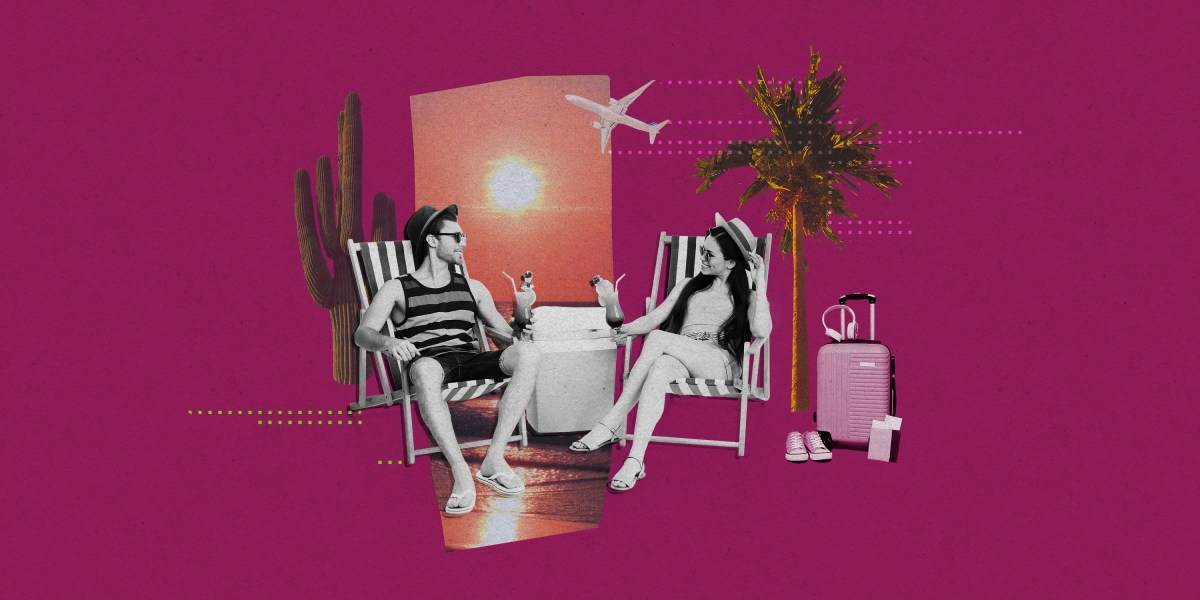
    I’m getting married later this summer and am feverishly planning a honeymoon together with my fiancé. It has been at times overwhelming trying to research and decide between what seem like millions of options while juggling busy work schedules and wedding planning.

    So I decided to take inspiration from a piece we just published about how to use AI to plan your vacation and tried using the same tools to design my honeymoon itinerary.

    The results were pretty good, and they aligned with the research I had already done into where to go and what to do in the Philippines. But when I asked about places I did know more about, such as Tokyo, I wasn’t that impressed. Read the full story.

    This story is from The Algorithm, our weekly newsletter diving into the complicated world of AI. Sign up to receive it in your inbox every Monday.

    Join us to discuss the state of deepfakes in 2024

    Deepfakes are proliferating online thanks to advances in generative AI. There’s a lot of potential for misuse—think political disinformation and nonconsensual sexual content. But there are a growing number of reasons why you may want a deepfake made of yourself or a loved one, too.

    Join MIT Technology Review reporters and editors for a fascinating discussion on the rise of deepfakes. We’re running a LinkedIn Live at 12pm ET this afternoon—register here to join in the conversion.

    The must-reads

    I’ve combed the internet to find you today’s most fun/important/scary/fascinating stories about technology.

    1 Chinese self-driving cars have driven more than 1 million miles in the US
    Quietly collecting data with little scrutiny. (Fortune $)
    + Meanwhile, Beijing is waving through robotaxis on Chinese roads. (Bloomberg $)
    + The big new idea for making self-driving cars that can go anywhere. (MIT Technology Review)

    2 Gasoline is here to stay
    The world’s largest oil company isn’t diversifying its interests just yet. (FT $)
    + The price of used EVs could be the industry’s secret weapon. (The Atlantic $)
    + This $1.5 billion startup promised to deliver clean fuels as cheap as gas. Experts are deeply skeptical. (MIT Technology Review)

    3 The US is courting overseas companies to invest in its native chipmaking
    Its new ‘chip diplomacy’ plans could bring the likes of South Korea into the process. (NOW $)
    + What’s next in chips. (MIT Technology Review)

    4 NATO is worried about attacks on internet subsea cables
    Amid heightened fears that Russia or China could do exactly that. (Bloomberg $)

    5 Europe is pinning its hopes of challenging SpaceX on its latest rocket


    It’ll have to brush off years of delays to achieve it, though. (WSJ $)
    + SpaceX appears to be a law unto itself. (Bloomberg $)

    6 We’ll watch the climate crisis unfold through push alerts
    What is novel now will become increasingly commonplace. (The Atlantic $)
    + Extreme wildfires are on the rise across the world. (Wired $)

    7 The world fiber optic data rate record has been smashed
    Producing data rates four times as fast as existing systems.(IEEE Spectrum)

    8 Chinese factory owners are going to great lengths for new partners
    Including filming highly entertaining comedy clips. (Rest of World)

    9 This digital artist fought back against the shops selling his image—and won
    Needless to say, Jonas Jödicke had the last laugh. (Wired $)
    + This artist is dominating AI-generated art. And he’s not happy about it. (MIT Technology Review)

    10 Tesla is allegedly working on a curfew feature
    To prevent teenage joyriders after hours. (Insider $)

    Quote of the day

    “If you can’t trust a multi-billion dollar company like Nike to continue support for a sneaker, how can you trust a toaster maker or an automaker?”

    —A frustrated Reddit user responds to Nike’s plans to end support for the app that controls its self-lacing sneakers, Ars Technica reports.

    The big story

    Welcome to Chula Vista, where police drones respond to 911 calls

    February 2023

    In the skies above Chula Vista, California, where the police department runs a drone program, it’s not uncommon to see an unmanned aerial vehicle darting across the sky.

    Chula Vista is one of a dozen departments in the US that operate what are called drone-as-first-responder programs, where drones are dispatched by pilots, who are listening to live 911 calls, and often arrive first at the scenes of accidents, emergencies, and crimes, cameras in tow.

    But many argue that police forces’ adoption of drones is happening too quickly, without a well-informed public debate around privacy regulations, tactics, and limits. There’s also little evidence that drone policing reduces crime. Read the full story.

    —Patrick Sisson

    We can still have nice things

    A place for comfort, fun and distraction to brighten up your day. (Got any ideas? Drop me a line or tweet ’em at me.)

    + If you’ve ever wondered how long it takes to transfer all of Carmy from The Bear’s fake tattoosnow you have an answer—24 minutes.
    + Waking up at 5am for a happier life? I’ll pass, thanks.
    + A Desperately Seeking Susan sequel, you say?
    + This two-legged robot will seek revenge, in this life or the next.

Our Portfolio

Latest Questions

Categories

TAGS

Contacts

Miscellaneous

Categories

SWITCH CURRENCY