NASA’s Orion Spacecraft Gets Lift on Earth
Science & Technology

NASA’s Orion Spacecraft Gets Lift on Earth

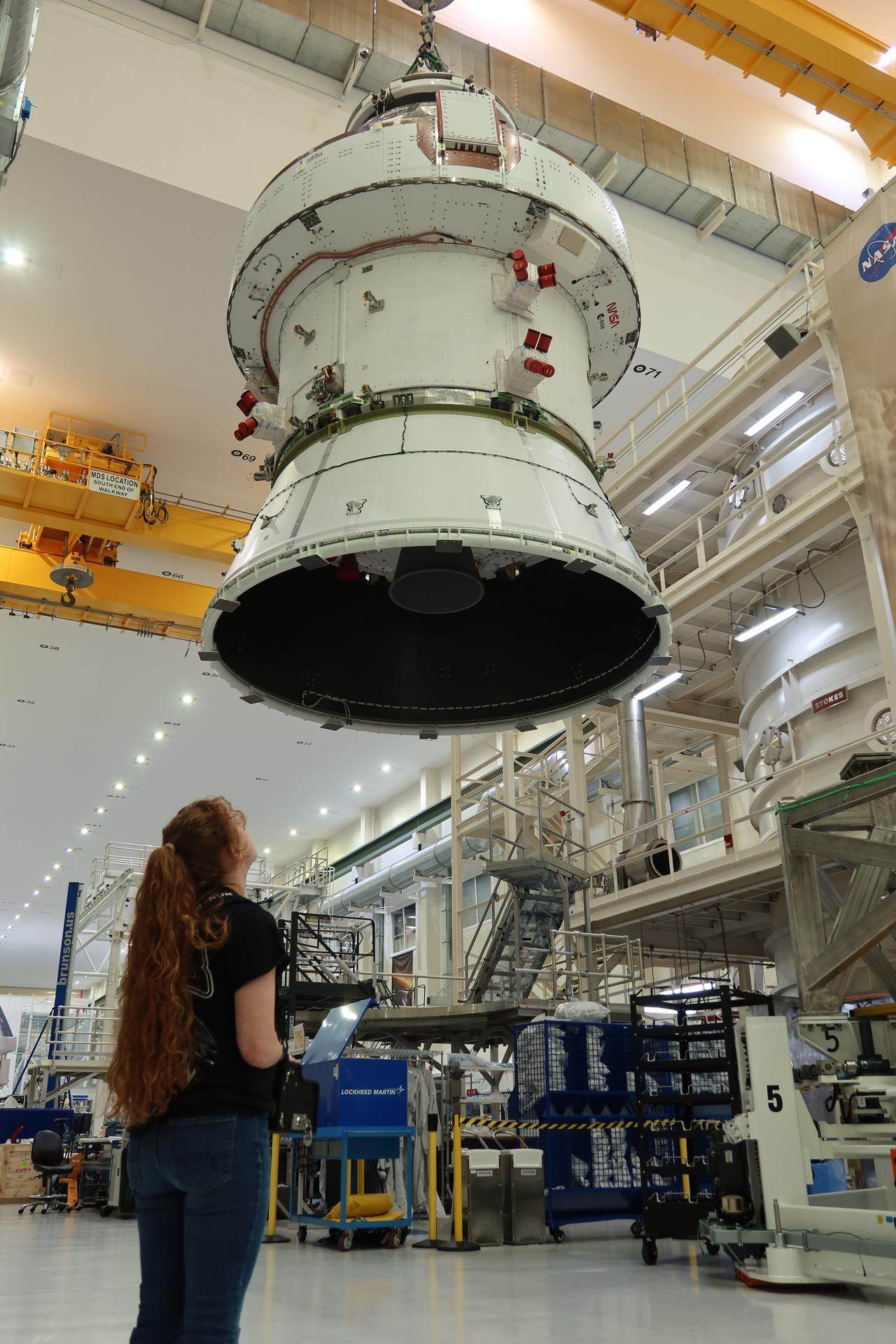
NASA Space Technology Jason CostaJul 25, 2024Crane operator Rebekah Tolatovicz, a shift mechanical technician lead for Artic Slope Regional Corporation at NASA’s Kennedy Space Center in Florida, operates a 30-ton crane to lift the agency’s Artemis II Orion spacecraft out of the recently renovated altitude chamber to the Final Assembly and Systems Testing, or FAST, cell inside NASA Kennedy’s Neil A. Armstrong Operations and Checkout Building on April 27.During her most recent lift July 10, Tolatovicz helped transfer Orion back to the FAST cell following vacuum chamber qualification testing in the altitude chamber earlier this month. This lift is one of around 250 annual lifts performed at NASA Kennedy by seven operator/directors and 14 crane operators on the ASRC Orion team.“At the time of the spacecraft lift, I focus solely on what’s going on in...
Continue reading
NASA’s 21st Northrop Grumman Mission Launches Scientific Studies to Station
Science & Technology

NASA’s 21st Northrop Grumman Mission Launches Scientific Studies to Station

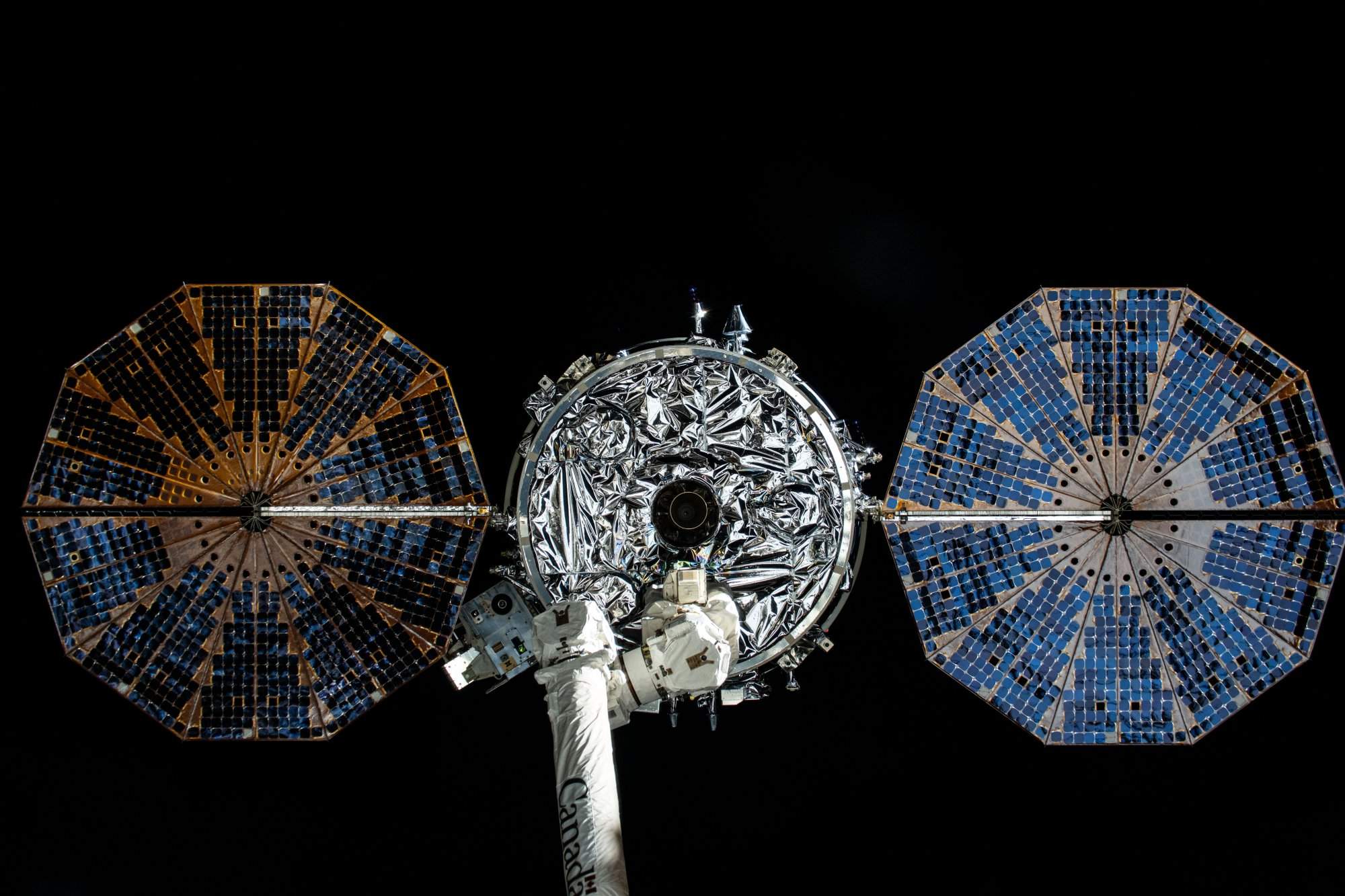
NASA Space Technology NASA and its international partners are sending scientific investigations to the International Space Station on Northrop Grumman’s 21st commercial resupply services mission. Flying aboard the company’s Cygnus spacecraft are tests of water recovery technology and a process to produce stem cells in microgravity, studies of the effects of spaceflight on microorganism DNA and liver tissue growth, and live science demonstrations for students. The mission is scheduled to launch from Cape Canaveral Space Force Station in Florida by early August.Read more about some of the research making the journey to the orbiting laboratory:Packed bed reactors are systems that use materials such as pellets or beads “packed” inside a structure to increase contact between different phases of fluids, such as liquid and gas. These reactors are used for various applications including water recovery, thermal...
Continue reading
NASA’s Curiosity rover accidentally reveals ultra-rare sulfur crystals after crushing a rock on Mars
Science & Technology

NASA’s Curiosity rover accidentally reveals ultra-rare sulfur crystals after crushing a rock on Mars

NASA Space Technology Yellow crystals of pure, elemental sulfur appear inside a crushed Mars rock that NASA's Curiosity rover accidentally drove over.(Image credit: NASA/JPL-Caltech/MSSS)NASA's Curiosity Mars rover has accidentally uncovered an abundance of never-before-seen crystals on the Red Planet after inadvertently running over a rock.On May 30, the rover was exploring Gediz Vallis — a channel carved into the steep slopes of Mount Sharp in the heart of Gale Crater — when it accidentally drove over a small rock, cracking it open. When the rover's cameras focused on what the robot had tripped over, scientists spotted peculiar yellow crystals gleaming among the rock's newly exposed innards.The crystals in the cracked rock were too small and delicate for the rover to properly handle. But when the robot drilled into another nearby rock, it revealed the...
Continue reading
NASA’s Juno Mission Captures the Colorful and Chaotic Clouds of Jupiter
Science & Technology

NASA’s Juno Mission Captures the Colorful and Chaotic Clouds of Jupiter

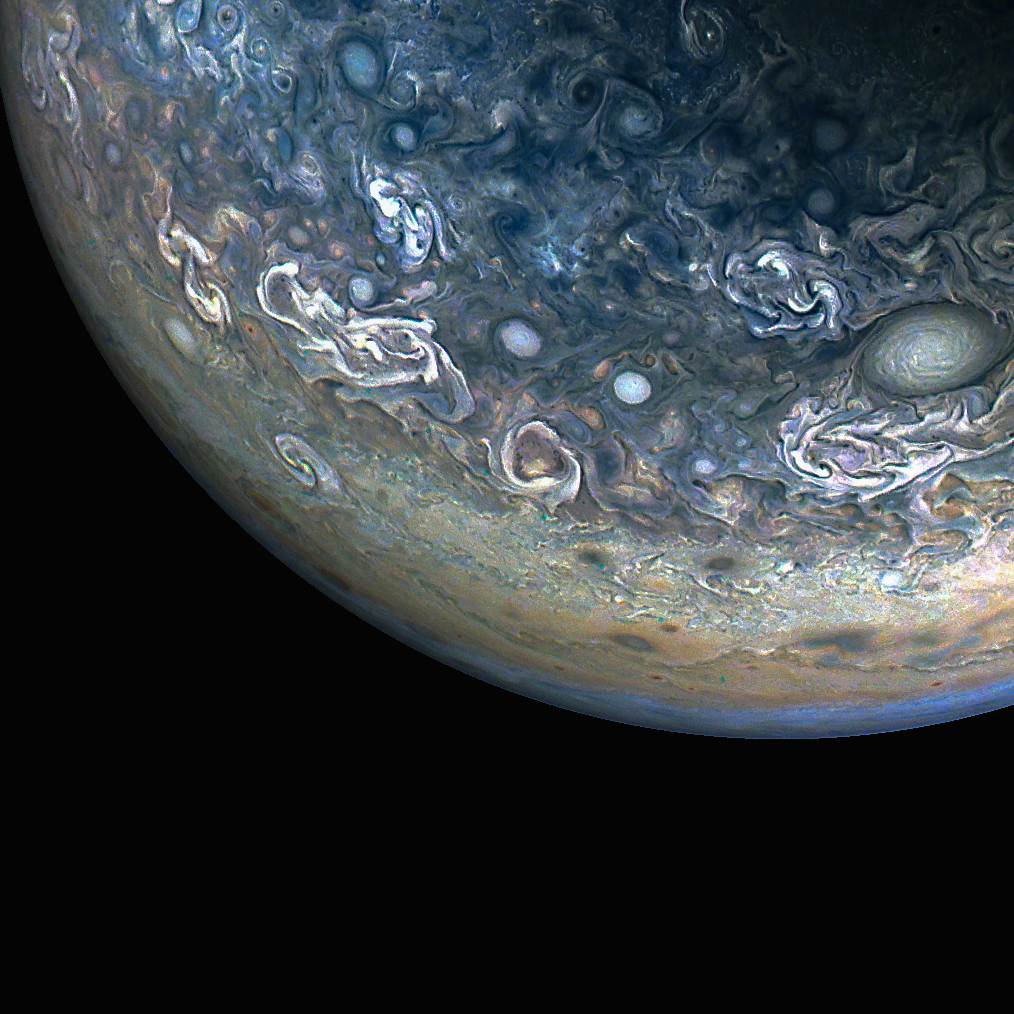
NASA Space Technology Jet Propulsion LaboratoryJul 19, 2024During its 61st close flyby of Jupiter on May 12, 2024, NASA’s Juno spacecraft captured this color-enhanced view of the giant planet’s northern hemisphere. It provides a detailed view of chaotic clouds and cyclonic storms in an area known to scientists as a folded filamentary region. In these regions, the zonal jets that create the familiar banded patterns in Jupiter’s clouds break down, leading to turbulent patterns and cloud structures that rapidly evolve over the course of only a few days.Citizen scientist Gary Eason made this image using raw data from the JunoCam instrument, applying digital processing techniques to enhance color and clarity.At the time the raw image was taken, the Juno spacecraft was about 18,000 miles (29,000 kilometers) above Jupiter’s cloud tops, at a latitude of about...
Continue reading