
Disaster Response Coordination System (DRCS) Formally Launches
Science & Technology

Disaster Response Coordination System (DRCS) Formally Launches

NASA Space Technology Elizabeth BlackwellAug 05, 2024The NASA Disasters Response Coordination System (DRCS) formally launched on 6/13/24 during a ceremony at NASA Headquarters with Administrator Nelson as the keynote speaker. The DRCS is a revamped one NASA approach in how the agency responds to natural hazards and disasters domestically and internationally to support partners and stakeholders The DRCS will be organized by the Program Office located at LaRC. MSFC and Earth Science Branch Disasters team will continue to support the DRCS and events that agency respond too by tapping into expertise and subject matter expertise here at MSFC. MSFC was represented at the DRCS launch by Center Response Coordinators Jordan Bell (ST11), Ronan Lucey (ST11/UAH) and Earth Action Associate Disasters Program Manager Lori Schultz (ST11). Additional information about the DRCS launch can be found here:...
Continue reading
Coming in Hot – NASA’s Chandra Checks Habitability of Exoplanets
Science & Technology

Coming in Hot – NASA’s Chandra Checks Habitability of Exoplanets

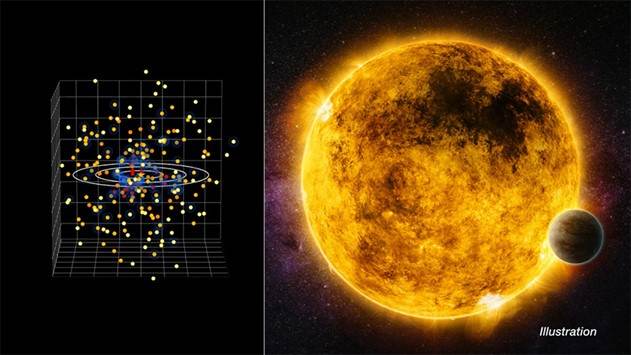
NASA Space Technology Elizabeth BlackwellAug 05, 2024This graphic shows a three-dimensional map of stars near the Sun. The blue haloes represent stars observed with NASA’s Chandra X-ray Observatory and ESA’s XMM-Newton. Astronomers are using these X-ray data to determine how habitable exoplanets may be based on whether they receive lethal radiation from the stars they orbit. This research will help guide observations with the next generation of telescopes aiming to make the first images of planets like Earth. Researchers used almost 10 days of Chandra observations and 26 days of XMM observations to examine the X-ray behavior of 57 nearby stars, some of them with known planets. Results were presented at the 244th meeting of the American Astronomical Society meeting in Madison, Wisconsin, by Breanna Binder (California State Polytechnic University in Pomona). To view the...
Continue reading
NASA Finds Mars Rock That Might Reveal Evidence of Ancient Life
Science & Technology

NASA Finds Mars Rock That Might Reveal Evidence of Ancient Life

NASA Space Technology NASA scientists have now discovered a single place on Mars with signs it once hosted all three of life’s main ingredients: liquid water, energy, and organic molecules.On July 21, NASA’s Perseverance rover spotted a strange rock partially buried in a dry riverbed. White streaks hinted water once flowed through the stone, and Perseverance detected organic molecules — the building blocks of life — within. But what really stood out was a smattering of black and white spots along the rock’s surface. On Earth, such “leopard spots” are mainly known to form in two ways: from microbes, or through chemical reactions that can provide fuel for life. Above – Leopard spots on Cheyava Falls A close-up of the Mars rock, nicknamed “Cheyava Falls”, showing its distinctive spots. These “leopard spots” are related to...
Continue reading
Can They Prevent the Starliner From Colliding With the Space Station?
Science & Technology

Can They Prevent the Starliner From Colliding With the Space Station?

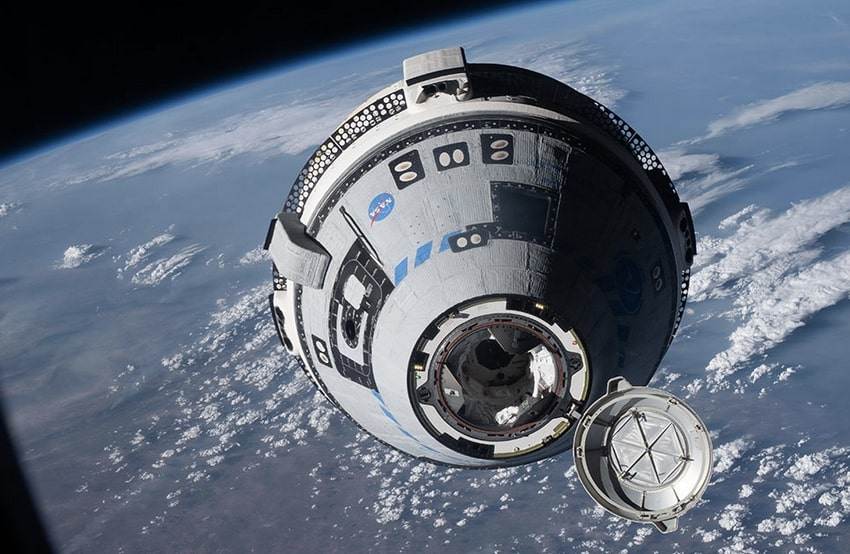
NASA Space Technology Home » Space » Can They Prevent the Starliner From Colliding With the Space Station?NASA is worried that multiple small reaction control system thrusters could fail while the Starliner is near the space station and cause a disaster. There are combinations of Starliner thrusters failures would make it become uncontrollable and cause a collision with the space station. The thrusters are needed later in the flight back to Earth to set up the critical de-orbit burn and entry in Earth’s atmosphere.Boeing Starliner software needs to be updated for it to be able to undock without crew onboard (even though it did this on the last test flight), and this will take a week. Boeing has DIFFERENT software for crewed and unmanned Starliner and it takes a week or more to...
Continue reading