NASA is worried the Boeing Starliner could ‘spin out’ and hit the International Space Station
Science & Technology

NASA is worried the Boeing Starliner could ‘spin out’ and hit the International Space Station

NASA Space Technology In This StoryBoeing (BA) launched its Starliner spacecraft into orbit on June 5. The plan was for the craft and its crew to dock with the International Space Station for eight days and then return to Earth safely. That didn’t quite happen, and the craft has now been stuck in space for more than 60 days and NASA is now worried that it could spiral out of control and hit the space station.Suggested ReadingMedicare patients could save $1.5 billion on 10 prescription drugsSuggested ReadingThe Starliner craft and its crew of Butch Wilmore and Suni Williams have been stranded in space after leaks were detected on the spaceship’s thrusters. Engineers back on Earth have been working to find a fix for the issue for weeks and rescue plans for Wilmore and Williams have...
Continue reading
Southern California Student Wins NASA Scholarship
Science & Technology

Southern California Student Wins NASA Scholarship

NASA Space Technology Sabrina Redifer, a 2024 graduate of Quartz Hill High School in Lancaster, California, won a NASA College Scholarship Award.Redifer plans to major this fall in molecular, cellular, and developmental biology at the University of California, Los Angeles. She earned a 4.0 grade-point average – a weighted GPA of 5.29 – and ranked fourth academically out of a class of 794 students.“My dream of becoming a physician stems from a love of science, innovation, and equality,” she said. “I want to develop new treatments through molecular and cellular research, and I want to make those treatments accessible to all people, regardless of their economic status or where they live.”Redifer won the scholarship following an agency-wide application for NASA employee dependents planning to pursue a science, technology, engineering, or math degree. The scholarship is...
Continue reading
Geospatial AI Foundation Model Team Receives NASA Marshall Group Achievement Award
Science & Technology

Geospatial AI Foundation Model Team Receives NASA Marshall Group Achievement Award

NASA Space Technology NASA’s science efforts aim to empower scientists with the tools to perform research into our planet and universe. To this end, a collaborative effort between NASA and IBM created an AI geospatial foundation model, which was released as an open-source application in 2024.Trained on vast amounts of NASA Earth science data, the foundation model can be adapted for Earth science applications such as flood, burn scar, and cropland studies. Tailoring the model for a specific task takes far less data than the original training set, providing an easy path for researchers to perform AI-powered studies.For their groundbreaking work on this project, the development team behind the foundation model has received the NASA Marshall Space Flight Center Group Achievement Award. Their success with the model showcases their commitment to advancing AI and scientific...
Continue reading
NASA Citizen Scientists Spot Object Moving 1 Million Miles Per Hour
Science & Technology

NASA Citizen Scientists Spot Object Moving 1 Million Miles Per Hour

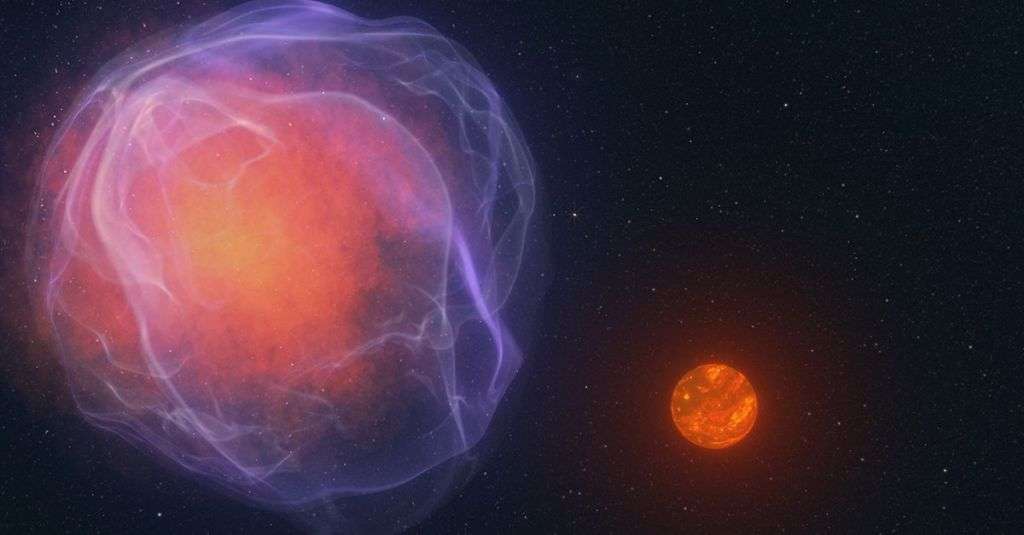
NASA Space Technology Most familiar stars peacefully orbit the center of the Milky Way. But citizen scientists working on NASA’s Backyard Worlds: Planet 9 project have helped discover an object moving so fast that it will escape the Milky Way’s gravity and shoot into intergalactic space. This hypervelocity object is the first such object found with the mass similar to or less than that of a small star.Backyard Worlds uses images from NASA’s WISE, or Wide-field Infrared Explorer, mission, which mapped the sky in infrared light from 2009 to 2011. It was re-activated as NEOWISE (Near-Earth Object Wide-field Infrared Survey Explorer) in 2013 and retired on Aug. 8, 2024.A few years ago, longtime Backyard Worlds citizen scientists Martin Kabatnik, Thomas P. Bickle, and Dan Caselden spotted a faint, fast-moving object called CWISE J124909.08+362116.0, marching across their screens in the WISE images. Follow-up observations...
Continue reading