Not-so-clean rooms: Scientists discover 26 new microbe species in NASA spacecraft facility
Science & Technology

Not-so-clean rooms: Scientists discover 26 new microbe species in NASA spacecraft facility

NASA's Phoenix Mars lander undergoes a test before its August 2007 launch.(Image credit: NASA/JPL-Caltech/UA/Lockheed Martin)Life, as they say, finds a way — even in the most sterile places on Earth. Scientists from NASA's Jet Propulsion Laboratory (JPL) in Southern California, along with researchers in India and Saudi Arabia, have discovered 26 previously unknown bacterial species in the clean rooms that were used to prep NASA's Phoenix Mars lander for its August 2007 launch. Clean rooms are decontaminated and intensely controlled environments specifically designed to prevent microbial life from hitching a ride into space. But some microorganisms, known as extremophilesshow impressive resilience in inhospitable environments, whether that's the vacuum of space, hydrothermal vents on the slopes of undersea volcanoes, or even NASA clean rooms. "Our study aimed to understand the risk of extremophiles being transferred in space missions and...
Continue reading
All Hands for Artemis III
Science & Technology

Advancing Spacesuit Technology: NASA’s Thermal Vacuum Tests for Artemis III Moonwalks

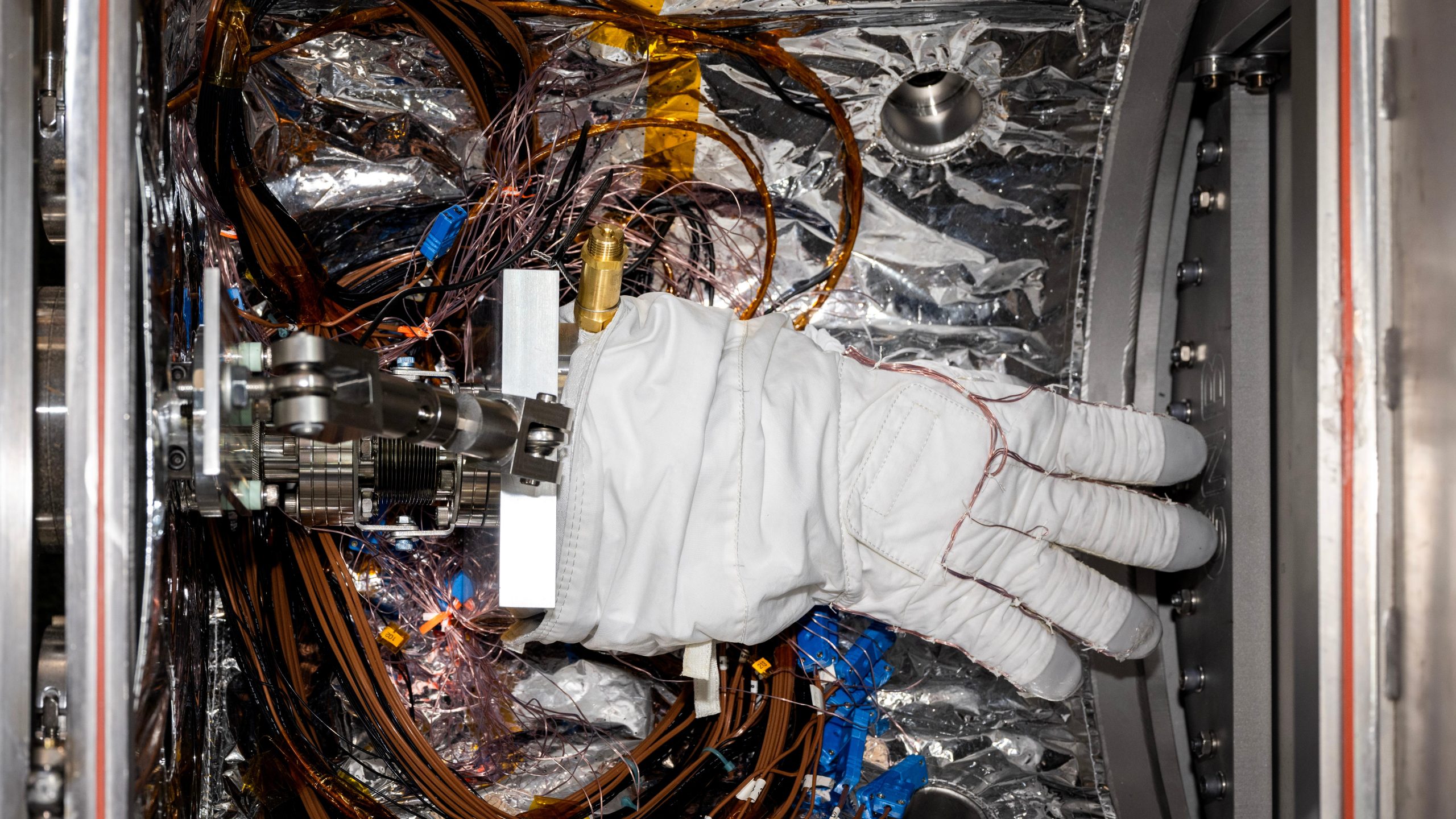
By Monika LuabeyaApril 24, 2025 NASA continues to push the boundaries of human space exploration. They are refining the technology that will enable astronauts to safely operate in the harsh lunar environment. This is crucial for the upcoming Artemis III mission. Engineers recently conducted rigorous thermal vacuum testing on a spacesuit glove. This glove is an essential component of the Extravehicular Mobility Unit (EMU). The glove was tested in extreme conditions within CITADEL. This stands for Cryogenic Ice Testing, Acquisition Development, and Excavation Laboratory. It is a specialized chamber at NASA's Jet Propulsion Laboratory (JPL) in Southern California. Pushing the Limits: Testing in Lunar-Like Conditions On November 1, 2023, NASA engineers placed the EMU glove in vacuum conditions. They exposed it to ultra-low temperatures of minus 352 degrees Fahrenheit (minus 213 degrees Celsius). These environmental extremes closely simulate...
Continue reading
Parker Solar Probe
Science & Technology

A NASA spacecraft will make another close pass of the sun

Access to this page has been denied NASA's Parker Solar Probe is set for another close pass of the sun. This pass is its second of three planned encounters. The probe aims to study the sun's corona and solar wind. It will reach speeds of 430,000 mph (ca. 692,017 km/h) during its closest approach. Here's a more detailed look: Mission: The Parker Solar Probe, launched in 2018, is designed to get closer to the sun than any earlier spacecraft. It aims to understand the sun's corona and solar wind. It also seeks to discover why the corona is significantly hotter than the sun's surface. Previous Record: The probe made...
Continue reading
NASA Space Station Research Helps Power Moon Science
Science & Technology

NASA Space Station Research Helps Power Moon Science

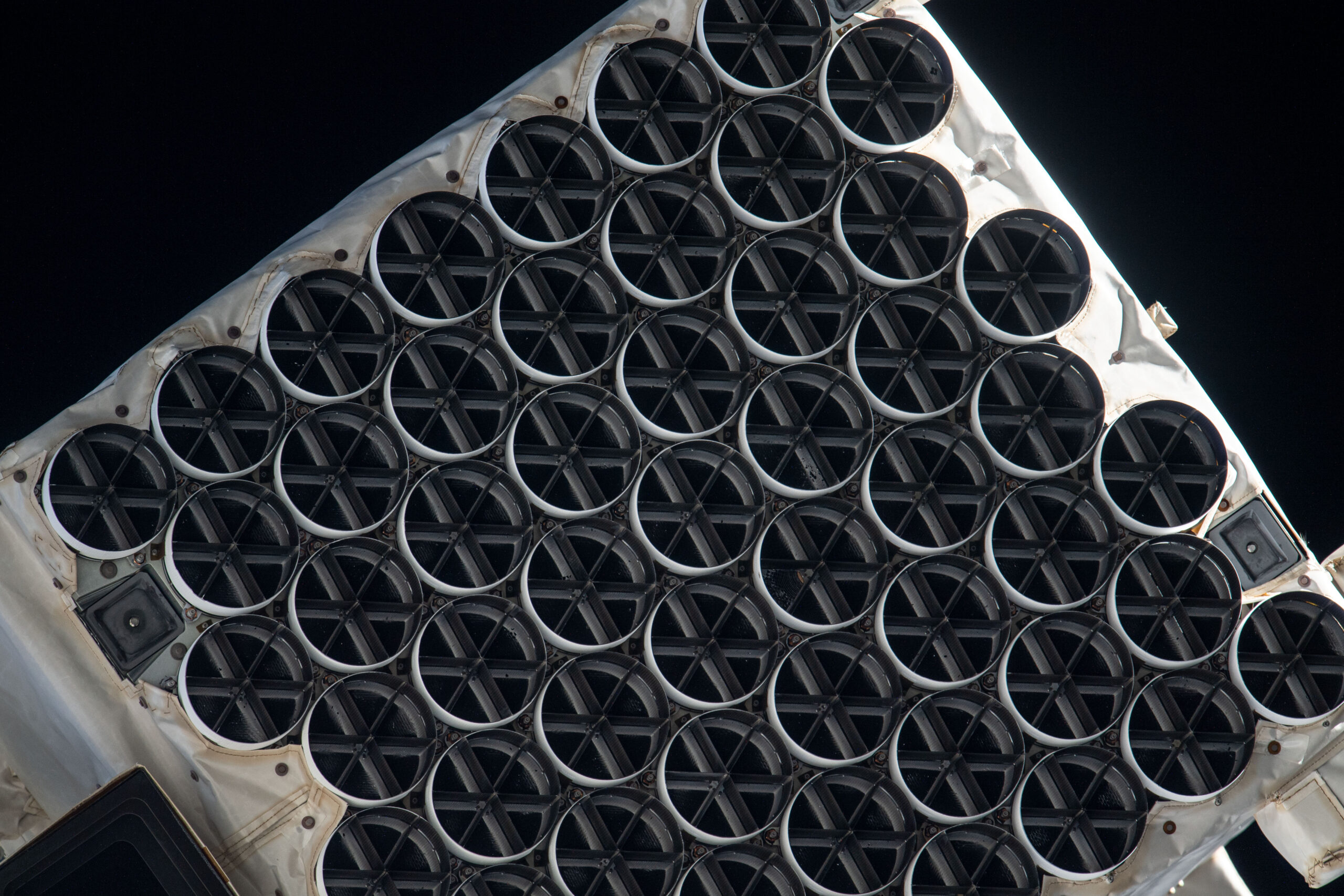
Destiny DoranInternational Space Station Research Communications TeamMar 14, 2025The International Space Station supports a wide range of scientific activities from looking out at our universe to breakthroughs in medical research, and is an active proving ground for technology for future Moon exploration missions and beyond. Firefly Aerospace’s Blue Ghost Mission-1 landed on the Moon on March 2, 2025, kicking off science and technology operations on the surface, including three experiments either tested on or enabled by space station research. These projects are helping scientists study space weather, navigation, and computer performance in space— knowledge crucial for future Moon missions. One of the experiments, the Lunar Environment Heliospheric X-ray Imager (LEXI), is a small telescope designed to study the Earth’s magnetic environment and its interaction with the solar wind. Like the Neutron star Interior Composition Explorer (NICER)...
Continue reading