

NASA, SpaceX Launch NOAA’s Latest Weather Satellite
Science & Technology

NASA, SpaceX Launch NOAA’s Latest Weather Satellite

NASA Space Technology NASA successfully launched the fourth and final satellite in a series of advanced weather satellites for NOAA (National Oceanic and Atmospheric Administration) at 5:26 p.m. EDT Tuesday. The GOES-U (Geostationary Operational Environmental Satellite) will benefit the nation by providing continuous coverage of weather and hazardous environmental conditions across much of the Western Hemisphere.The satellite launched on a SpaceX Falcon Heavy rocket from Launch Complex 39A at NASA’s Kennedy Space Center in Florida. Mission managers confirmed at 10:18 p.m. the spacecraft’s solar arrays successfully deployed, and the spacecraft was operating on its own power.“As communities across the country and the world feel the effects of extreme weather, satellites like GOES-U keep a close watch to monitor weather in real time,” said NASA Administrator Bill Nelson. “NASA and NOAA have worked together for several...
Continue reading
NASA Selects Participating Scientists to Join ESA’s Hera Mission
Science & Technology

NASA Selects Participating Scientists to Join ESA’s Hera Mission

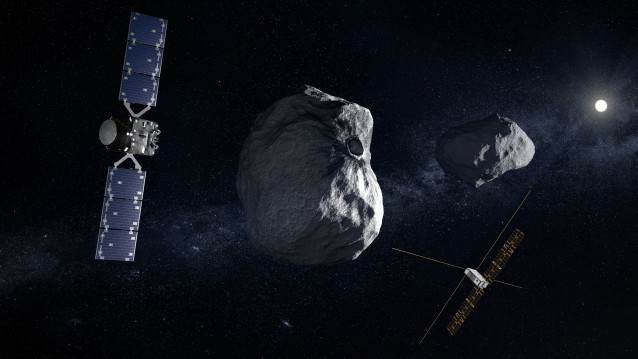
NASA Space Technology NASA has selected 12 participating scientists to join ESA’s (European Space Agency) Hera mission, which is scheduled to launch in October 2024. Hera will study the binary asteroid system Didymos, including the moonlet Dimorphos, which was impacted by NASA’s DART (Double Asteroid Redirection Test) spacecraft on Sept. 26, 2022. The objectives of DART and Hera collectively aim to validate the kinetic impact method as a technology to deflect an asteroid on a collision course with Earth, if one is ever discovered, and to learn more about the near-Earth asteroids that are the source of this natural hazard.Hera is scheduled to arrive at the Didymos/Dimorphos binary asteroid system at the end of 2026, where it will gather otherwise unobtainable data about the mass and makeup of both bodies and assess the changes caused...
Continue reading
See a stunning 3D visualization of astronomy’s most beautiful object
Science & Technology

See a stunning 3D visualization of astronomy’s most beautiful object

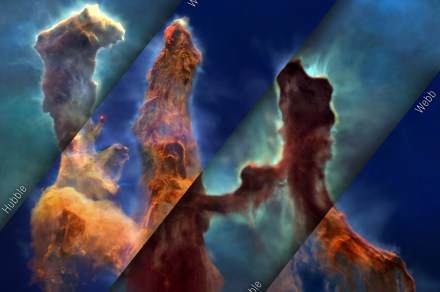
NASA Space Technology This image is a mosaic of visible-light and infrared-light views of the same frame from the Pillars of Creation visualization. The three-dimensional model of the pillars created for the visualization sequence is alternately shown in the Hubble Space Telescope version (visible light) and the Webb Space Telescope version (infrared light). Greg Bacon (STScI), Ralf Crawford (STScI), Joseph DePasquale (STScI), Leah Hustak (STScI), Christian Nieves (STScI), Joseph Olmsted (STScI), Alyssa Pagan (STScI), Frank Summers (STScI), NASA's Universe of LearningThe Pillars of Creation are perhaps the most famous object in all of astronomy. Part of the Eagle Nebula, this vista was first captured by the Hubble Space Telescope in 1995, and has captivated the public ever since with its dramatic rising pillars of dust and gas that stretch several light-years high. The nebula has...
Continue reading
Perseverance Mars rover digs into intriguing ‘Bright Angel’ rock formation (photo)
Science & Technology

Perseverance Mars rover digs into intriguing ‘Bright Angel’ rock formation (photo)

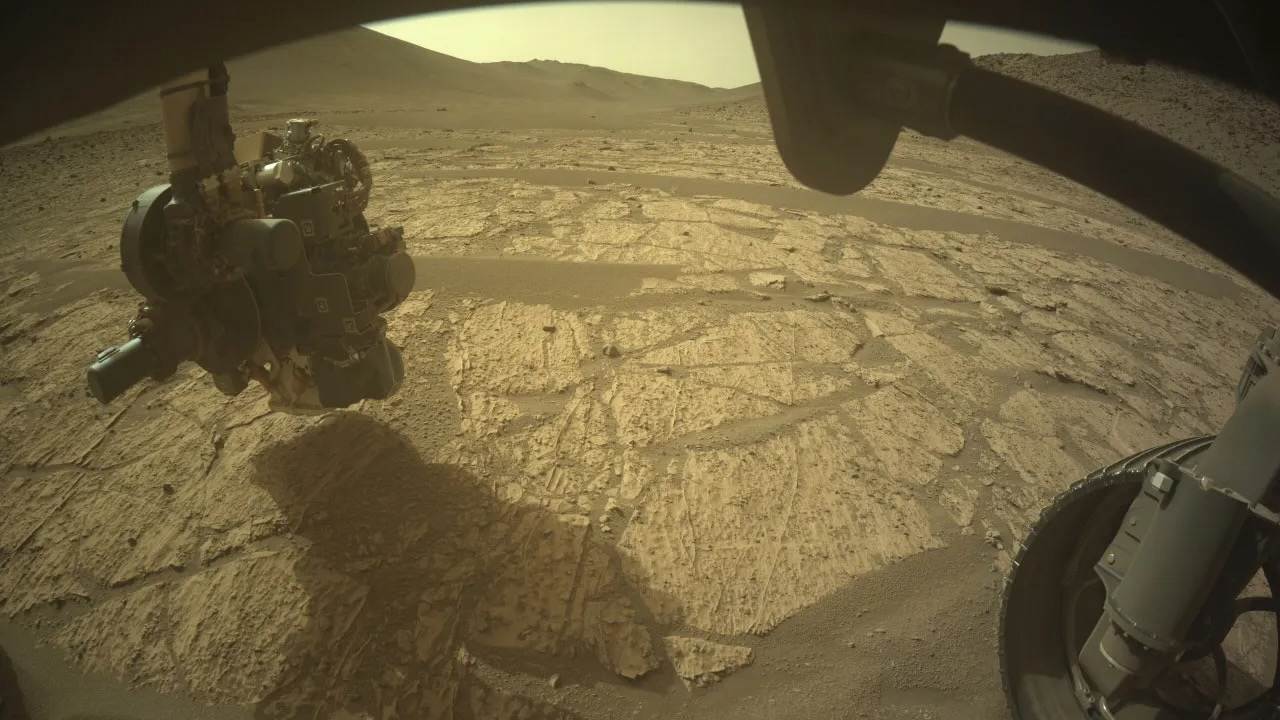
NASA Space Technology NASA’s Perseverance Mars rover acquired this image with its Front Right Hazard Avoidance Camera A on June 16, 2024. It shows the area in front of the rover at a site called Bright Angel, with the arm extended as the PIXL instrument investigates the surface.(Image credit: NASA/JPL-Caltech)Last week, after braving a field of sand dunes and traversing the desiccated remnants of an ancient river, NASA's Perseverance rover reached the shining rock outcropping on the Martian horizon that the rover's operators have named "Bright Angel."Perseverance has now begun its scientific investigation of a very unique place in its surroundings. Its first action: digging into the ground, scanning and imaging the Mars soil with X-rays. Over the coming months, scientists will parse the data that Perseverance sends back.Bright Angel got its name...
Continue reading