Tag: history

  • End the shutdown? That’ll point Congress back to Obamacare’s rising costs.

    End the shutdown? That’ll point Congress back to Obamacare’s rising costs.

    At the heart of what is now the longest U.S. government shutdown in history are federal subsidies that millions of Americans use to purchase health insurance on government-run marketplaces.

    The shutdown began as Democrats dug in their heels to prevent these subsidies from expiring. And now, members of Congress are facing increasing pressure to end the shutdown – not just because of its effects on airports and federal programs like nutrition assistance, but also because of public concerns about rising insurance premiums.

    These subsidies were greatly expanded in 2021 by Democrats who controlled Congress at the time. This led to a surge in enrollment on these marketplaces, which were created in 2010 under the Affordable Care Act (ACA), also known as Obamacare.

    Why We Wrote This

    The idea of federal subsidies to help more people afford health insurance was baked into the Affordable Care Act from the start. But they’ve grown – as has the strain of overall health care spending on federal budgets.

    The expanded subsidies are set to expire next month, driving up premiums for many individuals and families who buy health insurance on Obamacare exchanges. For weeks, Democrats have called on Republicans to agree to extend the subsidies as a condition of reopening the government. Republicans have criticized the subsidies as wasteful and open to abuse, while arguing that the government must reopen first before Congress can discuss health insurance.

    Open enrollment in marketplaces for 2026 plans began Nov. 1. Published prices show a large increase in the cost of many plans, reflecting uncertainty over what will happen to the expanded subsidies. The majority of enrollees receive some level of support designed to make Obamacare more affordable and increase the insured pool. The overall cost of insurance has been rising, in large part because U.S. health care is far more expensive than in peer countries.

    Dawn Schmidt doesn’t know yet how much her premiums will rise next year, but she’s worried about being able to afford her insurance plan. She retired from her job at Boeing in 2020 and lives in Pennsylvania, which administers its own ACA marketplace, known as Pennie. Administrators have warned her that premiums could rise by 82%. “It’s a lot. It adds up,” she says.

    What are the expanded subsidies, and why are they expiring?

    Subsidies were baked into Obamacare from the start. The idea was to assist individuals who didn’t have either employee-provided plans or access to Medicaid or Medicare, but couldn’t afford the market price of private insurance. Those with low incomes were required to pay between 2% and 10% of their income, with the government paying the rest.

    The expanded subsidies were introduced by Democrats in 2021 during the COVID-19 pandemic, when access to health care was a pressing concern. Financial support was extended to Americans making more than four times the federal poverty level, now above $60,000 for an individual enrollee, while those with the lowest incomes no longer had to pay any premiums. Enrollment more than doubled, from around 12 million in 2021 to 24 million in 2024.

    “We have more people in the system than we’ve ever had before, and that’s a good thing,” says Elena Marks, a health policy expert at Rice University’s Baker Institute for Public Policy. But, she adds, “the underlying costs continue to escalate … which is a bad thing.”

    To pass the legislation, Democrats had to set an expiration date to satisfy congressional fiscal rules. This created an enrollment cliff that was already causing concern before the impasse on government spending that led to the Oct. 1 shutdown.
    Tom Williams/CQ Roll Call/AP

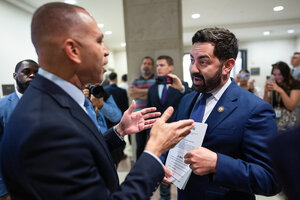
    Republican Rep. Mike Lawler (right) confronts House Minority Leader (and fellow New Yorker) Hakeem Jeffries about signing on to a bill that would extend Affordable Care Act tax credits, in the Capitol Visitor Center, Oct. 8, 2025.

    How are Democrats and Republicans responding?

    Democrats have tried to use the enrollment cliff as leverage to force an extension. Citing higher premiums in New York, Sen. Chuck Schumer has accused Republicans of ignoring a “healthcare crisis” that could see millions lose coverage if subsidies are slashed. “These devastating price hikes are entirely avoidable, but if Republicans keep stick[ing] their heads in the sand, New York families will be paying the price,” he said in a statement.

    Most Republicans take a different view. They point to the fiscal burden of extending subsidies that, if made permanent, would cost around $350 billion over 10 years, according to estimates from the Congressional Budget Office. They question the design of Obamacare and its failure to curb rising health care costs, as well as the risk of waste and fraud. Some want to scrap the Affordable Care Act and replace it with an alternative approach.

    But a redo of Obamacare is politically fraught. A GOP-led effort to repeal it in 2017 failed to pass the Senate amid infighting over what exactly would replace it. Some Republicans would prefer to extend the expiring subsidies and work on reforms to the marketplaces, given that open enrollment for 2026 is already underway. Rep. Mike Lawler, a Republican who represents a swing district in New York, has co-sponsored a bipartisan bill to extend the credits for one year.

    Polls suggest that the expanded subsidies are popular and that cutting them could sour voters on Republicans. A poll taken in September by KFF Health, a nonprofit research group, found that 3 in 4 respondents want the subsidies extended. In July, Tony Fabrizio, a pollster who has worked on campaigns for President Donald Trump, warned that “solid majorities of Trump voters and Swing voters” supported the subsidies and that their expiration could penalize Republicans in competitive districts in the 2026 midterms. GOP-run states such as Georgia and Florida have seen some of the biggest increases in Obamacare enrollment in recent years.

    What are the possible consequences of cutting subsidies for Obamacare?

    Higher premiums could deter millions of Americans from enrolling in the 2026 program, which means more uninsured people. Those with middle incomes who didn’t benefit from the original subsidy program may decide to pay more out of pocket. Experts say far greater attrition is likely among low-income groups whose costs were almost entirely subsidized.

    While critics have questioned why taxpayers are supporting middle-aged couples who took early retirement, such individuals are in the minority. Only 7% of enrollees in marketplaces had incomes over four times the federal poverty rate and, as a result, were eligible for the expanded subsidies. Of these, around half were between the ages of 50 and 64.

    Ms. Schmidt falls into this category: She retired early because her husband is older, and they wanted to make the most of their retirement. He is now on Medicare, while she is too young to qualify and buys Obamacare insurance. She paid $211 a month this year for her plan, which has a $6,000 deductible, and is bracing to pay more if subsidies are eliminated.

    “We’re probably going to have to cut back on things like vacations. We already cut back on spending on our grandchildren for Christmas and birthdays,” she says.

    The participation of early retirees in Obamacare was woven into its design, says Ms. Marks at Rice. “Part of the reason behind the ACA marketplace was to allow people to not stay in jobs they didn’t want to stay in, to get health insurance,” she says.

    Still, they aren’t the main beneficiaries of federal aid, she adds. “Most of the subsidy dollars go to the lowest-income people.”

    Even with subsidies, the rising cost of premiums puts a strain on pocketbooks. Young people are generally more likely to forgo health insurance and risk having to pay out of pocket for medical care. This creates a quandary for insurers and regulators, since young people tend to use less health care compared with older people; insurance pools rely on serving a demographic mix.

    This has long been the challenge hanging over Obamacare: If not enough young people pay into the system and the resulting pool skews less healthy, eventually it no longer becomes viable for private insurers. The individual mandate to buy health insurance was supposed to tackle this problem. Congress deactivated it during Mr. Trump’s first term.

    Behind this difficulty lies a stark reality: Americans pay far more for health care than other countries, and most of the provisions in Obamacare that were designed to curb rising costs have been rescinded or have stalled. Tens of millions are still uninsured. And, while policy experts have proposed various solutions, so far neither political party has been willing to significantly cut rising expenditures on health insurance programs for an aging population.

  • Science history: Invention of the transistor ushers in the computing era — Oct. 3, 1950

    Science history: Invention of the transistor ushers in the computing era — Oct. 3, 1950

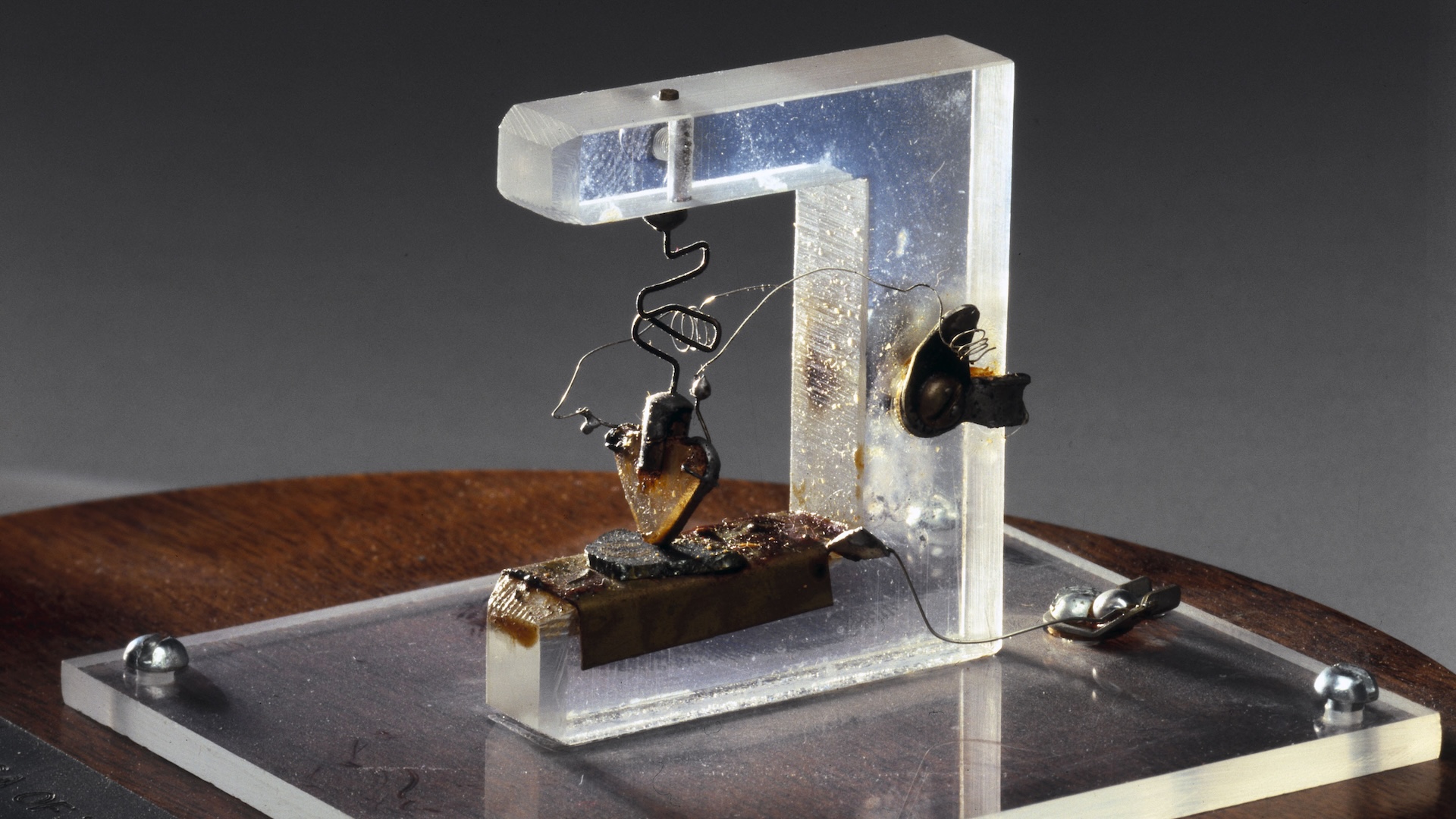
    A photograph of a replica of the world's first working transistor
    A replica of the first working transistor. The design used two thin pieces of gold, a coiled spring, and a slab of germanium. Transistors have come a long way since then, with some of the smallest measuring just an atom thick.(Image credit: Science & Society Picture Library via Getty Images)
    Quick facts

    Milestone: Transistor patented

    Date: Oct. 3, 1950

    Where: Bell Labs; Murray Hill, New Jersey

    Who: John Bardeen, Walter Brattain and William Shockley

    On Oct. 3, 1950, three scientists at Bell Labs in New Jersey received a U.S. patent for what would become one of the most important inventions of the 20th century — the transistor.

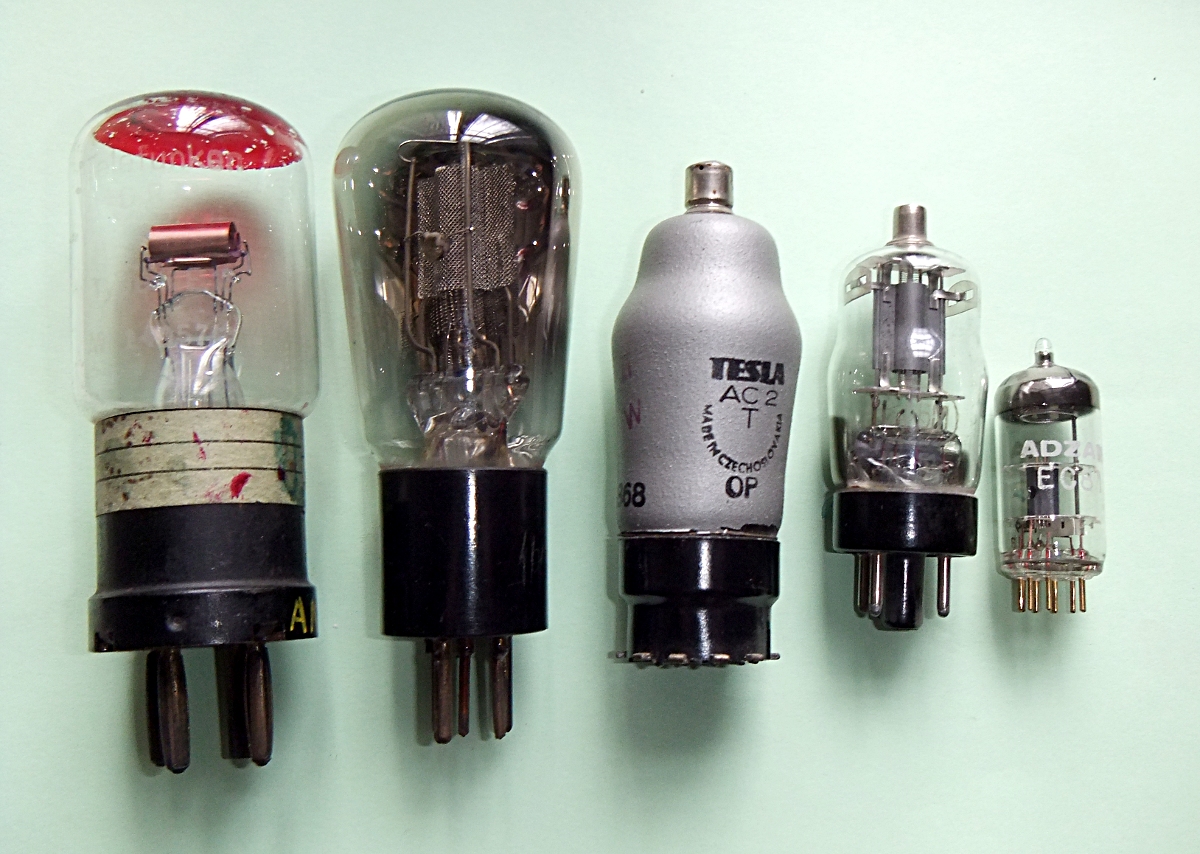
    The transistor was initially designed because AT&T wanted to improve its telephone network. At the time, AT&T amplified and transmitted phone signals using triodes. These devices encased a positive and negative terminal and a wire mesh in a vacuum tube, which ensured electrons could flow without bumping into air molecules.

    But triodes were power hogs that often overheated, so by the 1930s, Bell Labs President Mervin Kelly began to look for alternatives. He was intrigued by the potential of semiconductors, which have electrical properties between those of insulators and conductors. In 1925, Julius Lilienfeld had patented a semiconductor precursor to the transistor, but it used copper sulfide, which was unreliable, and the underlying physics were poorly understood.

    At the end of World War II, as the lab shifted its focus from war technology, Kelly recruited a team, led by Shockley, to find a replacement for vacuum-tube triodes. The team conducted a number of experiments, including plunging silicon into a hot thermoswith limited success. The problem was that they didn’t get much amplification.

    Then, in 1947, Brattain and Bardeen switched from silicon to germanium and helped clarify the physics at play in the semiconductor. Their work led to a “point-contact” transistor that used a little spring to press two thin slips of gold foil into a germanium slab. Notably, this early transistor took some finessing to work, requiring Brattain to wiggle things “just right” to get the impressive 100-fold amplification in signal.

    An array of triode vacuum tube light bulbs

    Triode vacuum tubes from the first half of the 20th century, shown in chronological order from left (1918) to right (1949). Triodes were integral components of phone networks prior to the invention of the transistor, but they used lots of power, overheated and were unreliable, which spurred AT&T to look for alternatives. (Image credit: RJB1, via Wikimedia Commons; CC BY-SA 4.0)

    In 1948, Shockley iterated on that design with what would later be termed the junction transistor, the subject of the patent that would go on to form the basis of most modern transistors.

    Get the world’s most fascinating discoveries delivered straight to your inbox.

    The key to the technology is that when a voltage is applied to a semiconductor, electrons migrate within the material, leaving positively charged “holes” behind, according to the patent.

    Thus, it’s possible to create “N-type” or “P-type” semiconductors — areas that carry an excess of either negative or positive charges. When a metal electrode contacts a semiconductor, the current flow would go one way if touching an N-type material and the opposite direction in a P-type material, the patent noted.

    a close-up of three miniature M-1 transistors against a dime

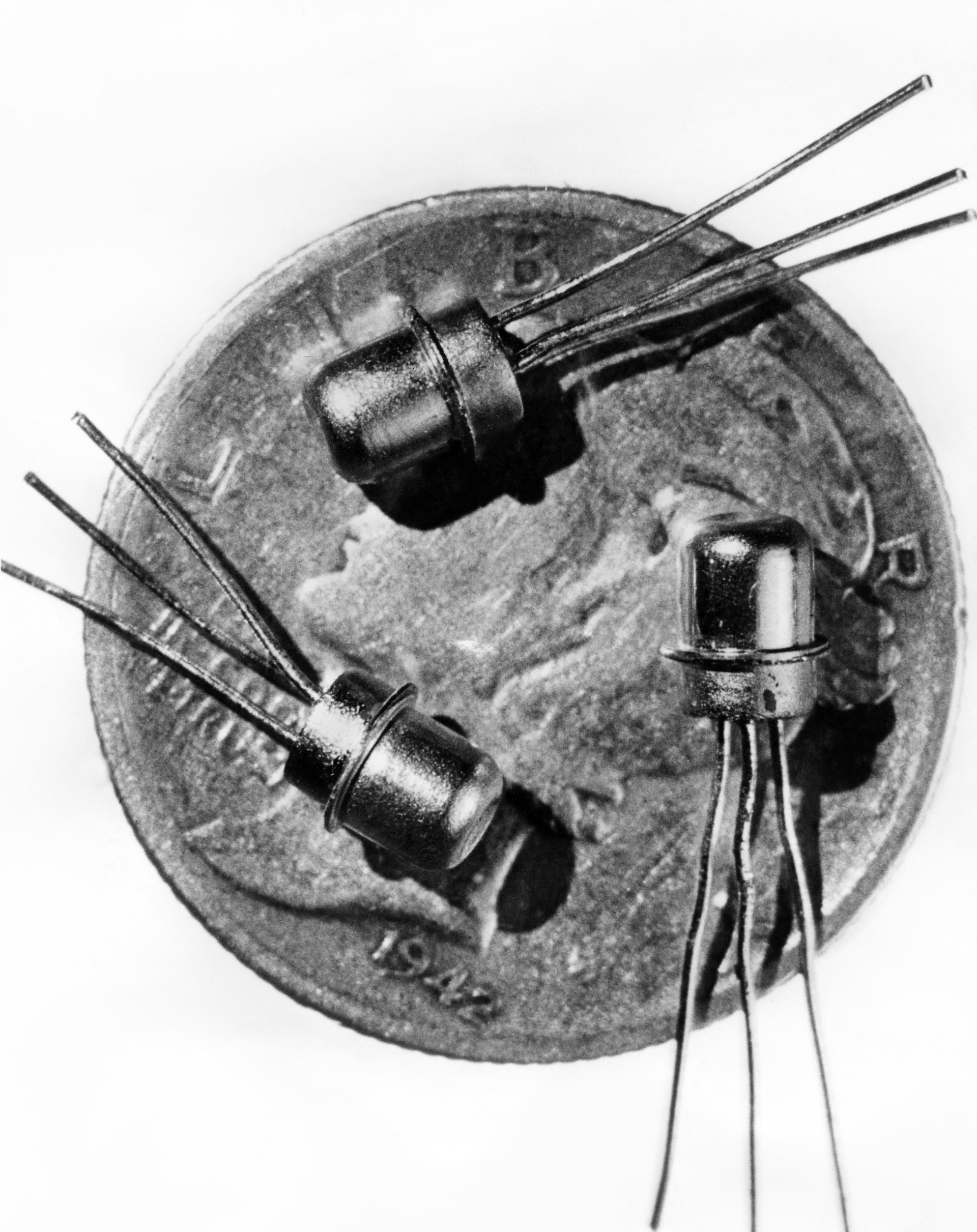
    A close-up of three miniature M-1 transistors photographed against a dime. This photo was taken in 1956, and shows just how much transistors developed in the six years after Bardeen, Brattain and Shockley were awarded their patent for the first transistor. (Image credit: AFP via Getty Images)

    The junction transistor takes advantage of this property with a semiconductor with three attached electrodes. By modifying the voltage applied and the properties of the electrodes and the semiconductor, it’s possible to reliably amplify the current. This amplification would soon prove invaluable in radios, televisions and telephone networks.

    But amplification isn’t what ushered in the era of modern computing. Rather, the junction transistor was a tiny, reliable, low-power, “on-off” switch that didn’t heat up much. Vacuum tubes were the switches in the first computers, and the transistor was just a much better on-off switch.

    Shockley was a notoriously bad boss (and a eugenicist and racist). The key researchers went their separate ways, with Bardeen moving to the University of Illinois and Shockley helping to found the modern Silicon Valley semiconductor industry. The trio would win the 1956 Nobel Prize in physics for their work on the “transistor effect.”

    John Bardeen, William Shockley, and Walter Brattain standing at a laboratory table

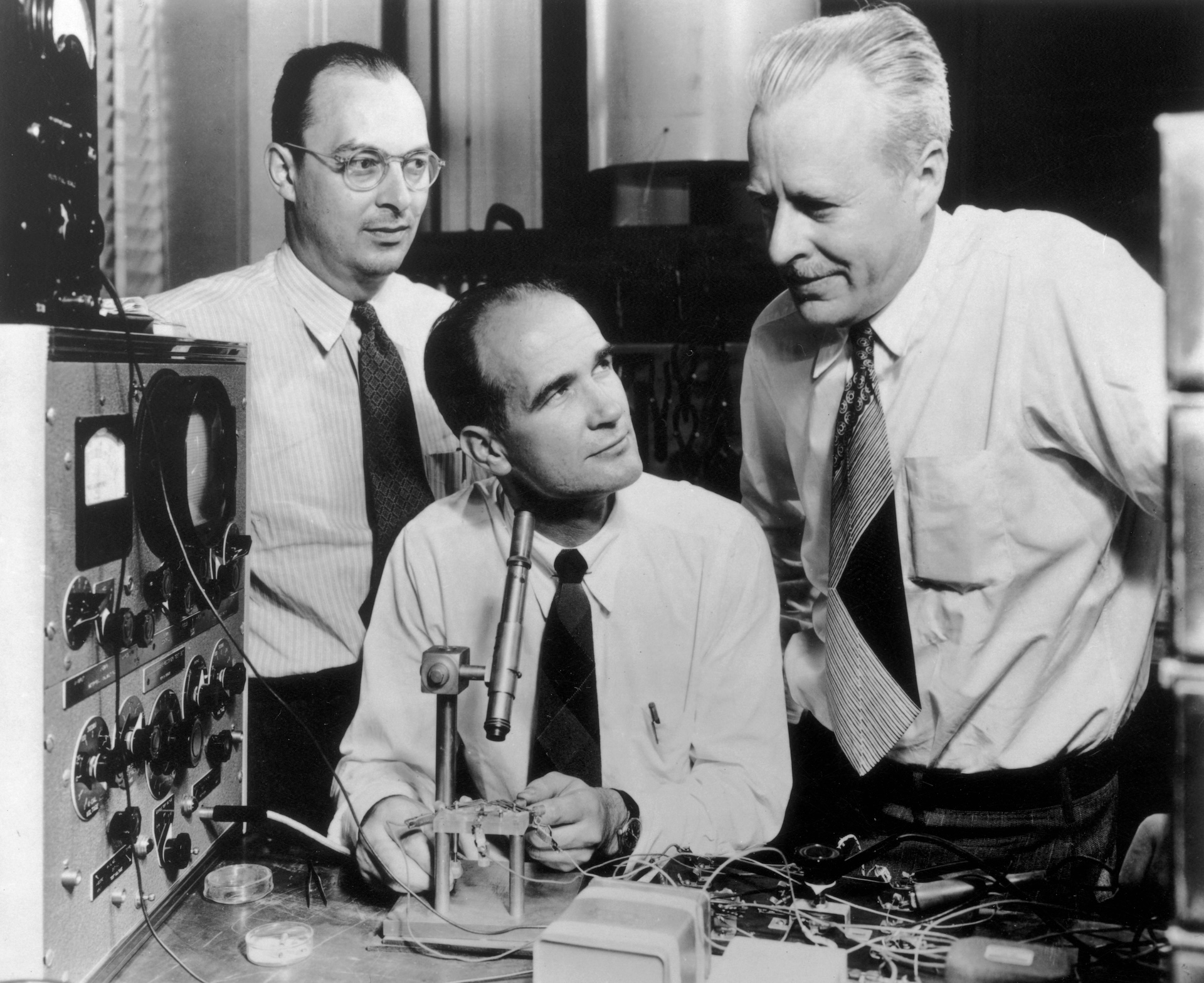
    John Bardeen (left), William Shockley (center) and Walter Brattain (right) pose in a laboratory in 1955. The trio would win the 1956 Nobel Prize for their work on transistors. (Image credit: Hulton Archive via Getty Images)

    A few years later, physical chemist Morris Tanenbaum, who worked briefly under Shockley at Bell Labs, would invent the first silicon transistor. In 1959, Jack Kilby of Texas Instruments filed a patent for the first integrated circuitwhich would form the basis for the modern computer chip. And by the early 1960s, the vacuum-tube computer was functionally extinct.

    In 1968, Gordon Moore, the founder of Intel, noted in a talk that transistors were being miniaturized and chips were getting twice as powerful at a predictable rate, ushering in the era of Moore’s law, which would continue for another four decades.

    But with Moore’s law now obsolete and AI demanding ever-more-powerful computing, scientists are banking that quantum computers — which can encode multiple quantum states in a qubitor “quantum bit” — will usher in the next era of computing.

    Tia is the managing editor and was previously a senior writer for Live Science. Her work has appeared in Scientific American, Wired.com and other outlets. She holds a master’s degree in bioengineering from the University of Washington, a graduate certificate in science writing from UC Santa Cruz and a bachelor’s degree in mechanical engineering from the University of Texas at Austin. Tia was part of a team at the Milwaukee Journal Sentinel that published the Empty Cradles series on preterm births, which won multiple awards, including the 2012 Casey Medal for Meritorious Journalism.

  • History rarely records processes that culminate into decisions of prime ministers: Neerja Chowdhury

    History rarely records processes that culminate into decisions of prime ministers: Neerja Chowdhury

    Politics tamfitronics

    Politics tamfitronics Story highlights

    Award-winning journalist Neerja Chowdhury said that it was her notebooks which she had saved from her journalistic years that helped her bring out the book

    Where does the buck stop in the Indian politics? It stops at the highest office of the government, which is the throne of the prime minister. The prime minister is not only the eyes through which the country sees the world but is also the force that drives the country through its tumultuous as well as glorious phase. But underneath this cloak of the prime minister lives a human who sometimes makes mistakes, sometimes fears resistance to their decisions, and sometimes fails to battle all conflicts thrown at them.

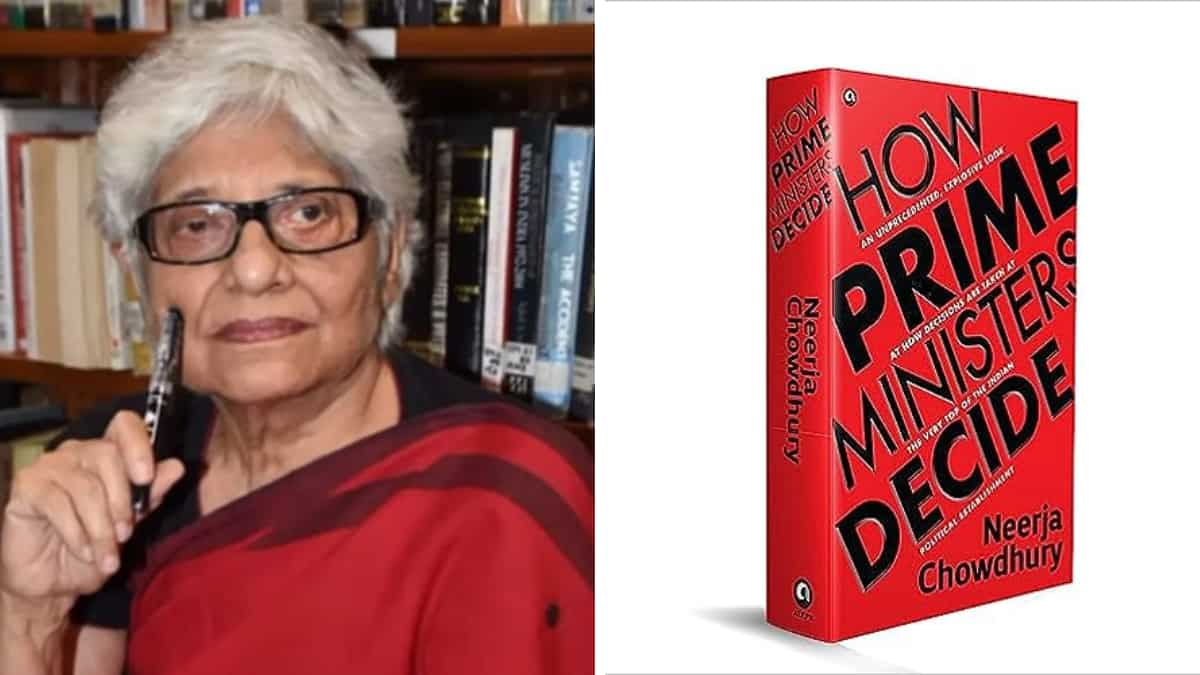
    Award-winning journalist and political commentator Neerja Chowdhury in her book “How Prime Ministers Decide” attempts to tell the story of the other side of the prime minister’s life, which is filled with failure, rejection, self-doubt and sometimes even the idea of quitting.

    In a candid interview with WION over her book, Chowdhury speaks about how history has many times failed to capture the processes that have led to the historic decisions taken by the prime ministers.

    The book, which is an eye-opening account of the historic decisions taken by the six prime ministers of India, has made it to the shortlist for the 7th annual Kamaladevi Chattopadhyay New India Foundation Book Prize.

    The book was also among the three requested by Delhi’s former chief minister, Arvind Kejriwal, when he was in jail. Commenting on this incident, Chowdhury says that she hopes to discuss the book with the Aam Aadmi Party leader someday.

    Here is the fulltranscript of the interview:

    A very unprecedented situation arose when Delhi’s then-Chief Minister Arvind Kejriwal was arrested and sent to jail. During his time in prison, he asked for a few books that included Mahabharata, Ramayana and also your book “How Prime Ministers Decide”. After he came out of prison, he resigned from his position. Do you think that this book may have influenced his decision in some way?

    I got to know that Arvind Kejriwal read it from cover to cover and he liked the book. He wanted to read similar books. So, I said that when he comes out of prison, I would like to meet him and ask him what are the bits he liked. And you know, people said the exact opposite of your questions. Many said that Kejriwal was trying to pick the traits of how he would become the prime minister one day.

    I am sure his aim is to try to reach the top. But I see his resignation as a very smart political move because he was sent to jail with the allegations of culpability in the liquor scam case. I would like to have an opportunity for a chat with Kejriwal on my book, which I feel will be very fascinating.

    Also, the fact that the national capital’s then-chief minister decided to read this book when he was at the centre of his fiercest political battle underlines the significance that this book holds in today’s time. How do you feel about that?

    Well, I felt good. The book has been written over the years. I wrote the book during the pandemic. During those two years, my movement remained restricted from the computer table to the dining table to the bed.

    The book encompasses the intense period of living with the prime ministers and the different political players who shaped things in the last 55 years. I signed up for the book in 2017 but did very little work at that time because of daily commitments.

    I pulled out all my notebooks, filled with notes taken throughout my journalistic years, which I had kept very carefully. These notebooks had copious notes of on-the-record and off-the-record information shared by anyone. So, if somebody like Kejriwal read and liked the book, I felt happy. But, I have to say this: I would really like younger people to read it.

    The book has a very fresh humane take on the lives of the prime ministers. Like in the case of Indira Gandhi, we see all shades of her personality – the weak shades and the strong ones. She has multiple roles to play as a daughter, a mother and a prime minister and there is constant conflict in her mind. In this battle of the human self and of a prime minister – who is believed to be on a pedestal which is devoid of these human conflicts – do they eventually lose themselves?

    Jaipal Reddy, who used to be a Janata Dal leader and later joined the Congress and was also in the ministry of Manmohan Singh, once said to me that people do sharp political analysis and don’t look at the human side of the politician. So, I decided to take one decision per prime minister and put it under the scanner to understand the pressures, lobbies involved and many other factors. In this process, what I got was a very holistic picture of them.

    So, I decided to start the book by saying how lonely it is at the top. Many prime ministers have spoken about the awesome feeling that the buck stops at them and their decision is going to impact the lives of millions, maybe for generations. However, most of the decisions of prime ministers were ad-hoc in nature and were dictated by the compulsion of time – either to retain power or to wrest power. Unfortunately, history captures events but rarely records processes that culminate in those events.

    Two prime ministers who made political capital out of their loneliness and solitude are Indira Gandhi and Narendra Modi.

    In the 1989 general elections, after the Bofors case, Congress had emerged as the single-largest party with 197 seats and the Left had 52 seats, which was giving Rajiv Gandhi a fair chance to try forming a coalition government. However, as you have clearly stated Gandhi did not have the stomach to run a coalition government, which is something every good politician in India should have. Why is history so lenient to Rajiv Gandhi?

    Look, Rajiv came before the coalition politics set in. After his mother’s death, Congress had secured a whopping majority of 414 in the 1984 elections. There was a coalition government for two and a half years under Morarji Desai after Indira Gandhi was routed out post-Emergency. There had not been a history of coalition governments, so Rajiv having ruled with the majority of 414, obviously did not have an appetite for coalition.

    Maybe, he also knew that the government wouldn’t last very long which is what happened. They lasted for only 11 months. So, it could have been a calculation.

    You have also talked about Rajiv Gandhi getting influenced by the last man he talked to. How do you think this shortcoming of Gandhi affected his political decisions?

    I think Rajiv was very politically naive. He got too quickly into the top position. People have called Manmohan Singh the accidental prime minister but I think it was Rajiv Gandhi who was actually the first one. In the morning he was campaigning in West Bengal and by 7 o’clock evening, he became the prime minister of India after her mother Indira was assassinated by her own security people on October 31, 1984.

    When Indira died, Rajiv’s political experience was essentially three years and he had been given easier things to handle. He was forward-looking and talked about taking India to the next century but he lacked experience, particularly of the old India.

    But he failed to understand the caste and community and this was epitomised by Shah Bano’s judgement which came in April of 1985 when an old Muslim woman was granted a maintenance of Rs 119 from her husband who divorced her through Triple Talaq. The Muslims said that the judgement interfered with the Muslim personal law. After this, Rajiv brought a law at the instance of the Muslim community to undo the Shah Bano judgement. It was said that Rajiv was appeasing the Muslims and the word appeasement came into the political lexicon at that time.

    Watch: India: PM Modi Urges People To Guard Against ‘Digital Arrests’

    To placate the Hindus, he facilitated the opening of the locks at the Babri Masjid which had been put there in 1949 when an idol of Ram Lalla was smuggled surreptitiously in the the dead of night and kept in the sanctum sanctorum which is when the Masjid became a disputed structure. So, he ended up pleasing neither the Muslims nor the Hindus.

    During PV Narasimha Rao’s tenure as the prime minister, some very significant events happened like the Babri Masjid demolition and Liberalisation, Privatisation and Globalisation (LPG) reforms in the Indian economy. However, when the 1984 anti-Sikh Riots took place, he was the man who was holding the position of the home minister. What do you think is the defining legacy of Narasimha Rao?

    In 1984, Narasimha Rao was the home minister and was in charge of law and order. However, he did not call the army when the anti-Sikh riots broke out in some parts of North India and Delhi. When Narasimha Rao became the prime minister, the country was in flames – there was Mandal violence, Mandir violence and Jammu and Kashmir was up in arms.

    When bureaucrats went to him to get papers signed, he said, “I knew the situation was bad but I did not realise it was so bad”. He dealt with some critical international issues but again he was the one who was responsible for doing nothing to save the Babri Masjid. So, Narasimha Rao has a very mixed legacy, on one hand, he was forward-looking and on the other hand, his non-decision on Babri Masjid led to the rise of the BJP.

    Atal Bihari Vajpayee was known for his oration skills. He was a poet and a great speaker. However, when he announced the success of the nuclear test, he was seen reading from a piece of paper and had a very statesmanly look on his face. When do you think a politician becomes a statesman and why? Also, now that the speech has stood the test of time, how do you see it in hindsight?

    Atal Bihari Vajpayee was a great orator. When he had to read out something, Vajpayee was not the same speaker. He spoke very spontaneously and took his time to answer questions. So, on the day of the nuclear test, it was decided what he would exactly speak. This was because the world was watching and every word would be scrutinised. 

    So, the speech was worked out very carefully and had very measured words, and Vajpayee didn’t even take any questions that day. 

    Through the prime ministership of Manmohan Singh, it was very well known that Sonia Gandhi was pulling his strings. However, she never really held the position. So, where is Sonia Gandhi’s place in the prime ministerial history?

    When the prime ministerial story of India will be written, Sonia Gandhi will have a very important place in it. This is because she was the influence behind the throne in the prime ministership of Rajiv Gandhi and Manmohan Singh and also played a part in some decisions of Narasimha Rao. So, I have called her half-prime minister during Manmohan Singh’s tenure. 

    Out of the 14 prime ministers, eight of them came from Uttar Pradesh. Why has UP been the power centre of Indian politics? 

    This is because Uttar Pradesh is the largest state in the country and dominates politics because of the large number of MPs. It was also the hub of the freedom movement. Then, the Nehru-Gandhi family, who played a very important role in the freedom movement, lived in Anand Bhawan, which was in UP.

    The importance of the state diminished during Narasimha Rao’s regime. And there was a theory that he did it deliberately and gave much more importance to the South. 

    Politics tamfitronics Prisha

    Politics tamfitronics Prisha

    Prisha is a digital journalist at WION. With almost 10 years of experience in international journalism, she majorly covers political and trending stories. She also&n

    viewMore

  • Oral History with Stephen G. Jurczyk, 1962 – 2023

    Oral History with Stephen G. Jurczyk, 1962 – 2023

    NASA Space Technology

    NASA Space Technology Jurczyk for ICYMI 170630

    NASA Acting Administrator Stephen G. Jurczyk

    Credits: NASA

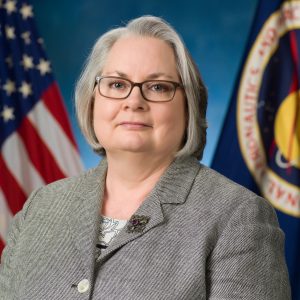
    NASA Space Technology The headshot image of Sandra L. Johnson

    Sandra L. Johnson

    Nov 07, 2024

    Steve Jurczyk’s NASA career began in 1988 at Langley Research Center as an engineer in the Electronic Systems Branch. During his time at Langley, he served in other roles, including director of engineering and director of research and technology.  Jurczyk was named as director of Langley in 2014, then in 2015 he left Langley to serve as the associate administrator for the Space Technology Mission Directorate at NASA Headquarters.  He quickly rose to the rank of associate administrator in 2018, and in January 2021 was named the agency’s acting administrator

    • NASA Oral History, September 22, 1921
    • NASA Honors Steve Jurczyk

    The transcripts available on this site are created from audio-recorded oral history interviews. To preserve the integrity of the audio record, the transcripts are presented with limited revisions and thus reflect the candid conversational style of the oral history format. Brackets and ellipses indicate where the text has been annotated or edited for clarity. Any personal opinions expressed in the interviews should not be considered the official views or opinions of NASA, the NASA History Office, NASA historians, or staff members.

Our Portfolio

Latest Questions

Categories

TAGS

Contacts

Miscellaneous

Categories

SWITCH CURRENCY