Astronomers Find Early Fast-Feeding Black Hole Using NASA Telescopes

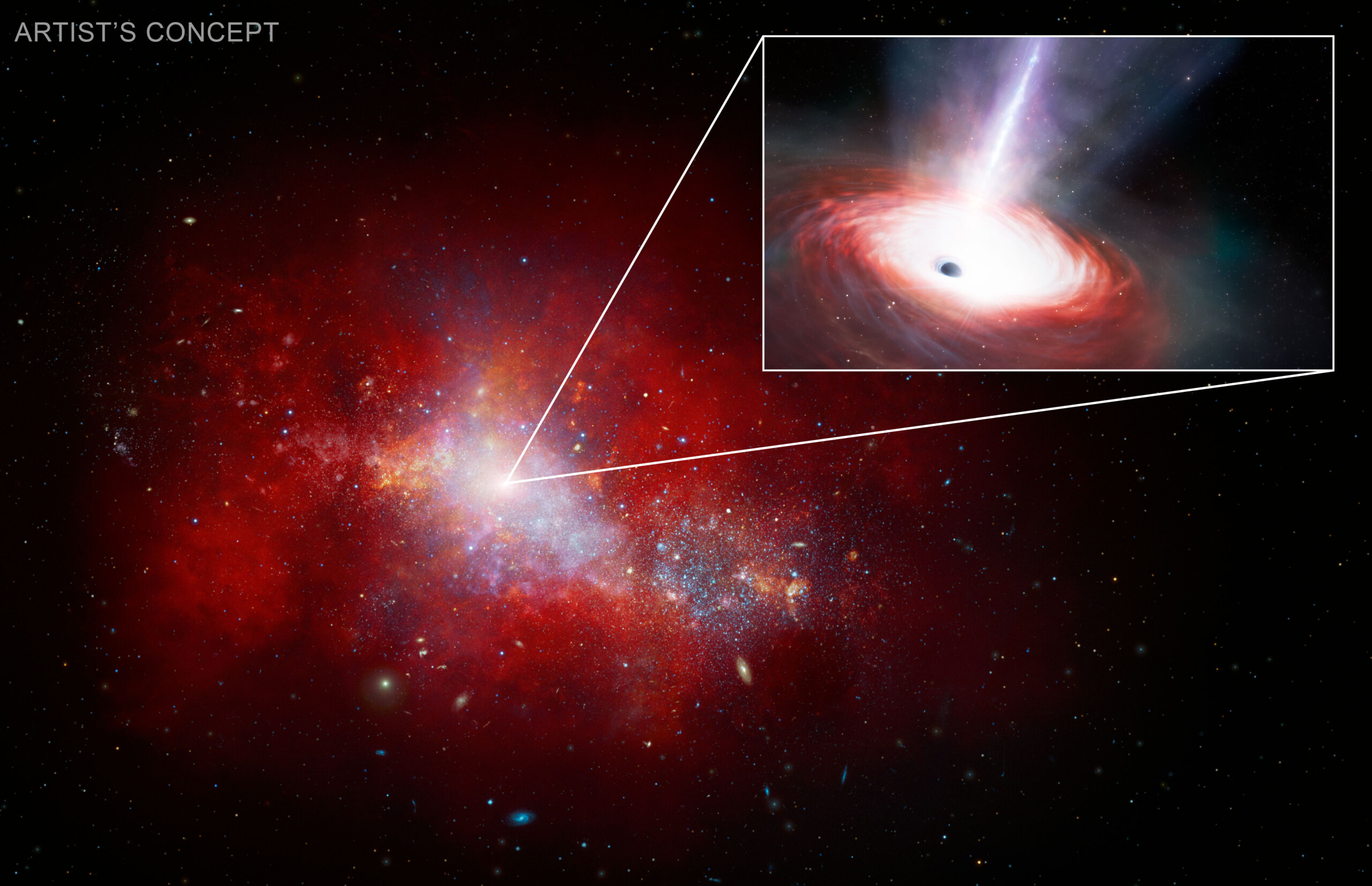
NASA Space Technology A rapidly feeding black hole at the center of a dwarf galaxy in the early universe, shown in this artist’s concept, may hold important clues to the evolution of supermassive black holes in general.Using data from NASA’s James Webb Space Telescope and Chandra X-ray Observatory, a team of astronomers discovered this low-mass supermassive black hole just 1.5 billion years after the big bang. The black hole is pulling in matter at a phenomenal rate — over 40 times the theoretical limit. While short lived, this black hole’s “feast” could help astronomers explain how supermassive black holes grew so quickly in the early universe.Supermassive black holes exist at the center of most galaxies, and modern telescopes continue to observe them at surprisingly early times in the universe’s evolution. It’s difficult to understand how these...