

Tag Archives: Observes
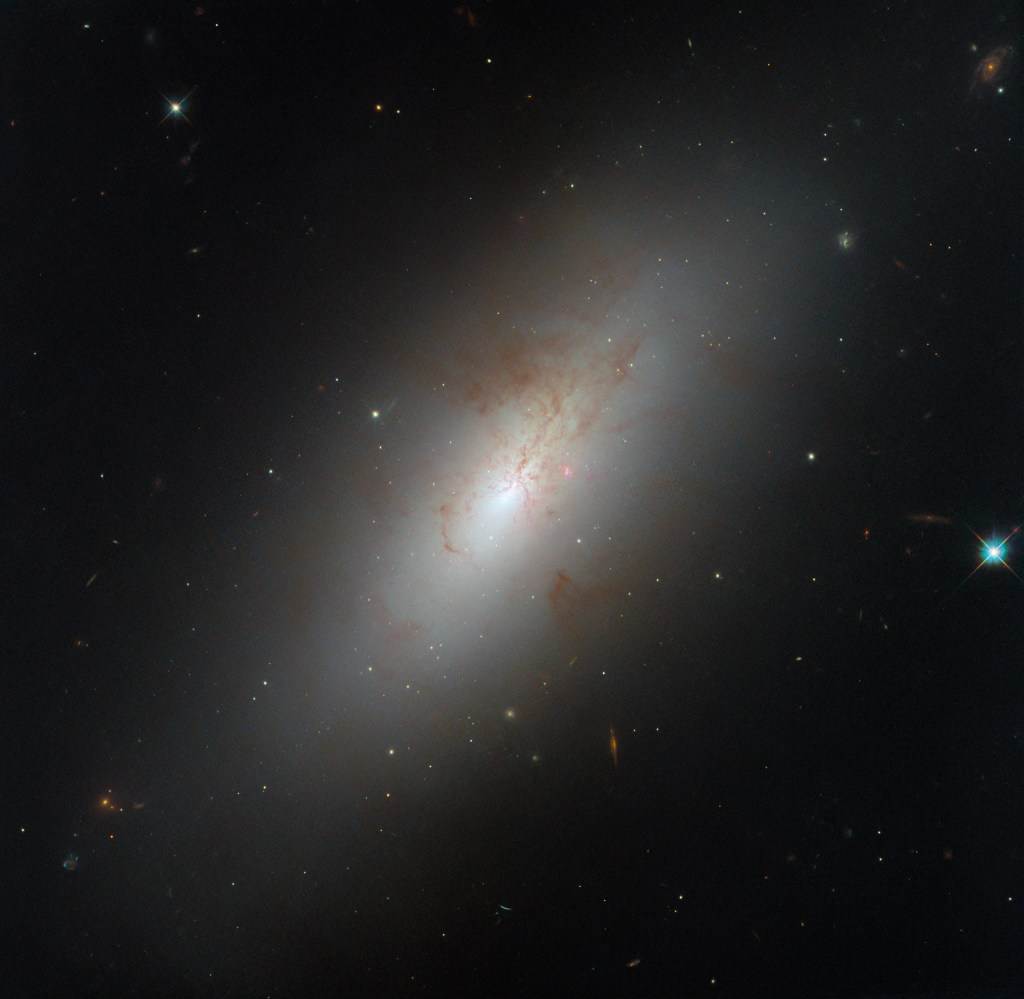
Hubble Observes a Peculiar Galaxy Shape

NASA Space Technology This NASA/ESA Hubble Space Telescope image reveals the galaxy, NGC 4694. Most galaxies fall into one of two basic types. Spiral galaxies are young and energetic, filled with the gas needed to form new stars and sporting spiral arms that host these hot, bright youths. Elliptical galaxies have a much more pedestrian look, and their light comes from a uniform population of older and redder stars. But some galaxies require in-depth study to classify their type: such is the case with NGC 4694, a galaxy located 54 million light-years from Earth in the Virgo galaxy cluster.NGC 4694 has a smooth-looking, armless disk which like an elliptical galaxy is nearly devoid of star formation. Yet its stellar population is still relatively young and new stars are actively forming in its core,...

Webb Observes Hidden Depths of Messier 106

NASA Space Technology NASA has released a stunning new image snapped by the NASA/ESA/CSA James Webb Space Telescope of the active, central part of the nearby spiral galaxy Messier 106.This Webb image shows Messier 106, a spiral galaxy located 20 million light-years away in the constellation of Canes Venatici. Image credit: NASA / ESA / CSA / Webb / J. Glenn.Lying over 20 million light-years from us in the small northern constellation of Canes Venatici, Messier 106 is one of the brightest and nearest spiral galaxies to our own Milky Way Galaxy.Also known as M106 or NGC 4258, the galaxy was discovered by Charles Messier’s observing assistant, Pierre Méchain, in 1781.“Despite carrying his name, Messier 106 was neither discovered nor catalogued by the renowned 18th century astronomer Charles Messier,” the Webb astronomers said in a...


