The Crew-11 mission was due to depart from NASA’s Kennedy Space Center in Florida.
The NASA SpaceX launch was scrubbed (Image: NASA)
NASA and SpaceX were set to launch the next crew to the International Space Station (ISS) today. However, the launch of Crew-11 was scrubbed just seconds before it was due to leave the Kennedy Space Center in Florida. Well into the 80-second countdown, the mission was aborted due to weather.
Just 65 seconds before launch, the four-strong crew aboard the SpaceX Dragon heard a “hold” call. It said: “Hold hold hold, we are standing down for violation of weather rules.” During the live stream shown by NASA, another alert was heard, saying: “Dragon SpaceX, bad luck on weather there, we just got clipped by a cumulous cloud right over the launchpad so we ended up scrubbing for weather.”
The SpaceX launch was due to go ahead today. (Image: NASA)
A few minutes later, the Kennedy Space Center shared a message on X, reading: “Due to weather, NASA and SpaceX are standing down from todays launch attempt.”
As the launch was aborted, NASA and SpaceX teams began offloading the rocket to allow the crew to disembark. The launch has been rescheduled for 11.43am from the Kennedy Space Centre.
The Crew Dragon capsule Endeavour, aboard the Falcon 9 rocket, was due to embark on its sixth human spaceflight. This would have made it the mostflown Crew Dragon ever built.
Commander Zena Cardman and pilot Mike Fincke were joined onbaord Kimiya Yui and Oleg Platonov. It marked the first mission for Cardman and Platonov.
Following a successful launch in the future, the crew will spend at least six months on the orbiting lab to relieve the team sent up in March to stand in for two astronauts grounded by spacecrafts issues.
It will take approximately 39 hours to reach the ISS, which would be a new record for Crew Dragon docking time and mean the astronauts arrive between August 2 and 3.
Crew-11’s launch marks the eleventh crew rotation flight as part of NASA’s Commercial Crew Programme, and the twelth human-rated Dragon launch.
Read Next
Invalid email
We use your sign-up to provide content in ways you’ve consented to and to improve our understanding of you. This may include adverts from us and 3rd parties based on our understanding. You can unsubscribe at any time. Read our Privacy Policy
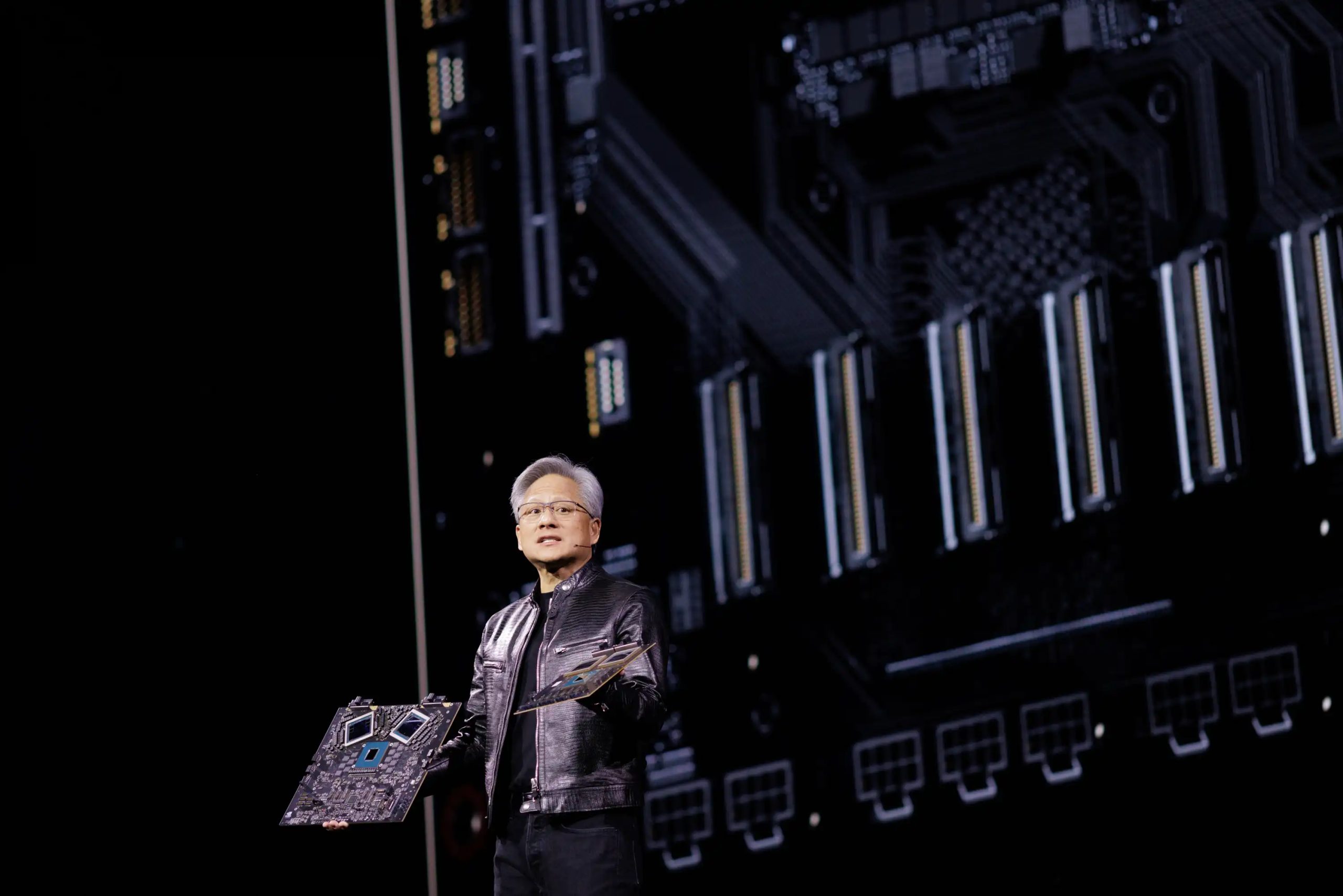
The companies want to ground AI models in science and engineering to grow industrial know-how.Nvidia is putting its AI infrastructure, models, and libraries together with virtual twin technology from 3D design software vendor Dassault Systèmes to build a shared architecture the companies describe as “science-validated industry world models.”
It’s a deepening of their existing collaboration with “a shared long-term vision for how industrial AI will be built, validated and deployed at scale,” the companies said.
Nvidia is multiplying its partnerships with developers of industrial design software. It recently expanded the integration options for its Omniverse development platform farther into physical AI applications, building the Omniverse libraries into Siemens Digital Twin Composer as well as integrating into products and services from Accenture, Microsoft, Ansys, Cadence, and others.World modelsDassault Systèmes CEO Pascal Daloz talked up the partnership’s potential for...
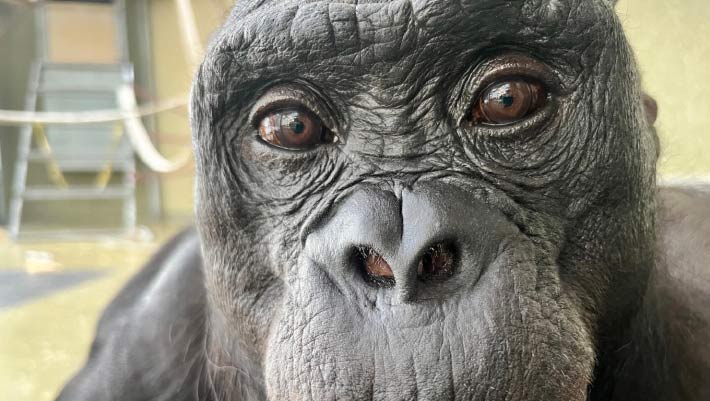
The consistent performance of Kanzi the bonobo in pretend play experiments suggests that the mental capacity to imagine nonexistent objects may trace back 6 to 9 million years, rewriting assumptions about the uniqueness of human imagination.Kanzi the bonobo. Image credit: Ape Initiative.“It really is game-changing that their mental lives go beyond the here and now,” said Dr. Christopher Krupenye, a researcher at Johns Hopkins University.
“Imagination has long been seen as a critical element of what it is to be human but the idea that it may not be exclusive to our species is really transformative.”
“Jane Goodall discovered that chimps make tools and that led to a change in the definition of what it means to be human and this, too, really invites us to reconsider what makes us special and what mental life is out...
Bailey G. LightFeb 03, 2026Rapid advances in commercial space, artificial intelligence, and edge computing are transforming what is possible for Earth observation. By pushing more intelligence onboard, missions can move from passively collecting data to actively interpreting and responding to changing surface conditions in near-real time, enabling more targeted observations and dramatically improving the value of data returned to the ground. Within this context, land-focused applications such as regenerative agriculture, sustainable forestry, and broader land resilience efforts stand to benefit enormously from satellites that can adapt what, when, and how they sense based on dynamic environmental signals and algorithmic insight rather than fixed schedules or static acquisition plans.
NASA Earth Science Technology Office (ESTO) invites participants to design small satellite (SmallSat) mission concepts that leverage adaptive sensing and onboard processing to enhance regenerative agriculture, forestry, or...
Criticism of the 2025–2030 Dietary Guidelines for Americans (DGA) is less about specific food categories such as red meat, dairy or plant-based products, and more about structure and governance, according to Neal Barnard, president of the Physicians Committee for Responsible Medicine.
Rather than focusing on whether the government is promoting the “right” or “wrong” foods, Barnard argues that the guidelines no longer function as a coherent framework grounded in nutrition science. Instead, he describes the DGA as a negotiated policy document shaped by scientific evidence, industry influence and political compromise simultaneously.
As a result, the guidelines operate less as a unified health model and more as a layered policy framework that attempts to balance competing priorities, Barnard said. This structure, he argues, creates internal contradictions and produces mixed signals for consumers, institutions and policymakers who rely on...
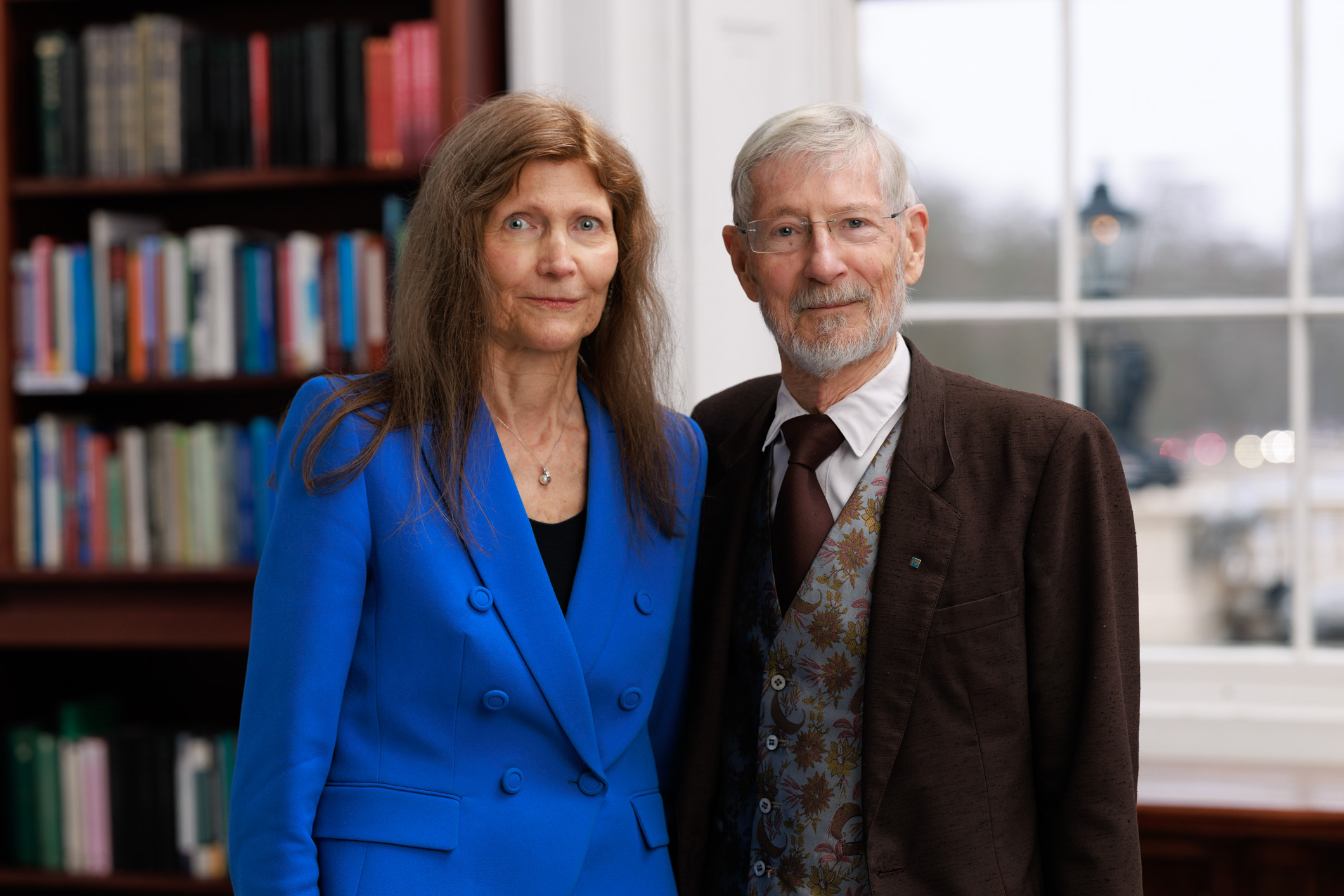
Cochlear Implant Pioneers and MED‑EL Founders Ingeborg and Erwin Hochmair Honoured with 2026 Queen Elizabeth Prize for EngineeringOne of the world’s most prestigious engineering awards recognises life‑changing medical innovationThe 2026 award honours pioneering cochlear implant technology that has transformed hundreds of thousands of livesThis achievement highlights decades of innovation at the intersection of engineering and medicineFebruary 3, 2026 – London, United Kingdom: MED‑EL celebrates a historic milestone: its founders, Ingeborg and Erwin Hochmair, have been named, together with other outstanding personalities, as Laureates of the 2026 Queen Elizabeth Prize for Engineering—one of the world’s most prestigious honours for life‑changing technological innovation.
The 2026 Queen Elizabeth Prize for Engineering recognises the design and development of modern neural interfaces—technologies that restore lost human functions—and the visionary engineers behind them.
Ingeborg and Erwin Hochmair are honoured alongside Graeme Clark and...
Less than a year after his appointment, Bhavnish Lathia has resigned as chief technology officer (CTO) of Kotak Mahindra Bank, citing personal reasons, extending the lender’s struggle to retain leadership continuity in the role. Lathia had taken over from Silicon Valley veteran Milind Nagnur, who resigned as CTO in January 2025 after serving a little over two years.
In his resignation, Lathia said he was relocating to the US for personal reasons.
“The technology leadership team is stable, mature and ready for broader responsibilities,” he wrote in a letter addressed to managing director Ashok Vaswani. “There is never a good time to resign, but I feel this is the best time for me to step off the stage and let the next generation of technology leaders take centre stage.”Following Lathia’s exit, Kotak Mahindra Bank has appointed Nilesh...
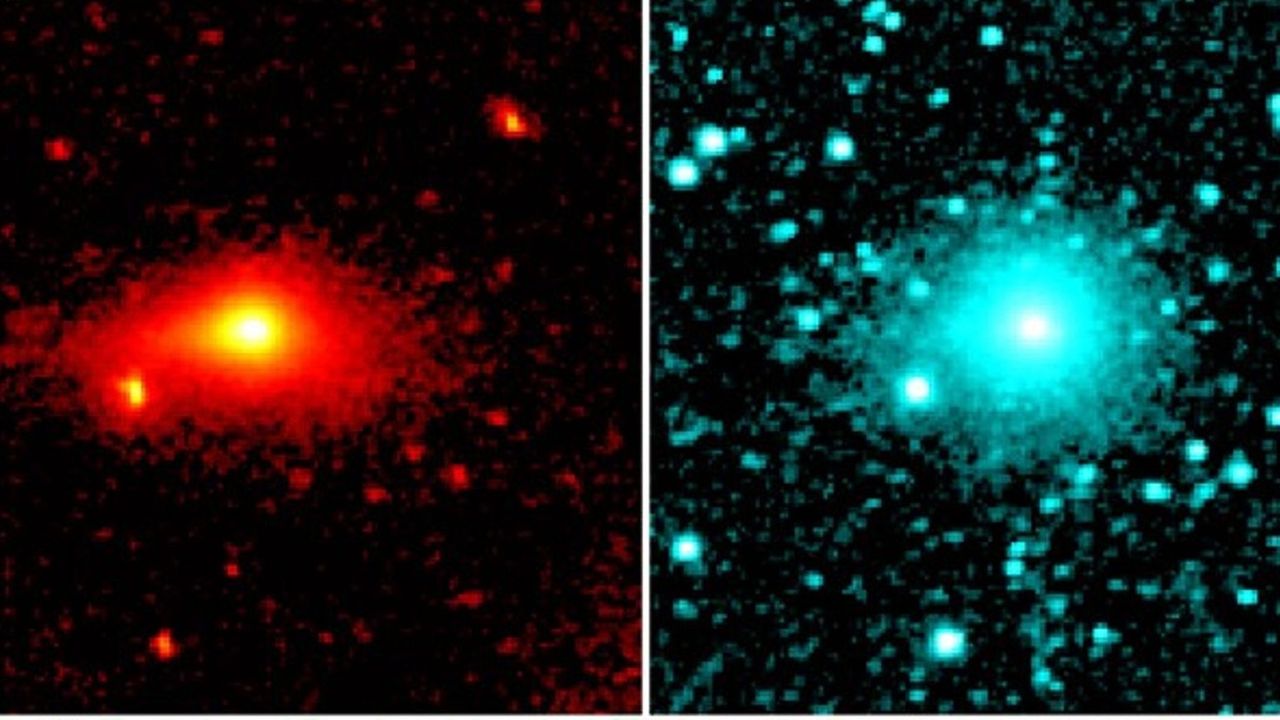
NASA's SPHEREx captured these infrared observations during a December 2025 campaign, revealing dust, water, organic molecules and carbon dioxide in comet 3I/ATLAS's coma.(Image credit: NASA/JPL-Caltech)New infrared observations reveal the rare interstellar visitor comet 3I/ATLAS dramatically brightening during its farewell tour of the solar system.
NASA's SPHEREx (Spectro-Photometer for the History of the Universe, Epoch of Reionization and Ices Explorer) space telescope captured views in December 2025 of the comet releasing a surge of gas, dust and complex molecules two months after the object's closest approach to the sun — a surprising outburst that's giving scientists their clearest chemical look yet at material formed around another star, according to a statement from NASA."Comet 3I/ATLAS was full-on erupting into space in December 2025, after its close flyby of the sun, causing it to significantly brighten," Carey Lisse, lead...
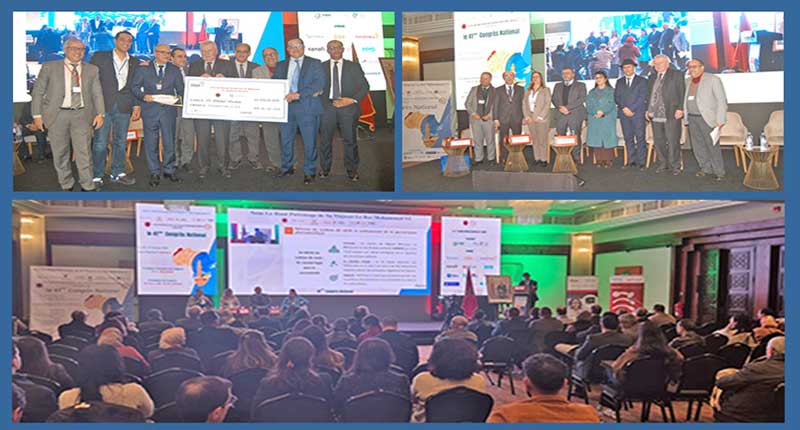
The work of the 41st National Congress of the Moroccan Society of Medical Sciences (SMSM), organized under the High Patronage of His Majesty King Mohammed VI, ended last Saturday in Casablanca.
The closing conference, focused on “South-South Relations: African Academy of Sciences and Health: a strategic lever for research, innovation and training on the continent”, marked the end of this event which brought together a host of medical professionals including doctors, researchers and experts from various disciplines. For two days, wide-ranging exchanges and debates enriched the participants, under the honorary presidency of Professor Lahcen Belyamani.
Opening on Friday, February 6, the 41st National Congress of the SMSM proposed several activities promoting the sharing of expertise and the emergence of concrete avenues for improving...
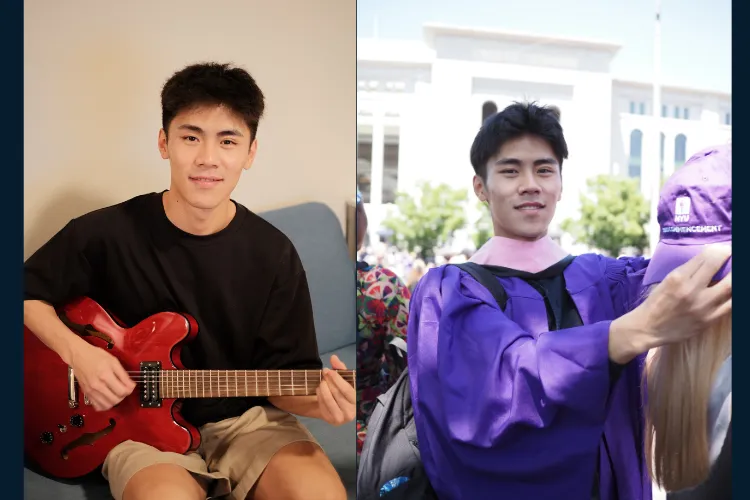
Ziqing Gong is a New York-based composer whose work unfolds where sound, structure, and systems meet. Rooted in contemporary composition and computer music, his practice reflects a sustained inquiry into how musical ideas behave over time, how technology can shape form from within, and how listeners enter and experience sound as an evolving process rather than a fixed object.This following artist profile was provided by Rainyard International Music Advisory, a partner of Digital Music News.
As I have observed across his body of work, Gong approaches technology not as an external tool but as compositional material. Techniques drawn from counterpoint, melodic construction, and formal development are often rearticulated through computational systems, allowing musical ideas to unfold through process rather than fixed repetition. This approach is evident in his use of environments such as SuperCollider, where classical...