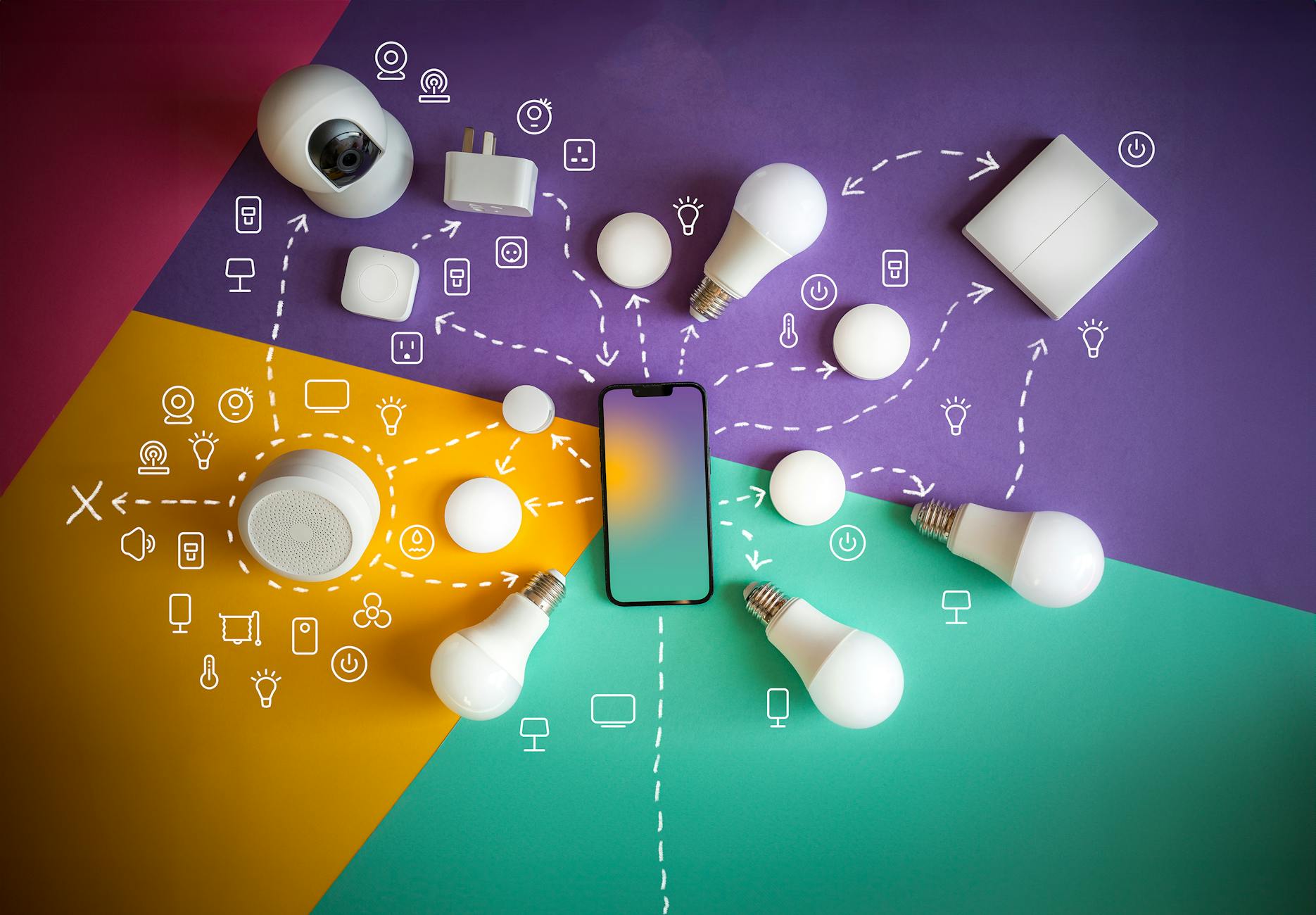
The Internet of Things (IoT) is revolutionising every sector — from agriculture to aerospace. But nowhere is its impact more profound than in electrical systems, both at the residential and industrial level. By enabling devices to communicate, collect data, and react in real-time, IoT is ushering in a new era of smart, efficient, and self-regulating electrical networks.
In this blog, we explore how IoT and smart technologies are transforming electrical systems, with practical applications, real-world benefits, and future trends to watch.
smart grid connected to IoT devices
1. What Is the Internet of Things (IoT) in Electrical Systems?
At its core, IoT in electrical systems refers to the integration of smart sensors, communication modules, controllers, and cloud platforms that allow electrical devices and infrastructure to exchange data and make intelligent decisions.
This convergence enables:
Remote monitoring
Real-time data collection
Predictive maintenance
Energy optimisation
IoT-enabled electrical components
2. Key Components of IoT-Enabled Electrical Systems
Understanding the architecture of IoT in electrical environments involves several layers:
Vibration, current draw, and temperature sensors predict bearing or insulation failure.
Integrates with PLC/SCADA systems.
c. Energy Management Systems (EMS)
Centralised dashboards with real-time loads from multiple units or plants.
Track power factor, load shedding, and energy KPIs.
d. Power Quality Analysis
IoT devices detect harmonic distortions, flicker, sags, and swells.
Enables corrective actions.
e. Preventive Maintenance
Data-driven maintenance planning (e.g., transformer replaced before insulation breakdown).
Reduces unplanned downtime.
A factory floor with IoT nodes on machines
5. Smart Grids and IoT
The Smart Grid is the future of electrical power distribution — and IoT is its backbone.
Features of Smart Grids:
Two-way communication between utilities and consumers.
Dynamic load balancing.
Renewable energy integration (solar, wind).
Grid fault detection and automated rerouting.
Smart grids employ:
Smart relays and breakers
AMI (Advanced Metering Infrastructure)
Wide-Area Monitoring Systems (WAMS)
A geographic map of a smart grid
6. Benefits of IoT in Electrical Systems
a. Improved Efficiency
Devices adjust automatically to load changes.
Avoid peak-hour surcharges by shifting loads.
b. Reduced Downtime
Predictive alerts lead to timely intervention.
c. Energy Savings
Real-time consumption data leads to behaviour change.
d. Remote Access and Control
Switch off appliances or equipment from anywhere.
e. Scalability
Add more devices to the system easily.
sleek infographic comparing Traditional Systems with IoT-Enabled Systems
7. Security Challenges in IoT-Driven Electrical Systems
With great connectivity comes great vulnerability.
a. Cybersecurity Risks
IoT devices can be hacked if not secured.
Utilities are potential targets for ransomware.
b. Data Privacy
User consumption data can be sensitive.
c. Firmware Vulnerabilities
Many devices don’t receive regular updates.
Best Practices:
Use encrypted communication protocols.
Regular firmware updates.
Network segmentation and firewalling.
cybersecurity shield over the smart grid
8. Real-World Case Studies
a. Smart Meters in the UK
Over 32 million smart meters installed by 2024.
Consumers receive detailed energy reports.
b. Shell’s Remote Monitoring System (Nigeria)
Remote wellhead control using IoT sensors and solar-powered telemetry.
c. Tesla Powerwall and Smart Inverter Integration
Real-time load shifting and grid interaction.
Screenshots of real IoT dashboards or smart meter stats
9. Future Trends in IoT and Smart Electrical Tech
a. AI-Powered Load Forecasting
Combine IoT data with AI for advanced predictions.
b. Blockchain in Energy Transactions
Peer-to-peer solar energy trading using smart contracts.
c. Digital Twins
Virtual replicas of electrical systems that simulate failures.
d. Edge AI
Smarter devices that make local decisions without needing cloud interaction.
futuristic control room illustration
Conclusion
IoT and smart technologies are no longer futuristic — they are reshaping how we manage, maintain, and monitor electrical systems today. From homes to heavy industry, the ability to collect real-time data, respond dynamically, and improve efficiency is a game changer.
Whether you’re a homeowner, technician, or engineer, embracing IoT in your electrical environment isn’t just a smart move — it’s a necessary one.
Dec. 7, 2025, 11:11 pm ET
The Tampa Bay Buccaneers have a problem as the NFC South is now in the balance following their Week 14 loss to the New Orleans Saints. The bottom dwellers of the NFC South had two wins coming into Sunday, and they leave Tampa Bay with three, while the Bucs drop a game and are now tied with the Carolina Panthers for the lead.
The Bucs' offense struggled all game long, especially quarterback Baker Mayfield. They missed several times by slim margins, and it ended up costing them the game. On defense, they could not stop the run game or even quarterback Tyler Shough, who had two rushing touchdowns. The game as a whole was a disaster for the Bucs, and now they are left picking up the pieces from yet another...
JAKARTA — Dozens of people were injured and hospitalised after an explosion occurred during Friday (Nov 7) prayers at a mosque inside a school complex in Indonesia's capital Jakarta, police said.
Police were investigating the cause of explosion at the site in Kelapa Gading, North Jakarta, city police chief Asep Edi Suheri told a televised press conference.
The number of people admitted to hospitals was 54, he said, adding the injuries ranged from minor to serious and included burns.
News channels KompasTV and MetroTV showed footage of a police line around the school with ambulances standing by. Images of the mosque showed no extensive damage.
]
Jerusalem Post/Israel News/Defense NewsWhy it took 11 years to return deceased hostage Hadar Goldin from Gaza? - explainerAfter 11 years, Hamas has returned Lieutenant Hadar Goldin. His story reveals how Israel’s policy on hostage deals changed after the Schalit exchange.Activists gather outside Lt. Hadar Goldin's home, hoping for the return of his remains from Gazan terror captivity, Kfar Saba, Israel, November 8, 2025.(photo credit: Of Gal/Flash90)ByYONAH JEREMY BOBNOVEMBER 9, 2025 15:53Updated: NOVEMBER 9, 2025 22:12Loading...
Galliford Try has retaken control of the water system at a delayed south coast care project in an attempt to solve a stubborn legionella problem.
Due to have been completed in 2023, Worthing Integrated Care Centre (WICC) was handed over to the NHS in December last year, after Galliford Try thought it had fixed the issue.
But fresh traces of legionella bacteria were detected in its water supply earlier this year and Galliford Try has now fitted a new, larger water pump, which it believes may resolve the fault.
It has also formally accepted the system back under its control to carry out further remedial work.
Sophie Cox, leader of Worthing Borough Council, said: “We understand how frustrating the delays are for everyone involved in this project ─ the NHS, the GP surgeries relocating and patients, as well as...
Kevin Sumlin Launches National Scholarship Program to Support the Next Generation of Student-Athletes Kevin Sumlin Launches National Scholarship Program to Support the Next Generation of Student-Athletes ...
Image: IDGIf you’re looking for an affordable Windows machine under $500, a blazing fast gaming beast for those intense matches, or a portable 2-in-1 for school or work, you’ve got plenty of great choices right now.
Want to see even more? Take a peek at PCWorld’s list of the top laptops you can get right now.
Meet the GIGABYTE AERO X16, the one notebook that does it all. Powered by the latest AMD Ryzen processors and NVIDIA® GeForce RTX™ 50 Series GPUs, this laptop is perfectly designed to game, create, or simply entertain on the go.Why you should trust us: It’s in our name! PCWorld prides itself on laptop experience and expertise. We’ve been covering PCs since 1983, and we now review more than 70 laptops every year. All of the picks below have been personally...
CHP urges schoolchildren to promptly receive seasonal influenza vaccination as severe paediatric influenza infection case was recorded over two consecutive days
****************************************************************************************** Following yesterday's (October 20) announcement of a case of severe paediatric influenza A infection, the Centre for Health Protection (CHP) of the Department of Health (DH) today (October 21) recorded another severe case. The CHP reiterated its appeal to schools and parents to arrange for schoolchildren to receive free seasonal influenza vaccination (SIV), as it is one of the most effective ways to prevent seasonal influenza and its complications. Vaccination also reduces the risk of serious illness or death from infection.The case involves a 2-year-old girl with underlying illness. She has developed a fever, cough and shortness of breath since October 10. She attended the Accident and Emergency Department of Princess Margaret Hospital on October 16 and was admitted for...
Samuel Boivin/NurPhoto via Getty ImagesFollow ZDNET: Add us as a preferred source on Google.ZDNET's key takeawaysAI video tools now raise real legal and ownership risks.OpenAI says Sora supports creativity, but critics aren't so sure.Generative video could democratize art or destroy it entirely.OpenAI's Sora 2 generative AI video creator has been out for about two weeks, and already it's causing an uproar.
SpongeBob cooking meth.
Ronald McDonald running away from Batman while police cars give chase.
You get the idea. This is the inevitable outcome when you give humans the opportunity to create anything they want with very little effort. We are twisted and easily amused people.
Also: I tried the new Sora 2 to generate AI videos - and the results were pure sorcery
Human nature is like that. First, slightly less mature individuals...
Democrats seem to be losing their grip on the media lately.
We've even seen ABC's Jon Karl pointing the finger at Democrats for not voting to open the government. Then there was CBS Face the Nation host Margaret Brennan busting Sen. Chris Murphy (D-CT) with his own words about prior shutdowns. READ MORE: Liberal Media Just Made a Big Admission About the Schumer Shutdown - Dems Aren't Going to Like This
Priceless: Chris Murphy and Dems Nailed by Liberal Media Host on Schumer ShutdownOn Sunday, Brennan surprisingly caught another Democrat with his own words - House Minority Leader Hakeem Jeffries (NY). Jeffries has been decrying redistricting efforts by Republicans, claiming such efforts are "rigging elections."get a load of this line of questioning from CBS's Margaret Brennan to Hakeem Jeffries aimed...
NewslettersGet the latest talksGet a daily email featuring the latest talk, plus a quick mix of trending content.By subscribing, you understand and agree that we will store, process and manage your personal information according to our Privacy Policy