
Politics
Science vs politics: Kiwi’s long road to EU health-claim approval
In August 2025, Zespri, the world’s largest marketer of kiwifruit, announced that the European Commission had approved what it described as the first health…
TAMFIS NIG LTDRC 8067447CAC ACTIVEFinima, Bonny Island, Rivers State

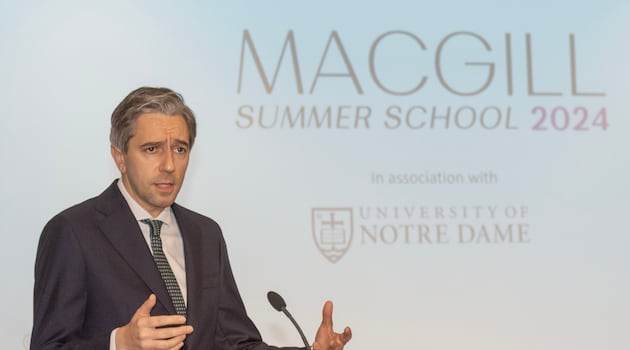
In response to Ireland’s growing population and increasing demands on public services, Taoiseach Simon Harris has put forward a bold proposal to create a Department of Infrastructure. This new department is envisioned as a centralized authority tasked with overseeing billions of euros in capital projects spanning water, energy, and housing sectors. The initiative seeks to improve coordination, reduce bureaucratic obstacles, and ensure projects are delivered on time and within budget. By fostering pragmatic leadership and transparent communication, the proposal aims to address infrastructural challenges while supporting Ireland’s economic competitiveness and social needs.
Ireland is experiencing significant demographic growth, placing unprecedented pressure on its infrastructure systems, from housing supply to water and energy networks. The current governmental framework, spread across multiple departments and agencies, has faced challenges in coordinating large-scale capital projects effectively. Taoiseach Simon Harris’s proposal for a dedicated Department of Infrastructure emerges as a strategic response to these systemic inefficiencies.
The rationale is rooted in the need for a more unified approach to managing infrastructure investments. With billions of euros allocated to capital spending, stakeholders have increasingly voiced concerns about fragmented administrative processes causing delays and cost overruns. By consolidating responsibilities under one department, the government aims to streamline decision-making and project execution.
Moreover, the proposal is not a critique of past government efforts but an acknowledgment that evolving challenges require adaptive governance structures. The department would act as a catalyst for modernizing Ireland’s infrastructure delivery, ensuring that investments translate into tangible benefits for communities and businesses alike.
At its core, the Department of Infrastructure would serve as the lead body for planning, coordinating, and delivering major capital projects across sectors vital to Ireland’s development. These include water supply and sewage systems, energy infrastructure, and housing developments, which are all critical to meeting the country’s socio-economic needs.
One of the primary objectives is to break down bureaucratic silos that currently hinder efficient project management. By fostering interdepartmental collaboration and centralizing expertise, the department aims to reduce redundancies and accelerate project timelines, thereby improving value for public investment.
Additionally, the department would focus on enhancing transparency and accountability in infrastructure delivery. A dedicated team working exclusively on these projects would be less constrained by competing priorities, enabling a sharper focus on outcomes and stakeholder engagement throughout the project lifecycle.
Housing shortages remain a pressing issue in Ireland, with many development projects stalled due to infrastructural bottlenecks such as limited access to water and sewage facilities. The proposed department seeks to tackle these challenges head-on by ensuring that critical infrastructure is developed in tandem with housing initiatives.
By coordinating efforts across sectors, the department would help streamline approvals and resource allocation, reducing delays for housing developers. This integration is expected to facilitate the delivery of social and affordable housing targets, which are essential to meeting the needs of Ireland’s growing population.
Furthermore, the department’s approach would consider the broader economic implications of infrastructure constraints. Addressing these bottlenecks is not only vital for social welfare but also for maintaining Ireland’s competitiveness in attracting investment and supporting business growth.
Taoiseach Simon Harris frames the proposal within a pragmatic political philosophy that prioritizes effective problem-solving over ideological positioning. He emphasizes the importance of leadership that is responsive to current challenges while preparing for future demands, transcending traditional left-right political divides.
This pragmatic approach involves engaging honestly with the public and stakeholders, clearly communicating what can be achieved and the reasons behind decisions. Harris highlights that politics today requires energy, vision, and optimism to navigate complex global uncertainties and domestic pressures.
By advocating for a dedicated infrastructure department, Harris is promoting a leadership model focused on delivering tangible results. This includes fostering collaboration, managing resources efficiently, and maintaining public trust through transparency, all essential for sustainable governance.
The creation of a Department of Infrastructure promises several significant benefits. First, it would enable more effective delivery of capital projects by consolidating expertise and resources, avoiding duplication of efforts across government entities.
Second, it could enhance Ireland’s ability to respond swiftly to infrastructural needs arising from demographic changes and economic development. A dedicated department would have the agility to prioritize projects based on strategic importance and urgency.
Third, improved coordination could lead to cost savings by minimizing project delays and inefficiencies. Efficient infrastructure delivery supports broader economic growth, improves quality of life, and helps maintain Ireland’s attractiveness as a destination for investment.
While the proposal offers promising prospects, implementing a new department involves complex challenges. Transitioning responsibilities and integrating functions from existing departments require careful planning to avoid disruption in ongoing projects.
There is also the need to define the department’s scope clearly and ensure it has sufficient authority and resources to fulfill its mandate effectively. Balancing centralization with local and sectoral needs will be critical to maintaining responsiveness and inclusivity.
Moreover, political consensus and stakeholder buy-in are essential to ensure the department’s long-term success. Transparent communication and demonstrating early wins will help build trust and validate the department’s role in Ireland’s infrastructure future.
Taoiseach Harris underscores the importance of transparent communication in public policy, especially in a participative democracy. Effective engagement with citizens and stakeholders is vital to bringing people along during complex infrastructure projects that impact communities.
Providing clear, factual information about project goals, timelines, and challenges fosters trust and mitigates misinformation. The department would likely adopt proactive communication strategies to keep the public informed and involved, enhancing legitimacy and support.
Engagement also helps policymakers understand community needs and concerns, allowing for better-tailored solutions. This two-way dialogue is essential for the successful delivery of infrastructure that meets public expectations and contributes to social cohesion.
The proposed Department of Infrastructure represents a forward-looking step towards modernizing Ireland’s approach to capital project delivery. If established, it could transform how infrastructure is planned, funded, and executed, aligning with the country’s evolving needs.
As Ireland faces ongoing demographic growth, climate change pressures, and economic challenges, a dedicated infrastructure body could provide the strategic focus and leadership necessary to navigate these complexities.
Ultimately, the success of this initiative will depend on pragmatic governance, effective collaboration, and sustained commitment to public service excellence. With these elements in place, Ireland can build resilient, sustainable infrastructure that supports prosperity and quality of life for generations to come.
The proposal to establish a Department of Infrastructure marks a significant evolution in Ireland’s approach to managing its vital capital projects. By centralizing responsibility, improving coordination, and embracing pragmatic leadership, the initiative promises to address long-standing challenges in delivering essential infrastructure. While implementation will require careful planning and broad support, the potential benefits—ranging from accelerated housing delivery to enhanced economic competitiveness—are substantial. As Ireland navigates a complex future, this department could become a cornerstone institution, driving sustainable development and improving the quality of life for all citizens.
Originally reported by irishtimes.com. Adapted for our readers.
Keep reading
Politics
In August 2025, Zespri, the world’s largest marketer of kiwifruit, announced that the European Commission had approved what it described as the first health…
News
By Engr. Tamunofiniarisa BrownReading Time: 6 Minutes The conflict between Russia and Ukraine is often framed in the media as a simple battle between…
Politics
Twenty-five years after the September 11 attacks, the family of Marine Travis Fuller reflects on his death in the Iraq War, grappling with the…
TAMFIS NIG LTD
Electrical and instrumentation engineering, bid preparation and consulting, IT and software.