
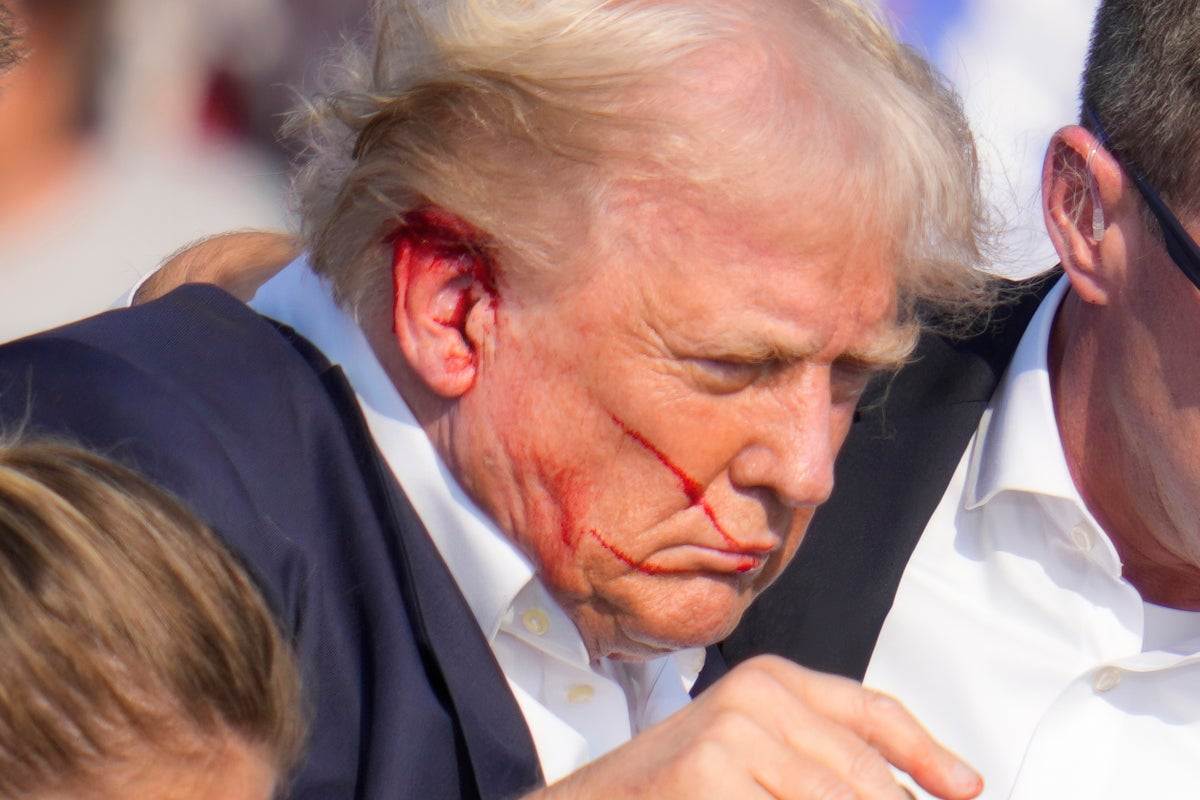
The shocking shooting incident targeting former President Donald Trump at a rally in Butler, Pennsylvania, has jolted the nation. However, the violence that erupted is far from an isolated event; it is the culmination of years of escalating political hostility and division in the United States. The gun that fired was metaphorically primed by a toxic political climate marked by polarizing rhetoric, conspiracy theories, and a growing culture of violence. As the nation braces for the upcoming election, this incident forces a critical reflection on how deeply violence is embedded in the fabric of American politics and what it means for the future of democracy.
The Incident: A Violent Flashpoint at the Butler Rally
On a seemingly routine campaign day at the agricultural show grounds in Butler, Pennsylvania, gunfire erupted, targeting Donald Trump. The attacker, Thomas Matthew Crooks, opened fire amidst a crowd of supporters, creating immediate chaos and fear. Although Trump escaped with minor injuries, the event has become a defining moment of political violence in recent American history.
The imagery from the shooting—Trump being hustled away by Secret Service agents, blood streaming from his ear, with the American flag billowing behind—has been seared into the collective memory. For Trump supporters, this moment was swiftly transformed into a narrative of survival and martyrdom, reinforcing his political persona just days before the Republican National Convention.
The attack has also shifted the political discourse, temporarily suspending partisan attacks and prompting calls for unity against violence. Yet, beneath the surface, the incident reveals deeper fractures within American society and politics, where violence has become a disturbingly familiar undercurrent.
Historical Roots of Political Violence in the United States
Political violence in the U.S. is not a new phenomenon, but its intensity has fluctuated over time. From the assassinations of presidents Lincoln and Kennedy to the violent protests and riots of the 20th century, the nation has a history of political conflict spilling into physical aggression. However, recent years have seen a marked increase in targeted attacks against political figures.
Factors contributing to this surge include growing political polarization, the rise of extremist groups, and the proliferation of firearms. The accessibility of weapons, combined with incendiary political rhetoric, has created an environment where violence is more likely to erupt.
Moreover, social media and online platforms have amplified extremist views and conspiracy theories, often unfiltered and unchecked. This digital landscape has facilitated radicalization and mobilized individuals towards violent actions, making political violence endemic rather than exceptional.
The Role of Rhetoric and Political Polarization
The political rhetoric surrounding Donald Trump has been fiercely divisive, often painting opponents in existential terms. Terms like 'authoritarian,' 'fascist,' and 'threat to democracy' have been used by both supporters and detractors, escalating tensions rather than fostering dialogue.
Ohio Senator JD Vance, a prominent Trump ally, highlighted how this rhetoric contributed directly to the shooting, underscoring that such violent acts are not isolated but symptomatic of a toxic political atmosphere. The demonization of political figures fuels anger and justifies extreme actions in the eyes of some.
At the same time, politicians have at times exploited this polarization to galvanize their bases. Campaign ads featuring violent imagery and inflammatory language have become common, blurring the line between political contest and incitement. This mutual escalation has entrenched hostility, making political violence more probable.
Conspiracy Theories and Their Violent Consequences
Conspiracy theories have played a significant role in shaping the political landscape and, by extension, the environment in which violence occurs. Claims such as Barack Obama’s alleged ineligibility for presidency and the baseless assertion that the 2020 election was stolen have undermined trust in democratic institutions.
Donald Trump and his supporters have often lent credence to these theories, giving them a veneer of legitimacy. This has emboldened extremist elements who view violence as a justifiable response to perceived threats against their political beliefs.
The tragic mass shooting in Buffalo, New York, where 10 African Americans were killed by a white supremacist wielding an AR-15, is a grim example of how far-reaching the consequences of such conspiracy-driven extremism can be. The same model of rifle was used in the shooting at the Trump rally, highlighting the recurring thread of gun violence linked to political extremism.
Political Exploitation of Violence and Its Hypocrisy
In the aftermath of the shooting, accusations flew across party lines, with some Republicans alleging that Joe Biden incited the attack, a claim lacking evidence but indicative of the charged atmosphere. Representative Mike Collins’s demand for Biden’s prosecution exemplifies how violence is weaponized politically.
This rhetoric is often hypocritical, as many politicians who condemn violence simultaneously employ aggressive tactics and language to energize their supporters. Collins himself had run a campaign ad featuring him shooting a rifle through symbolic political targets, blurring the lines between metaphor and incitement.
Such behavior perpetuates a cycle where political violence is condemned publicly but tacitly encouraged privately. It raises questions about accountability and the genuine commitment of political leaders to de-escalate tensions.
Media Portrayal and Its Impact on Public Perception
The media plays a crucial role in shaping public understanding of political violence. The shooting at the Butler rally received extensive coverage, with imagery and narratives rapidly disseminated across platforms. For Trump supporters, this coverage reinforced a narrative of victimhood and resilience.
Conversely, the media’s portrayal can sometimes sensationalize violence, inadvertently amplifying its impact. The repeated broadcasting of dramatic images risks normalizing such events and embedding them into the political culture.
Balanced reporting that contextualizes violence within broader societal and political trends is essential. Media outlets must navigate the fine line between informing the public and avoiding the glorification of violence or the spread of inflammatory rhetoric.
The Path Forward: Addressing Political Violence in America
The attempted assassination of Donald Trump is a stark reminder that political violence is a pressing issue demanding comprehensive solutions. Addressing the root causes requires bipartisan commitment to reduce polarization and foster respectful political discourse.
Strengthening gun control measures could mitigate the ease with which firearms are accessed by individuals intent on committing violence. Additionally, efforts to counter misinformation and conspiracy theories through education and transparent communication are vital.
Political leaders bear responsibility for setting a tone that discourages violence. Moving beyond partisan point-scoring towards genuine dialogue and reconciliation is essential for restoring trust in democratic processes and safeguarding the nation’s future.
Implications for the 2024 Election and American Democracy
As the 2024 election approaches, the shooting incident adds a volatile element to an already fraught political environment. Donald Trump’s status as a near-martyr figure among his base may bolster his campaign, intensifying partisan divides.
The suspension of campaign attacks following the shooting offers a brief respite, but the underlying tensions remain unresolved. Both parties face the challenge of campaigning responsibly without inflaming passions that could lead to further violence.
Ultimately, the incident underscores the fragility of American democracy in the face of political violence. Ensuring free and fair elections, protecting political figures, and promoting civil discourse are critical to preventing future violence and preserving democratic norms.
Conclusion
The attempted assassination of Donald Trump in Butler, Pennsylvania, is a stark manifestation of the endemic political violence plaguing the United States. Rooted in decades of polarization, amplified by incendiary rhetoric and conspiracy theories, and exacerbated by easy access to firearms, this violence threatens the very foundations of American democracy. Addressing this crisis requires a concerted effort from political leaders, media, and citizens alike to foster respectful discourse, implement sensible gun reforms, and combat misinformation. Only through acknowledging and confronting these challenges can the nation hope to move beyond violence and restore faith in its democratic institutions as it approaches a pivotal election season.