Politics
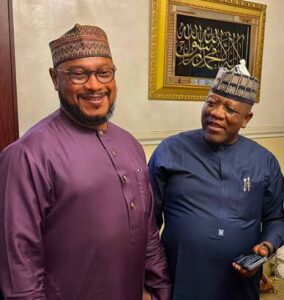
Yari’s 2027 Campaign Strategy: How to Evaluate Claims About Tinubu’s Record
Yari says the APC will emphasise Tinubu’s achievements in 2027. This analysis explains how voters can examine outcomes, baselines and campaign evidence.
TAMFIS NIG LTDRC 8067447CAC ACTIVEFinima, Bonny Island, Rivers State


In a striking intervention, Hollywood star George Clooney has joined a chorus of Democratic-aligned voices urging President Joe Biden to reconsider his bid for re-election in 2024. Clooney’s candid assessment, published in The New York Times, not only reflects internal party concerns but also revives the longstanding tradition of celebrity involvement in U.S. political campaigns. This article explores Clooney’s critique, the historical context of celebrity political endorsements, and the nuanced impact such interventions have had on American elections.
George Clooney, a well-known actor and Democratic fundraiser, recently expressed deep reservations about President Joe Biden’s viability as a candidate in the upcoming 2024 election. Writing in The New York Times, Clooney described his disappointment, noting that the Biden he encountered at a recent fundraiser lacked the vigor and appeal he once had. He contrasted the current Biden unfavorably with the president’s earlier political personas from 2010 and 2020.
Clooney’s concerns extend beyond personal impressions; he claims that numerous Democratic senators, congress members, and governors privately share his view that Biden’s candidacy could jeopardize not only the presidency but also control of the House and Senate. While these opinions are reportedly kept private, Clooney’s public statement underscores a significant internal debate within the Democratic Party about electoral strategy and leadership.
Celebrity involvement in political campaigns is not a new phenomenon. It dates back at least a century, with early examples illustrating how entertainers have long sought to influence public opinion and election outcomes.
One of the earliest recorded celebrity endorsements was by Al Jolson, a major entertainment figure in the 1920s, who supported Republican Warren G. Harding’s 1920 presidential campaign. Jolson even recorded a campaign song, "Harding you’re the man for us," which was part of an innovative media strategy that helped boost Harding’s public profile despite his lackluster reputation. Jolson’s support extended to Harding’s vice president, Calvin Coolidge, in 1924, demonstrating how entertainers have historically aligned with political figures to sway voters.
Frank Sinatra’s political journey further illustrates the complex relationship between celebrities and politics. Initially a staunch Democrat, Sinatra actively campaigned for Franklin Roosevelt and John F. Kennedy, famously recording "High Hopes" to promote Kennedy’s 1960 bid. Sinatra’s efforts reportedly included leveraging connections with organized crime to influence union support, a controversial aspect of his political activism. However, Sinatra’s relationship with the Democratic Party soured after Kennedy appointed his brother Bobby Kennedy as attorney general, who aggressively targeted organized crime. This rift led Sinatra to shift his allegiance to the Republican Party, endorsing Richard Nixon in 1972 and financially supporting Ronald Reagan’s 1980 campaign.
In more recent times, Oprah Winfrey’s endorsement of Barack Obama in 2008 exemplified the powerful impact a celebrity can have on a presidential campaign. Winfrey’s enthusiastic support, including active campaigning and public declarations of pride in Obama’s candidacy, is credited by political analysts with delivering over a million votes. Her endorsement was seen as a pivotal moment that energized the electorate and contributed to Obama’s historic victory.
While celebrity endorsements have historically influenced elections, their effectiveness varies greatly depending on the political climate, the candidate, and the celebrity involved. Clooney’s call for Biden to withdraw highlights the tension between public support and private political calculations within parties.
In the current polarized environment, celebrity interventions can sometimes deepen divisions rather than unify voters. Clooney’s blunt assessment may resonate with some Democrats who are concerned about electoral prospects, but it risks alienating Biden’s supporters who view such calls as undermining party unity.
Moreover, the nature of celebrity influence has evolved with social media and 24-hour news cycles. The rapid dissemination of celebrity opinions can amplify their impact but also expose them to intense scrutiny and backlash. Unlike Oprah’s endorsement in 2008, which was widely celebrated, Clooney’s critique may be perceived as controversial or even damaging within certain voter segments.
The comparison to past celebrity endorsements also reveals shifts in political alliances. Celebrities like Sinatra who switched party loyalties reflect how personal experiences and political contexts shape endorsements. Clooney’s intervention may similarly signal broader strategic debates within the Democratic Party about leadership and electability.
Clooney’s public urging for Biden to step aside adds a high-profile voice to ongoing discussions about the Democratic Party’s direction in 2024. His perspective suggests that some influential figures believe a different candidate might improve the party’s chances in a challenging electoral environment.
However, the decision to withdraw is ultimately Biden’s, and such interventions, while impactful, do not determine political outcomes on their own. The Democratic base, party leadership, and voters will weigh various factors including Biden’s policy record, campaign strategy, and the strength of potential challengers.
Celebrity endorsements and critiques will continue to play a role, but they are one element among many in the complex calculus of American elections. Clooney’s statement may prompt further debate within the party and among voters about the best path forward.
George Clooney’s call for President Joe Biden to exit the 2024 race underscores the enduring and evolving role of celebrities in American politics. From early 20th-century campaign songs to modern-day endorsements, entertainers have sought to sway public opinion and influence electoral outcomes. Clooney’s candid critique highlights internal party concerns and the challenges faced by incumbents in a polarized political landscape. However, the ultimate decision rests with Biden and the Democratic electorate, who will balance celebrity voices with broader political considerations. As the election approaches, the interplay between celebrity influence and voter sentiment will remain a dynamic and closely watched aspect of the democratic process.
Originally reported by crikey.com.au. Adapted for our readers with AI assistance.
Keep reading
Politics
Yari says the APC will emphasise Tinubu’s achievements in 2027. This analysis explains how voters can examine outcomes, baselines and campaign evidence.
Lifestyle
Obi says his wife funds her own purchases. This analysis separates his explanation, unverified handbag prices and the evidence needed to assess public spending.
Politics
Politics tamfitronics Minnesota Gov. Tim Walz attends a rally in Asheville, North Carolina, on Sept. 17. Minnesota led the way on in...
TAMFIS NIG LTD
Electrical and instrumentation engineering, bid preparation and consulting, IT and software.