
News
RUSSIA versus NATO and BRICS vs. NATO Military SWOT
Recall that Poland’s Minister Sikorski’s core claim is partially supported by the numbers, but the framing “quite quickly” and “without the U.S.” does not…
TAMFIS NIG LTDRC 8067447CAC ACTIVEFinima, Bonny Island, Rivers State

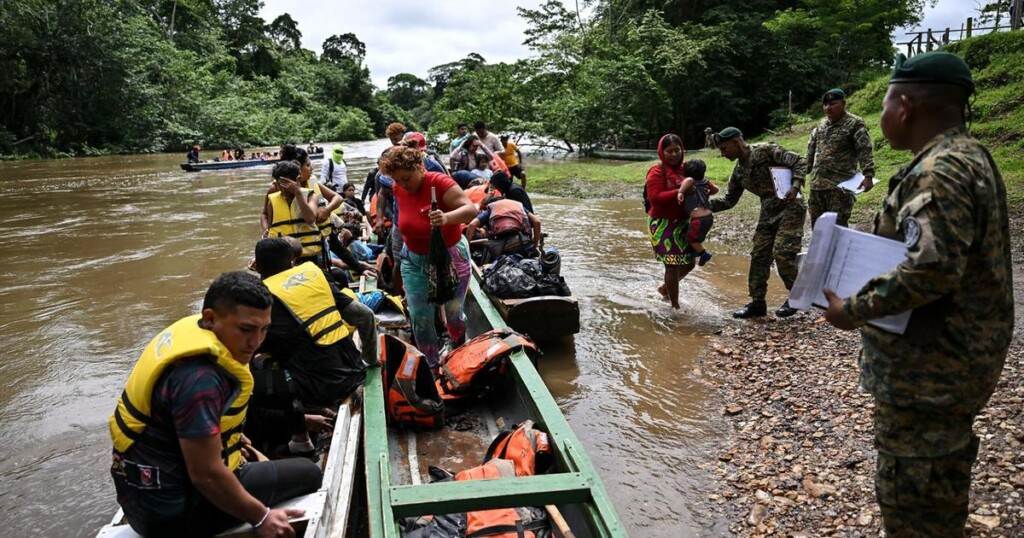
The Darién Gap, a dense and perilous stretch of jungle between Colombia and Panama, has long been a daunting obstacle for migrants journeying from South America to the United States. Recently, the U.S. government announced plans to assist Panama in deporting migrants crossing this hazardous region. This collaboration is part of a broader strategy to manage migration flows, improve border security, and address the humanitarian challenges faced by vulnerable populations undertaking this dangerous trek. This article explores the complexities of the Darién Gap migration route, the details of the U.S.-Panama initiative, and its potential implications for migrants and regional migration dynamics.
The Darién Gap is a dense, roadless expanse of rainforest and swampland spanning approximately 100 miles between Colombia and Panama. It represents the only break in the Pan-American Highway, making it a natural barrier for overland travelers. Migrants often face extreme environmental hazards including dangerous wildlife, harsh terrain, and unpredictable weather, complicating their journey northward.
Beyond natural dangers, the Darién Gap is notorious for its lack of infrastructure and security presence, which exposes migrants to risks such as exploitation by criminal groups, human traffickers, and armed militias. These factors contribute to the region's reputation as one of the most perilous migration routes in the world, deterring many but compelling others desperate to reach the United States.
Despite these challenges, the Darién Gap remains a crucial transit point for thousands of migrants annually. Most migrants crossing here come from countries like Haiti, Cuba, Venezuela, and parts of Africa and Asia, seeking asylum or better economic opportunities in the U.S. The increasing use of this route has drawn international attention to the urgent need for coordinated migration management.
In recent years, the number of migrants crossing the Darién Gap has surged dramatically. Factors such as political instability, economic hardship, and violence in countries of origin have driven more people to undertake this treacherous journey. Panama has reported record numbers of migrant arrivals attempting to cross the Gap, overwhelming local authorities and humanitarian organizations.
The humanitarian situation has become increasingly dire, with many migrants suffering from dehydration, injuries, and exposure to tropical diseases. Rescue operations and medical assistance are often limited due to the remote nature of the terrain. The Panamanian government has struggled to provide adequate shelter and support to migrants during their transit.
This migration influx places considerable strain on Panama’s resources and infrastructure. Additionally, it has regional security implications, as irregular migration can contribute to transnational crime and complicate diplomatic relations among countries in the Americas. These pressures have intensified calls for international cooperation to manage the flow effectively.
The United States’ announcement to assist Panama in deporting migrants crossing the Darién Gap marks a significant step in bilateral migration cooperation. This initiative aims to reduce irregular migration by supporting Panama’s efforts to identify, process, and repatriate migrants who enter its territory without authorization.
The cooperation framework involves the U.S. providing financial, logistical, and technical assistance to Panama’s migration authorities. This support includes enhancing border surveillance, improving migrant reception facilities, and facilitating the safe and orderly return of individuals to their countries of origin.
By partnering with Panama, the U.S. seeks to address root causes of migration while strengthening regional border security. The initiative also aligns with broader U.S. migration policies focused on reducing irregular entries at the southern border and promoting legal pathways for migration.
While the deportation initiative aims to manage migration flows, it raises important humanitarian concerns. Many migrants crossing the Darién Gap are vulnerable individuals fleeing persecution, violence, or extreme poverty. Ensuring their rights and access to protection mechanisms remains critical amid deportation efforts.
International organizations and human rights groups emphasize the need for thorough screening processes to identify asylum seekers and victims of trafficking among the migrant population. Without such safeguards, deportations risk violating international protection obligations and exposing individuals to further harm.
The U.S. and Panama have committed to upholding humanitarian standards, including access to medical care, legal assistance, and safe reception conditions. However, implementing these measures in the challenging context of the Darién Gap requires significant resources and coordination with NGOs and multilateral agencies.
The U.S.-Panama deportation cooperation is expected to influence migration patterns across Central and South America. By strengthening border controls and repatriation mechanisms, the initiative may deter some migrants from attempting the dangerous Darién Gap crossing, redirecting flows to other routes or encouraging legal migration channels.
Neighboring countries will likely observe shifts in migration pressures, necessitating enhanced regional collaboration to manage mixed migration flows effectively. Multilateral frameworks, such as those led by the United Nations and the Organization of American States, play a crucial role in fostering comprehensive responses.
However, critics caution that focusing primarily on deportations without addressing root causes—such as violence, poverty, and governance challenges in migrants’ home countries—may only provide short-term relief. Sustainable solutions require coordinated development, security, and migration policies across the Americas.
The initiative raises complex legal questions related to migration law, sovereignty, and international human rights obligations. Panama, as the receiving state, holds primary responsibility for the treatment and processing of migrants within its borders, while the U.S. supports these efforts through assistance programs.
Ensuring that deportations comply with non-refoulement principles—preventing return to persecution or danger—is paramount. Both countries must implement robust asylum screening and due process safeguards to uphold international legal standards.
Additionally, the initiative reflects evolving U.S. migration policy priorities, emphasizing partnerships with transit countries to manage migration upstream. This shift underscores the importance of diplomatic engagement and resource allocation in addressing complex migration challenges.
For the U.S.-Panama collaboration to be effective, ongoing monitoring, evaluation, and transparency are essential. Stakeholders should ensure that the initiative is implemented humanely, respects migrants’ rights, and adapts to changing migration trends.
Increased investment in humanitarian assistance, infrastructure, and capacity-building in Panama will be critical to support migrants safely during processing and deportation. Equally important is expanding legal migration pathways and addressing root causes in origin countries through development and governance programs.
Regional cooperation involving all transit and origin countries, supported by international organizations, can promote more comprehensive and sustainable migration management. Such a holistic approach balances security concerns with humanitarian imperatives.
The U.S.-Panama initiative to assist in deporting migrants crossing the Darién Gap represents a significant development in managing one of the world’s most challenging migration routes. While aiming to reduce irregular migration and enhance border security, the program must carefully balance enforcement with humanitarian protections, ensuring vulnerable migrants receive fair treatment and access to asylum processes. Ultimately, addressing the complex migration dynamics in the region requires coordinated efforts that go beyond deportations, focusing on root causes and sustainable, rights-based solutions. Through continued cooperation, investment, and regional engagement, the U.S. and Panama can contribute to safer, more orderly migration pathways that respect human dignity and international law.
Originally reported by cbsnews.com. Adapted for our readers.
Keep reading
News
Recall that Poland’s Minister Sikorski’s core claim is partially supported by the numbers, but the framing “quite quickly” and “without the U.S.” does not…
Politics
In August 2025, Zespri, the world’s largest marketer of kiwifruit, announced that the European Commission had approved what it described as the first health…
News
By Engr. Tamunofiniarisa BrownReading Time: 6 Minutes The conflict between Russia and Ukraine is often framed in the media as a simple battle between…
TAMFIS NIG LTD
Electrical and instrumentation engineering, bid preparation and consulting, IT and software.