
Top Stories
Discovery beneath soccer field reveals massive medieval convent lost for centuries
NEWYou can now listen to Fox News articles! Researchers recently uncovered a long-lost medieval convent in an unusual location in Denmark: a soccer field…
TAMFIS NIG LTDRC 8067447CAC ACTIVEFinima, Bonny Island, Rivers State

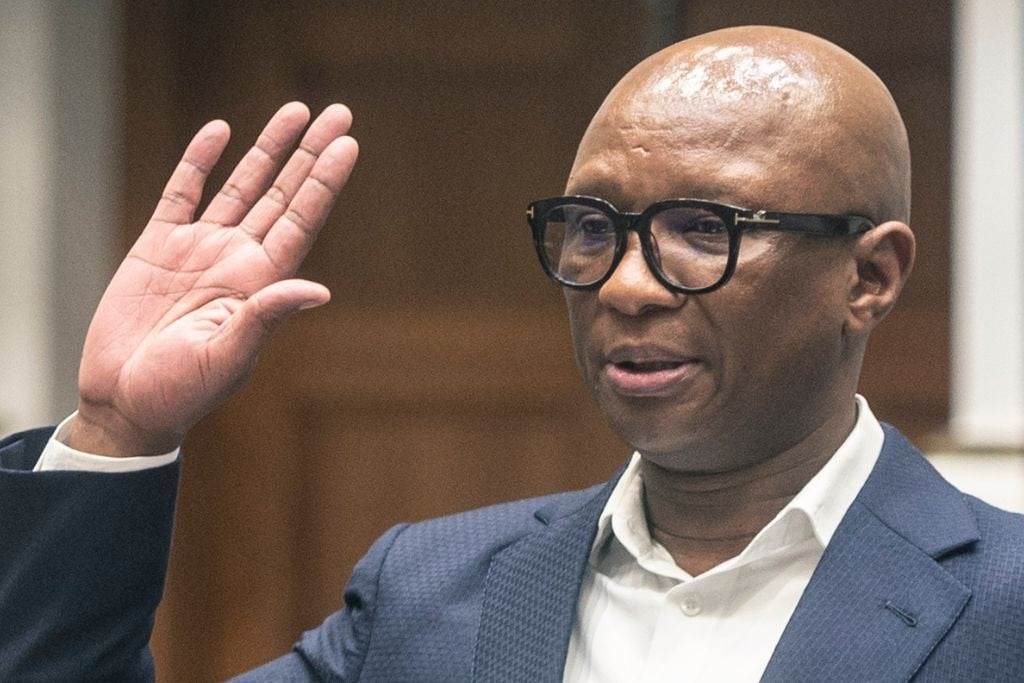
Zizi Kodwa, a prominent figure in South African politics and former Minister of Sports, Arts and Culture, recently returned to Parliament amid controversy. Having resigned his ministerial position following corruption charges, Kodwa’s re-entry as a Member of Parliament (MP) has sparked intense debate. His return appears to challenge the African National Congress’s (ANC) step-aside rule, which mandates that officials facing serious allegations step away from their positions. This article delves into the background of Kodwa’s case, the legal and political implications of his return, public sentiment, and what this development means for governance and accountability in South Africa.
Zizi Kodwa has been a significant player in South African politics for several years, notably serving as the Minister of Sports, Arts and Culture. His political journey is marked by active participation in the African National Congress (ANC) and involvement in key government initiatives. Kodwa’s career took a sharp turn when he was implicated in a corruption case, leading to his resignation from the ministerial post.
The charges against Kodwa center around allegations of corruption that have yet to be conclusively proven in court. Despite this, the accusation alone has had major ramifications for his political standing. His resignation was perceived as a move aligned with the ANC’s internal disciplinary processes and the broader step-aside rule aimed at preserving the integrity of public office.
However, Kodwa has consistently maintained his innocence, asserting that the charges are unfounded. His stance is that he is committed to clearing his name through the judicial process. This position has been a critical factor in his decision to return to Parliament, signaling his intent to continue serving despite the legal challenges.
The ANC’s step-aside rule was introduced as a measure to combat corruption within the party and government by requiring members facing serious allegations to temporarily step down from official duties. The rule aims to uphold ethical standards and public trust by ensuring that accused officials do not wield influence during investigations or trials.
Kodwa’s return to Parliament, despite the ongoing corruption case against him, raises questions about the enforcement and consistency of the step-aside rule. Some critics argue that this move undermines the rule’s purpose, potentially setting a precedent for other accused members to disregard the principle.
Supporters of Kodwa contend that the step-aside rule should not be applied prematurely and that members should be presumed innocent until proven guilty. They argue that his reinstatement is a reflection of due process and respect for legal rights, emphasizing the importance of balancing accountability with fairness.
On a recent Tuesday, Zizi Kodwa was officially sworn in as an MP, joining several others who had missed the initial swearing-in session earlier in the month. The ceremony was not just a procedural event but a symbolic moment reinforcing Kodwa’s political comeback and the ANC’s internal dynamics.
Minutes before the oath-taking, Kodwa spoke to journalists, downplaying the corruption charges and reaffirming his commitment to serving the public. His remarks reflected a confident stance, signaling that he views his return as legitimate and necessary despite the controversy.
The swearing-in also highlighted divisions within the ANC and the broader political landscape. While some members welcomed Kodwa’s return as a positive step, others viewed it as a challenge to the party’s efforts to present a united front against corruption, reflecting ongoing tensions in South African politics.
Kodwa’s return to Parliament while facing corruption charges introduces complex legal considerations. Parliamentary immunity, legal proceedings, and the separation of powers between legislative and judicial branches come into play, complicating the situation further.
While MPs generally enjoy certain protections, these do not extend to shielding members from prosecution for criminal offenses. Kodwa’s presence in Parliament does not halt the legal process, but it may influence perceptions of impartiality and justice, especially given his political influence.
Legal experts emphasize that the judiciary must operate independently to ensure that Kodwa’s case is adjudicated fairly and transparently. The ongoing proceedings will be closely watched as a test of South Africa’s commitment to the rule of law and anti-corruption efforts.
The public response to Kodwa’s return has been mixed, with social media platforms and traditional news outlets reflecting a wide range of opinions. Some citizens express frustration and disappointment, viewing his return as a setback for anti-corruption initiatives.
Others advocate for due process, cautioning against premature judgments and emphasizing the importance of legal rights and fair treatment. This discourse underscores the complexities of balancing justice, political accountability, and public trust in a democratic society.
Media coverage has been extensive, with News24 and other outlets providing detailed reporting and analysis. The coverage highlights the broader implications of Kodwa’s case for governance, political ethics, and the ANC’s internal cohesion, shaping public understanding of the issue.
Kodwa’s case raises critical questions about governance standards and political accountability in South Africa. It tests the effectiveness of measures like the step-aside rule and the ANC’s commitment to rooting out corruption within its ranks.
The situation also impacts public confidence in political institutions, as citizens seek assurance that elected officials are held to high ethical standards. How the ANC and Parliament manage this case could influence perceptions of transparency and integrity in government.
Furthermore, Kodwa’s return may influence future policies and reforms aimed at strengthening anti-corruption frameworks. It underscores the need for clear guidelines, consistent enforcement, and robust mechanisms to prevent conflicts of interest and abuses of power.
Looking ahead, Kodwa’s political trajectory will largely depend on the outcome of the ongoing legal proceedings. A conviction could lead to further disciplinary action and impact his parliamentary role, while an acquittal might bolster his position within the ANC.
For the ANC, managing Kodwa’s case effectively is crucial for maintaining party unity and public credibility. The party faces the challenge of balancing internal loyalty with external demands for accountability and ethical governance.
This episode may also influence the ANC’s broader strategic approach to corruption allegations, potentially prompting revisions to the step-aside rule or other policies to enhance clarity and enforceability in future cases.
Zizi Kodwa’s return to Parliament amid corruption charges encapsulates the tensions between legal processes, political dynamics, and public expectations in South Africa. His case is emblematic of broader challenges facing the country’s fight against corruption and the pursuit of accountable governance.
The ANC’s step-aside rule, while a significant step toward ethical standards, faces tests in its application and consistency, as illustrated by Kodwa’s reinstatement. This situation calls for careful navigation to uphold justice without compromising political rights.
Ultimately, the resolution of Kodwa’s case and the manner in which political institutions respond will have lasting implications for South Africa’s democratic health, public trust, and the ongoing battle against corruption.
The return of Zizi Kodwa to Parliament under the shadow of corruption allegations presents a complex interplay between justice, politics, and public perception in South Africa. While maintaining his innocence, Kodwa’s reinstatement tests the ANC’s step-aside rule and highlights the challenges of enforcing ethical standards within political structures. The outcome of this case will be pivotal in shaping the country’s approach to corruption and governance, underscoring the need for transparent, fair, and consistent application of rules to maintain public trust and democratic integrity.
Source: news24.com. Originally reported there; this article has been adapted for Tamfitronics readers.
Keep reading
Top Stories
NEWYou can now listen to Fox News articles! Researchers recently uncovered a long-lost medieval convent in an unusual location in Denmark: a soccer field…
News
By Engr. Tamunofiniarisa BrownReading Time: 6 Minutes The conflict between Russia and Ukraine is often framed in the media as a simple battle between…
TAMFIS NIG LTD
Electrical and instrumentation engineering, bid preparation and consulting, IT and software.