Politics
Yari’s 2027 Campaign Strategy: How to Evaluate Claims About Tinubu’s Record
Yari says the APC will emphasise Tinubu’s achievements in 2027. This analysis explains how voters can examine outcomes, baselines and campaign evidence.
TAMFIS NIG LTDRC 8067447CAC ACTIVEFinima, Bonny Island, Rivers State

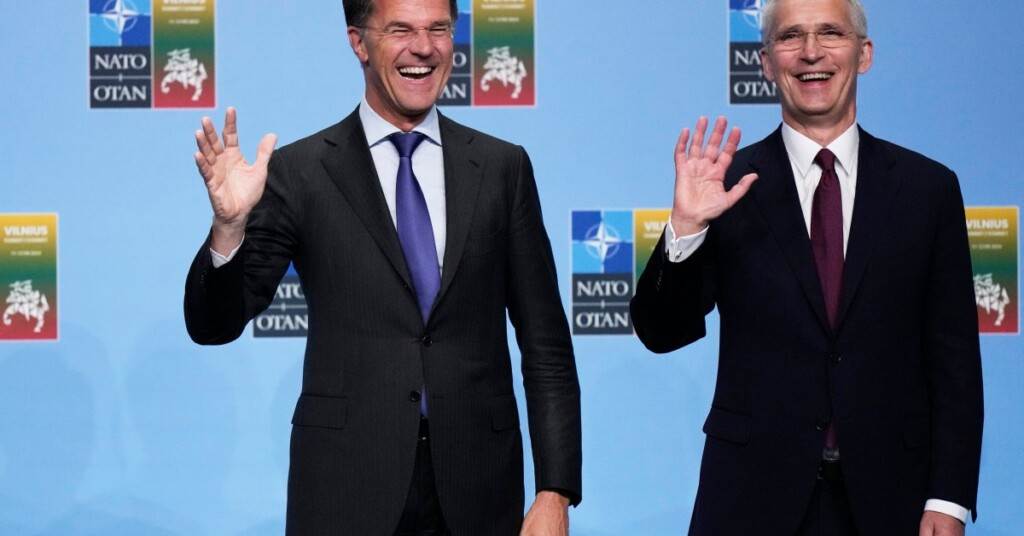
Mark Rutte’s appointment as NATO’s secretary general marks a significant transition from national leadership to a pivotal international role. With over a decade at the helm of Dutch politics, Rutte has honed a unique ability to forge consensus among diverse political factions. As NATO faces unprecedented security challenges, including the Russian invasion of Ukraine, Rutte’s diplomatic skills and pragmatic leadership style will be tested on the global stage. This article explores Rutte’s political background, his path to becoming NATO chief, and the implications of his leadership for the alliance’s future.
Mark Rutte’s political career is marked by his adeptness at managing complex coalition governments in the Netherlands. Serving as prime minister from 2010 until his resignation in July 2023, he led four multiparty coalitions, a testament to his skill in navigating political diversity and maintaining stability. His ability to find common ground among fractious partners earned him the nickname “Teflon Mark,” reflecting his resilience in the face of political scandals and crises.
Rutte’s background is unconventional for a politician of his stature. A history graduate and former human resources manager at Unilever, he brought a pragmatic and down-to-earth approach to governance. His personal style—often seen riding a bicycle or casually interacting with citizens—contrasts with the formal image of many world leaders, signaling accessibility and groundedness.
These qualities will be invaluable as NATO’s secretary general, a role that requires chairing meetings, guiding delicate consultations, and ensuring consensus among 32 member countries. The alliance operates on unanimity, meaning every member has veto power, making diplomatic finesse essential.
Rutte’s selection as NATO chief was not without challenges. Securing unanimous support required persuading skeptical leaders such as Hungary’s Viktor Orbán and Turkey’s Recep Tayyip Erdogan. Rutte agreed to Hungary’s demand that it not be obligated to contribute personnel or funds to NATO’s new support plans for Ukraine, illustrating his willingness to negotiate and compromise to maintain alliance cohesion.
Former NATO spokesperson Oana Lungescu highlights Rutte’s pragmatism and his ability to maintain good working relationships across the political spectrum, including with U.S. presidents Joe Biden and Donald Trump. This bipartisan rapport could prove crucial as NATO navigates uncertainties surrounding the upcoming U.S. presidential election.
Rutte’s diplomatic approach mirrors that of his predecessor, Jens Stoltenberg, who led NATO through a decade of significant challenges. Stoltenberg praised Rutte as a “true trans-Atlanticist” and a “consensus-builder,” expressing confidence that the alliance is in capable hands.
Rutte’s tenure as Dutch prime minister was marked by strong support for Ukraine following Russia’s invasion in 2022. Under his leadership, the Netherlands committed military aid including Leopard tanks and F-16 fighter jets, reinforcing NATO’s collective defense posture.
He has publicly stated that the war on Europe’s eastern flank influenced his decision to seek the NATO secretary general position. His commitment to collective security aligns with NATO’s core mission to safeguard member states against aggression.
As NATO prepares for a summit in Washington focused on supporting Ukraine, Rutte’s leadership will be closely watched. His experience in balancing national interests with alliance solidarity will be critical in maintaining unified support for Ukraine amid varying member priorities.
Rutte’s years in office also refined his skills on the international stage. He cultivated strong relationships with key European leaders such as former German Chancellor Angela Merkel and French President Emmanuel Macron. His familiarity with European Union dynamics offers a nuanced perspective on the NATO-EU relationship, which is vital given the overlapping security interests and potential for cooperation or competition.
Oana Lungescu notes that Rutte’s understanding of EU affairs may help ensure that European defense initiatives complement rather than conflict with NATO’s objectives, a delicate balance at a time when security challenges demand coordinated responses.
His visits to Washington and interactions with U.S. leadership further underscore his transatlantic credentials, positioning him as a bridge between European allies and the United States.
Despite his extensive experience, Rutte faces a complex array of challenges as NATO’s secretary general. The alliance must navigate ongoing tensions with Russia, manage internal divisions among member states, and adapt to evolving security threats including cyber warfare and geopolitical shifts.
Maintaining consensus among 32 diverse members will require continuous diplomatic engagement and strategic vision. Rutte’s history of coalition management provides a strong foundation, but the scale and complexity of NATO’s operations present a new level of difficulty.
Additionally, the upcoming U.S. presidential election introduces uncertainty regarding future American engagement with NATO. Rutte’s ability to sustain strong transatlantic ties will be critical in ensuring the alliance’s continued relevance and effectiveness.
Mark Rutte’s appointment as NATO secretary general comes at a critical juncture for the alliance. His proven ability to build consensus in the politically diverse landscape of Dutch politics offers hope for steady leadership amid global uncertainties. As NATO confronts the challenges posed by Russia’s aggression and evolving security threats, Rutte’s pragmatic and diplomatic approach will be indispensable. While the path ahead is complex, his balanced experience and international rapport provide a strong foundation for guiding NATO into its next chapter of collective defense and cooperation.
Originally reported by time.com. Adapted for our readers with AI assistance.
Keep reading
Politics
Yari says the APC will emphasise Tinubu’s achievements in 2027. This analysis explains how voters can examine outcomes, baselines and campaign evidence.
Lifestyle
Obi says his wife funds her own purchases. This analysis separates his explanation, unverified handbag prices and the evidence needed to assess public spending.
Politics
Politics tamfitronics Minnesota Gov. Tim Walz attends a rally in Asheville, North Carolina, on Sept. 17. Minnesota led the way on in...
TAMFIS NIG LTD
Electrical and instrumentation engineering, bid preparation and consulting, IT and software.