
Politics
Science vs politics: Kiwi’s long road to EU health-claim approval
In August 2025, Zespri, the world’s largest marketer of kiwifruit, announced that the European Commission had approved what it described as the first health…
TAMFIS NIG LTDRC 8067447CAC ACTIVEFinima, Bonny Island, Rivers State

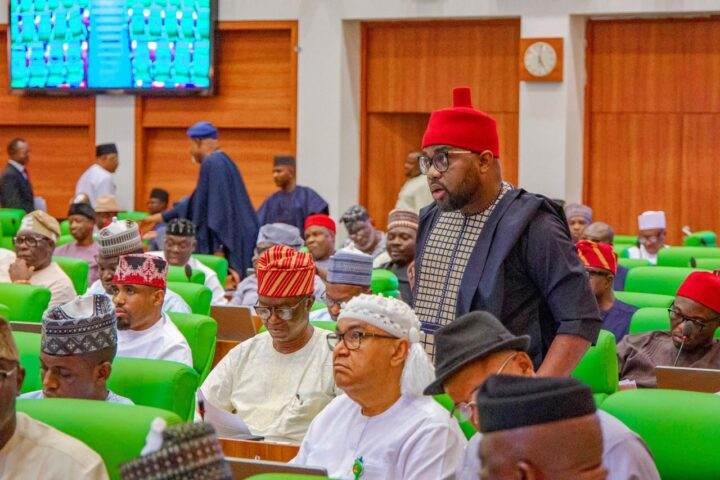
In a significant political development, around 50 members of Nigeria’s House of Representatives have petitioned President Bola Tinubu to release Nnamdi Kanu, the leader of the Indigenous People of Biafra (IPOB), who is currently detained and facing trial for separatist activities. The lawmakers invoke constitutional provisions empowering the Attorney General to discontinue cases in the public interest and emphasize that Kanu’s release could foster peace, promote national unity, and address longstanding grievances in the South-East region. This article examines the lawmakers’ appeal, the context of Kanu’s detention, and the potential implications for Nigeria’s political landscape.
Nnamdi Kanu is a prominent activist and leader of the Indigenous People of Biafra (IPOB), a group advocating for the independence of the Biafra region in southeastern Nigeria. The movement has been a source of tension and conflict, with the Nigerian government labeling IPOB’s activities as separatist and prosecuting its leaders accordingly. Kanu’s detention and ongoing trial at the Federal High Court in Abuja have drawn significant domestic and international attention.
Recently, Kanu expressed willingness to negotiate an out-of-court settlement with the government, signaling a possible avenue for dialogue. However, his detention remains contentious, especially among South-East communities who view him as a symbol of their political and cultural aspirations.
On June 19, 2024, approximately 50 members of the Nigerian House of Representatives submitted a letter to President Tinubu, urging him to direct the Attorney General of the Federation, Prince Lateef Fagbemi SAN, to invoke his constitutional powers to discontinue Kanu’s trial and facilitate his release. The appeal is grounded in Section 174(1) of the 1999 Constitution and Section 107(1) of the Administration of Criminal Justice Act 2015, which empower the Attorney General to discontinue prosecutions in the public interest.
The lawmakers, representing multiple political parties including the Labour Party, PDP, APC, APGA, and NNPP, emphasized that releasing Kanu could serve as a pivotal gesture toward restoring peace in the South-East. They argue this act would encourage inclusivity, promote national unity, and provide an opportunity to address the root causes of unrest and agitation in the region.
Ikenga Ugochinyere, representing Ideato Federal Constituency, noted that the letter was endorsed by representatives from diverse geopolitical zones, reflecting a broad consensus on the issue.
The lawmakers framed their appeal within the context of President Tinubu’s 'Renewed Hope' agenda, a policy framework aimed at promoting national unity, economic development, and political reform. They expressed confidence that releasing Kanu would align with the administration’s goals by fostering dialogue and reducing regional tensions.
The letter cites previous government interventions where clemency and peace-building efforts yielded positive results, such as the handling of cases involving activists Omoyele Sowore and Sunday Igboho, and initiatives in conflict-prone regions like the Niger Delta and North-East. These examples underscore the potential benefits of a reconciliatory approach in the South-East.
By releasing Kanu, the lawmakers believe the administration would demonstrate a commitment to justice, fairness, and the rule of law—principles essential for Nigeria’s democratic stability.
The South-East region has experienced persistent unrest linked to separatist agitation, economic marginalization, and security challenges. The lawmakers contend that Kanu’s release could dismantle the cycle of violence and restiveness, enabling the region to focus on economic growth and development.
They argue that facilitating dialogue with IPOB and other stakeholders would help address long-standing grievances, reducing tensions that have hindered investment and social cohesion. The letter suggests such a move could also improve the region’s participation in national conversations amid ongoing constitutional reforms.
Moreover, Nigeria is currently grappling with multiple pressures including unemployment, insecurity, hunger, and poverty. The lawmakers assert that easing regional conflicts through political gestures like Kanu’s release could contribute to national stability and progress.
While the call for Kanu’s release is framed as a step toward peace, it raises complex questions about balancing upholding the rule of law with pursuing political reconciliation. Kanu faces serious charges related to separatist activities, which the government views as threats to national unity and security.
The lawmakers’ appeal suggests discontinuing prosecution is not a dismissal of legal accountability but a strategic move to open channels for dialogue and inclusivity. This reflects a broader debate in Nigeria about managing dissent and regional autonomy within a united federation.
The letter underscores the importance of avoiding prolonged political and judicial persecution, advocating dialogue and negotiation as tools for resolving conflicts.
The appeal letter was signed by lawmakers from diverse political parties: 23 from the Labour Party, 10 from the People’s Democratic Party (PDP), nine from the All Progressives Congress (APC), three from the All Progressives Grand Alliance (APGA), and one from the New Nigeria Peoples Party (NNPP).
This cross-party representation signals a rare consensus on addressing the South-East’s challenges through inclusive political gestures. It reflects recognition among lawmakers that the issue transcends partisan politics and requires a national solution.
Such unity among federal legislators could influence executive decision-making and encourage broader national dialogue on regional grievances and constitutional reforms.
The formal appeal by approximately 50 Nigerian federal lawmakers to President Bola Tinubu to release Nnamdi Kanu marks a significant moment in Nigeria’s ongoing effort to balance national unity with regional aspirations. Rooted in constitutional provisions and framed within the administration’s 'Renewed Hope' agenda, the request underscores the potential of political reconciliation to foster peace and inclusivity in the South-East. While challenges remain in addressing the legal and security implications of Kanu’s separatist activities, the lawmakers’ call reflects a growing consensus that dialogue and fairness must guide Nigeria’s path forward. The decision to release Kanu could set a precedent for resolving other regional conflicts and contribute to a more stable and united Nigeria amid pressing economic and social challenges.
Originally reported by politicsnigeria.com. Adapted for our readers with AI assistance.
Keep reading
Politics
In August 2025, Zespri, the world’s largest marketer of kiwifruit, announced that the European Commission had approved what it described as the first health…
News
By Engr. Tamunofiniarisa BrownReading Time: 6 Minutes The conflict between Russia and Ukraine is often framed in the media as a simple battle between…
Politics
Twenty-five years after the September 11 attacks, the family of Marine Travis Fuller reflects on his death in the Iraq War, grappling with the…
TAMFIS NIG LTD
Electrical and instrumentation engineering, bid preparation and consulting, IT and software.