
Top Stories
KFF Health News’ ‘What the Health?’: The Supreme Court and the Abortion Pill
Since the Supreme Court overturned Roe v. Wade in 2022, the landscape of abortion rights in the United S...
TAMFIS NIG LTDRC 8067447CAC ACTIVEFinima, Bonny Island, Rivers State

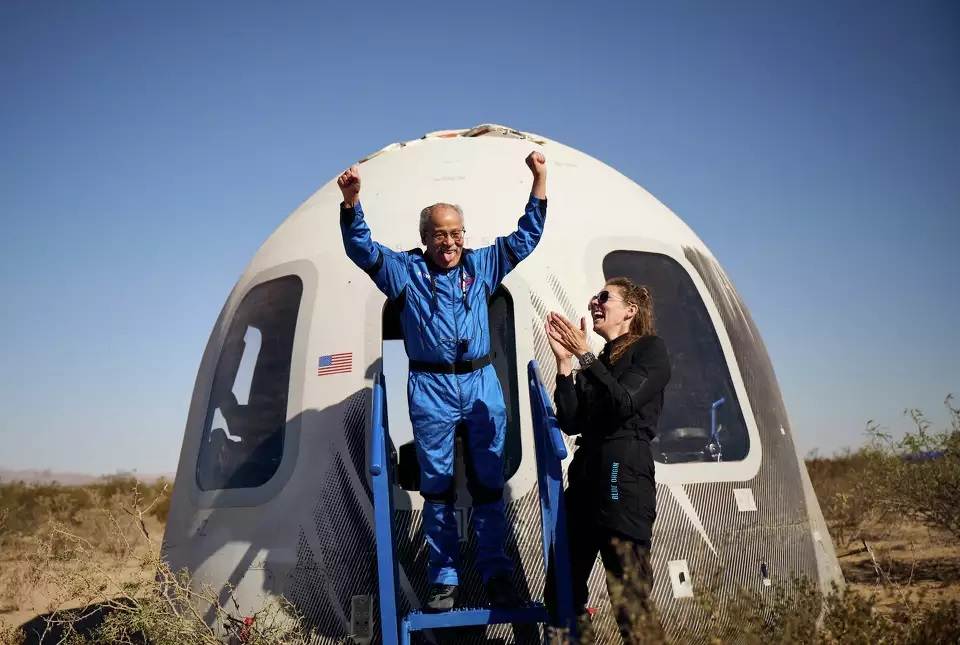
When Ed Dwight climbed aboard Blue Origin's New Shepard rocket on 19 May 2024, he closed a chapter of American space history that had remained open for 63 years. At 90, Dwight became the oldest person to reach space, finally realising a dream deferred since 1961 when the Kennedy administration selected him as the nation's first Black astronaut candidate. The flight was a powerful symbolic victory, yet it also cast a sharp light on a persistent structural problem: the space sector remains overwhelmingly white, and Black professionals are still strikingly absent from engineering labs, mission control rooms and astronaut corps alike.
In 1961, just months after Yuri Gagarin's historic orbit, Edward Murrow, director of the U.S. Information Agency, urged NASA administrator James Webb to enrol and train a qualified Black pilot. The logic was diplomatic as much as scientific: putting a non-white man in space would broadcast American ideals to the "whole non-white world, which is most of it." Ed Dwight, an Air Force test pilot, met every technical criterion. He was the only African American identified from military ranks who qualified for the astronaut candidate programme.
Why Dwight never flew for NASA remains contested. He has long cited President Kennedy's assassination as the moment political will evaporated. Others point to the quieter, systemic barriers that constrained Black advancement throughout the Jim Crow era. Whatever the cause, the result was the same: it took another 22 years before Guion Bluford became the first Black astronaut to reach orbit in 1983. By then Dwight had left the military and begun a celebrated career as a sculptor.
Fast-forward to the 2020s and the demographic picture remains dispiriting. At major industry conferences, Black attendees number in the low dozens out of thousands. Speaker line-ups shrink that figure to single digits. At smaller gatherings, Black professionals often find themselves the only person of colour in the room. This is not a legacy issue confined to history books; it is a live, measurable deficit in the workforce designing, building and operating the next generation of space infrastructure.
The absence matters commercially as well as morally. The global space economy is projected to surpass $1 trillion by 2040, driven by satellite broadband, Earth observation, in-orbit servicing and lunar commerce. Companies that fail to recruit from the full talent pool risk groupthink, blind spots in product design and weaker innovation pipelines. For a sector that prides itself on frontier thinking, the homogeneity of its workforce is a strategic vulnerability.
In 2020, four space industry veterans — retired astronaut B. Alvin Drew Jr, United Airlines interiors engineer Khristian Jones, NASA engineer Tiffany Lockett and AeroVironment executive Will Pomerantz — founded the Patti Grace Smith Fellowship (PGSF). Named after the former FAA associate administrator for commercial space transportation, the fellowship places Black undergraduate students in paid internships at space companies, supplementing the experience with scholarships, mentorship and a peer network.
Since its inception, 104 "Patties" have completed the programme. The earliest cohorts are now entering the workforce. One alumnus works as a Blue Origin engineer and helped coordinate youth outreach activities on the day of Dwight's flight. Another, Emily Burrus, described guiding students at the NS-25 launch as "a once in a lifetime experience" that connected Dwight's resilience to her own trajectory. Adam Ben Youssef, a member of the 2024 class, said the event reinforced a simple lesson: "no matter what I face, I will never give up striving for greatness."
Dwight's suborbital flight was sponsored by Space for Humanity, a non-profit dedicated to expanding access to space. The gesture was meaningful, but symbols alone do not rewrite hiring policies or retrofit university curricula. Sustainable change requires three interlocking levers: early exposure, financial support and cultural accountability.
Early exposure means reaching students before they self-select out of STEM pathways. PGSF targets undergraduates, but the pipeline leaks long before university. Industry partnerships with secondary schools, particularly those serving under-represented communities, can demystify aerospace careers and make them tangible. Financial support must address the hidden costs — unpaid internships, relocation, specialised equipment — that disproportionately exclude lower-income students. Cultural accountability demands that companies publish demographic data, set measurable hiring targets and tie leadership compensation to progress.
Private space companies now dominate launch cadence, satellite manufacturing and crewed flight. This concentration of power creates an opportunity. Firms such as Blue Origin, SpaceX, Rocket Lab and Sierra Space can embed diversity requirements into their supply chains, mandate diverse candidate slates for every role and fund fellowship programmes at scale. Government procurement rules — NASA's Commercial Crew and Commercial Lunar Payload Services contracts, for instance — can reinforce those expectations by scoring diversity performance alongside technical and cost metrics.
Investors, too, have a role. Venture capital funds backing space start-ups can incorporate workforce diversity into due diligence and term sheets. Limited partners allocating capital to space-focused funds should ask for the same transparency they demand on financial returns.
The U.S. experience offers a cautionary template for Nigeria and other African nations building sovereign space capabilities. The National Space Research and Development Agency (NASRDA) and private ventures such as the African Space Industry Top 10 Under 30 initiative are nurturing local talent. Ensuring that women, rural communities and economically disadvantaged groups are represented from the outset will avoid the decades-long catch-up game the American sector is now playing. International partnerships — whether through the African Union's space strategy or bilateral agreements with the European Space Agency — should include explicit knowledge-transfer clauses that prioritise inclusive workforce development.
Ed Dwight's journey from rejected candidate to space traveller is a testament to persistence, but it should not be the template for the next generation. The space sector's credibility as a frontier industry depends on whether it can build pathways broad enough for every Ed Dwight — and every Emily Burrus and Adam Ben Youssef — to walk through without waiting six decades. The fellowships, procurement levers and investor pressure described here are not charitable add-ons; they are operational necessities for a sector that claims to be building the future. If the view from orbit is meant to inspire all of humanity, the workforce that puts us there must look like all of humanity.
Originally reported by spacenews.com. Adapted for our readers with AI assistance.
Keep reading
Top Stories
Since the Supreme Court overturned Roe v. Wade in 2022, the landscape of abortion rights in the United S...
Top Stories
Top Stories Tamfitronics One evening in May, nursing assistant Debra Ragoonanan’s vision blurred during her shift at a state-run Massachusetts vet...
TAMFIS NIG LTD
Electrical and instrumentation engineering, bid preparation and consulting, IT and software.

