Business
Nigeria’s Broken Systems: Why Failure Persists and What Must Change
An analysis of the structural and institutional factors that entrench governance failures in Nigeria, from patronage politics and weakened oversight to the urgent need…
TAMFIS NIG LTDRC 8067447CAC ACTIVEFinima, Bonny Island, Rivers State

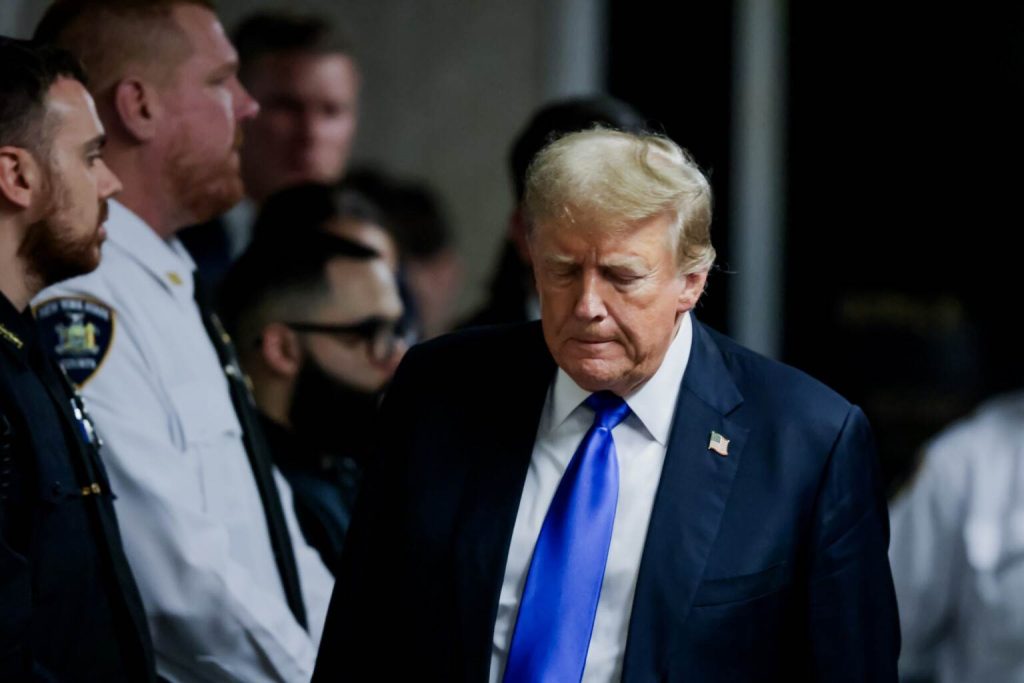
The conviction of former President Donald Trump on 34 felony charges related to hush money payments has ignited a firestorm of controversy and claims that the American judicial system is broken or politically biased. However, a thorough analysis of the trial, the legal procedures involved, and the broader political context demonstrates that the judicial process is operating as intended. This article explores why the verdict should be viewed as a testament to the resilience and integrity of the judiciary, rather than evidence of systemic failure.
Donald Trump's conviction stems from allegations that he engaged in illegal hush money payments, resulting in 34 felony counts. This case is not an isolated incident; earlier in 2024, the Trump Organization was found liable in a separate civil trial for misrepresenting its financial status and was ordered to pay $355 million in damages. These legal challenges collectively underscore the judiciary's role in holding powerful entities accountable.
Critics often describe these cases as 'unprecedented,' a term frequently used during Trump's political career to highlight novel or extraordinary events. While the high-profile nature of the trials is undeniable, the legal proceedings themselves adhere to established judicial standards and processes.
A key point of contention is the perceived overlap between political vendettas and judicial impartiality. Trump and his supporters have framed the trials as politically motivated 'witch hunts' or 'hoaxes.' While political battles and judicial proceedings have coincided, they remain distinct arenas.
Political disputes often involve aggressive tactics and partisan rhetoric, especially during election cycles. However, the judiciary was intentionally designed by the Founding Fathers as a co-equal branch of government, insulated from political influence. This separation ensures that legal decisions are based on evidence and law, not political expediency.
The judiciary's commitment to due process means every defendant, including a former president, is presumed innocent until proven guilty and entitled to a fair trial by a jury of peers. The opportunity to appeal verdicts further reinforces this system of checks and balances.
Some allegations have surfaced regarding potential bias in the trial, such as the background of Judge Juan Manuel Merchan and the Manhattan District Attorney Alvin Bragg's political affiliations. Critics point to Judge Merchan's familial connections and Bragg's campaign promises as evidence of partiality.
While these factors may raise questions, the prosecution still bore the burden of proving guilt beyond a reasonable doubt to a unanimous jury. Convincing 12 jurors to convict a former president on multiple felony counts is a significant legal hurdle, suggesting that the verdict was not a foregone conclusion influenced solely by politics.
Moreover, Trump's public criticisms of the judge, prosecution, and jury underscore the transparency of the process and provide grounds for appeals, which are integral to ensuring judicial fairness.
The polarized reactions to the conviction reveal the dangers of framing judicial decisions as partisan victories or defeats. Trump supporters' claims of a 'rigged system' and some progressives' declarations that 'he got what he deserved' risk undermining public trust in the judiciary.
Disagreement with court rulings is a natural part of democratic discourse, protected under the First Amendment's right to petition for redress. However, when legal outcomes are portrayed as purely political, it threatens to erode the foundational principle that justice is blind and impartial.
Maintaining confidence in the judicial system requires recognizing its role above political fray and appreciating the procedural safeguards that protect every individual's rights.
Despite its imperfections, the American judicial system remains a cornerstone of democracy, distinguishing the nation from authoritarian regimes. Its structure—established by the Founding Fathers—ensures that no individual, regardless of status, is above the law.
The recent convictions against Donald Trump demonstrate that the system can hold even the most powerful accountable, reinforcing the rule of law. This outcome should be viewed not as a failure but as evidence that the judiciary fulfills its constitutional mandate.
As the 2024 presidential election approaches, it is crucial for the public to understand that the health of democracy depends on respecting judicial independence and the legal process, irrespective of political outcomes.
The conviction of former President Donald Trump on multiple felony counts serves as a powerful reminder that the American judicial system, while not flawless, continues to function as a robust and independent arbiter of justice. Despite the intense political climate and vocal criticisms, the legal process upheld principles of fairness, due process, and accountability. As the nation navigates future political and legal challenges, preserving the integrity of the judiciary is essential for sustaining democracy and the rule of law. Ultimately, the system's ability to operate effectively beyond partisan divides is a testament to its enduring strength and the vision of the Founding Fathers.
Originally reported by newsweek.com. Adapted for our readers with AI assistance.
Keep reading
Business
An analysis of the structural and institutional factors that entrench governance failures in Nigeria, from patronage politics and weakened oversight to the urgent need…
Politics
Yari says the APC will emphasise Tinubu’s achievements in 2027. This analysis explains how voters can examine outcomes, baselines and campaign evidence.
Lifestyle
Obi says his wife funds her own purchases. This analysis separates his explanation, unverified handbag prices and the evidence needed to assess public spending.
TAMFIS NIG LTD
Electrical and instrumentation engineering, bid preparation and consulting, IT and software.

