
Business
Nigeria’s Broken Systems: Why Failure Persists and What Must Change
An analysis of the structural and institutional factors that entrench governance failures in Nigeria, from patronage politics and weakened oversight to the urgent need…
TAMFIS NIG LTDRC 8067447CAC ACTIVEFinima, Bonny Island, Rivers State

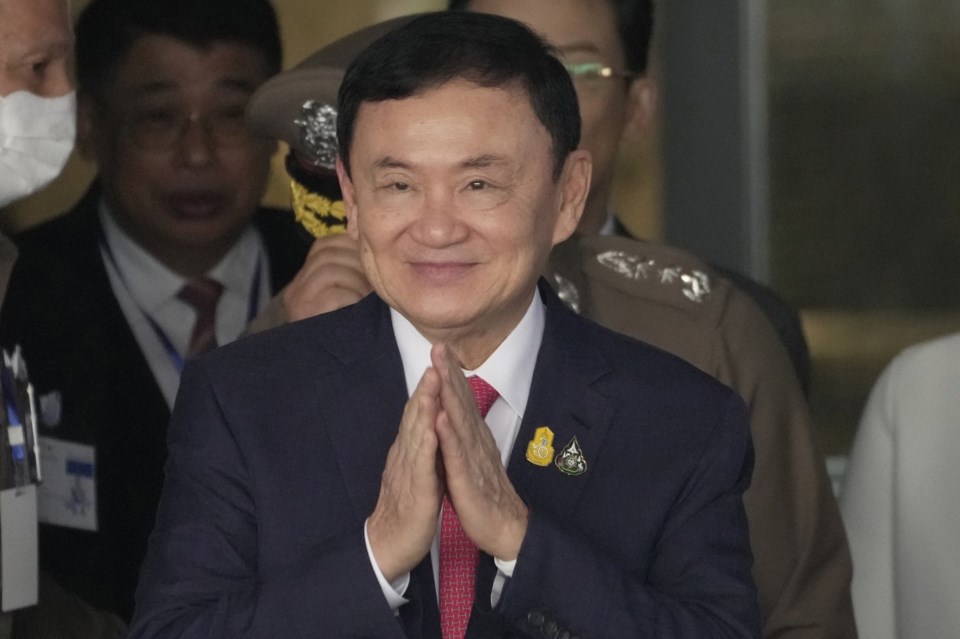
Thaksin Shinawatra, a towering figure in Thailand's political landscape despite his ousting nearly two decades ago, has once again found himself at the center of controversy. Recently indicted on charges of defaming the monarchy, Thaksin's legal challenges reflect broader political fractures within the country. This article explores the details of his indictment, the implications for Thailand's political system, and the ongoing struggle between progressive forces and royalist establishments.
On a recent Tuesday, Thaksin Shinawatra was formally indicted on charges of lese majeste, an offense involving defamation of the Thai monarchy. Despite the gravity of the charge, Thaksin was granted bail shortly after the indictment, with conditions restricting his travel outside Thailand without court approval. His bail was set at 500,000 baht (approximately $13,000), and his passport was confiscated to ensure compliance. The court cited several reasons for granting bail, including Thaksin's age, his permanent residence in Thailand, and the absence of prosecutor objections.
The lese majeste law in Thailand is among the strictest globally, carrying penalties ranging from three to fifteen years in prison. This law has increasingly been employed to silence government critics and political opponents, reflecting its potent role in the country's political arena. The offense is considered one of the harshest in the world, and its application has sparked international concern over freedom of expression in Thailand.
Thaksin's indictment stems from remarks he made to journalists in South Korea in 2015, but the case remained dormant for several years due to his exile starting in 2008. He initially faced the lese majeste charge in 2016, but the case was not pursued at that time because he was outside the country. His voluntary return to Thailand last year reignited the legal process, coinciding with his involvement in the current government led by the Pheu Thai party.
Thaksin Shinawatra, now 74, was ousted by a military coup in 2006, an event that plunged Thailand into years of political polarization. His tenure was marked by accusations from royalist opponents of corruption, abuse of power, and disrespect toward the monarchy, allegations that have continued to shadow his political career. These accusations were often intertwined with broader conflicts between populist and royalist factions within the country.
Despite his exile and legal troubles, Thaksin remains a significant political force. His return to Thailand coincided with the Pheu Thai party's coalition with conservative rivals to form the government, a strategic alliance that sidelined the progressive Move Forward party, which had won the most seats in the previous election. This coalition was seen by some analysts as a calculated move to maintain stability and limit the influence of more reformist elements.
Thaksin's high-profile public appearances and political commentary continue to unsettle the establishment. He has traveled extensively across the country, making observations and engaging with supporters, actions that some view as provocative given the sensitivities surrounding the monarchy. Consequently, the lese majeste prosecution is interpreted by some as a warning from powerful adversaries to moderate his political activities and avoid further destabilizing the delicate political balance.
Thaksin's case is one among several legal and political challenges complicating Thailand's political landscape since the Pheu Thai government took office. The Senate, appointed by the military junta that overthrew a previous Pheu Thai administration in 2014, has played a crucial role in blocking the Move Forward party from assuming power despite its electoral success. This reflects the ongoing tension between elected representatives and unelected institutions loyal to the royalist establishment.
The Move Forward party now faces potential dissolution following allegations that it sought to amend the lese majeste law, which critics argue amounts to an attempt to overthrow the constitutional monarchy. The Constitutional Court is currently deliberating on this matter, alongside investigations into Prime Minister Srettha Thavisin regarding the appointment of a Cabinet member convicted of bribery. If found culpable, Srettha could be forced out of office, adding further instability to the government.
Thailand's courts, particularly the Constitutional Court, are widely viewed as instruments of the royalist establishment, often wielded to constrain political opponents. Recent rulings have upheld the legality of a partially completed voting process for a new Senate, preventing the continuation of military-appointed senators and signaling a complex interplay between democratic aspirations and entrenched power structures. The court's decisions have significant implications for the balance of power and the future of democratic governance in Thailand.
The ongoing legal battles and political maneuvering reveal a deeply uneven balance of power between elected officials and unelected institutions loyal to the monarchy and military. This dynamic poses significant challenges to Thailand’s democratic development and political stability, as elected leaders often find their authority undermined by bodies not accountable to the electorate.
Political analysts note that the Pheu Thai party’s alliances with conservative forces, while enabling governance, expose it to vulnerabilities and internal contradictions. The use of lese majeste charges against Thaksin and the targeting of the Move Forward party highlight the persistent influence of royalist forces in shaping political outcomes. These developments underscore the difficulties faced by reformist politicians in navigating a political environment dominated by entrenched interests.
Observers caution that Thailand’s democracy remains fragile, with elected representatives constrained by institutions that are not directly accountable to the public. The current environment underscores the difficulty of pursuing political reforms and the risks faced by those challenging established power centers. The situation serves as a stark reminder of the ongoing struggle between democratic aspirations and the entrenched royalist and military establishments.
Thaksin Shinawatra’s indictment on royal defamation charges is emblematic of the broader struggles within Thai politics, where democratic aspirations collide with entrenched royalist and military interests. While Thaksin’s legal challenges spotlight the contentious lese majeste law, they also reveal the delicate balance of power that continues to shape Thailand’s political trajectory. The ongoing conflicts between elected leaders and unelected institutions underscore the complexities facing Thailand’s democracy, suggesting that meaningful political reform will require navigating a landscape fraught with historical divisions and powerful vested interests.
Originally reported by barrietoday.com. Adapted for our readers with AI assistance.
Keep reading
Business
An analysis of the structural and institutional factors that entrench governance failures in Nigeria, from patronage politics and weakened oversight to the urgent need…
Politics
Yari says the APC will emphasise Tinubu’s achievements in 2027. This analysis explains how voters can examine outcomes, baselines and campaign evidence.
Lifestyle
Obi says his wife funds her own purchases. This analysis separates his explanation, unverified handbag prices and the evidence needed to assess public spending.
TAMFIS NIG LTD
Electrical and instrumentation engineering, bid preparation and consulting, IT and software.

