
News
RUSSIA versus NATO and BRICS vs. NATO Military SWOT
Recall that Poland’s Minister Sikorski’s core claim is partially supported by the numbers, but the framing “quite quickly” and “without the U.S.” does not…
TAMFIS NIG LTDRC 8067447CAC ACTIVEFinima, Bonny Island, Rivers State

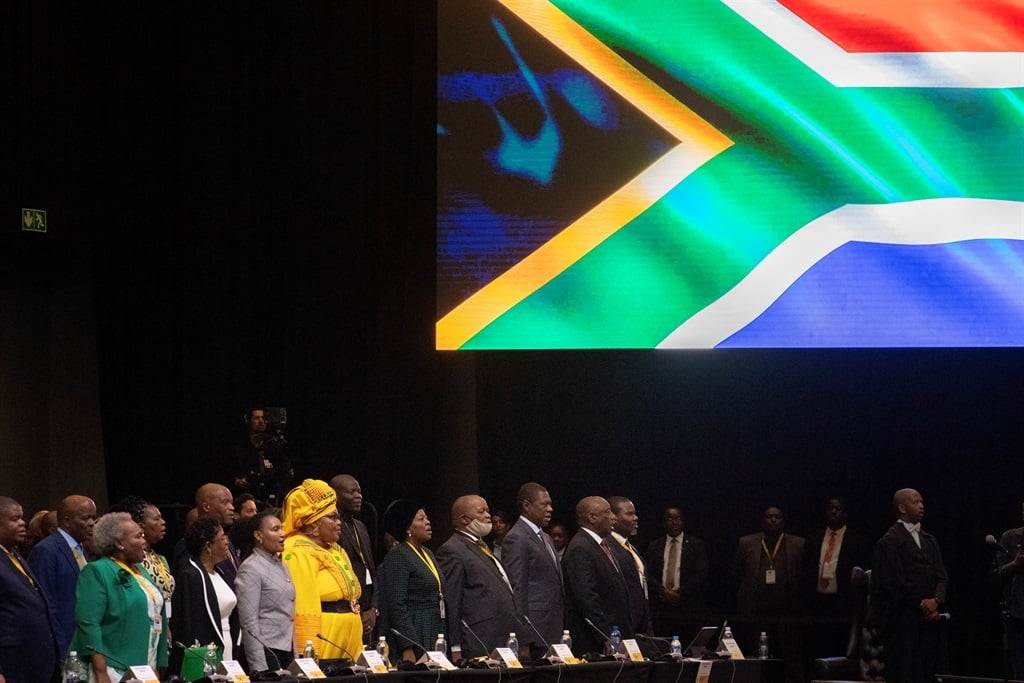
On 14 June 2024, South Africa witnessed a historic first sitting of its seventh Parliament in Cape Town. Marking a departure from the entrenched partisan politics of recent years, the session was characterized by remarkable cross-party endorsements and collaborative gestures. The African National Congress (ANC), Democratic Alliance (DA), and Inkatha Freedom Party (IFP) engaged in unexpected alliances, facilitating the re-election of President Cyril Ramaphosa and the appointment of key parliamentary leadership. While the atmosphere was charged with optimism and unity, political analysts caution that underlying frictions might soon manifest, potentially challenging this newfound spirit of cooperation. This article delves into the dynamics of this parliamentary sitting, exploring the implications of these developments for South Africa’s democratic trajectory and governance.
The first sitting of South Africa’s seventh Parliament broke from the traditional partisan playbook, setting a new tone for legislative proceedings. Members from the DA, ANC, and IFP demonstrated a willingness to collaborate by supporting each other’s candidates for key positions. This gesture was emblematic of a broader desire to move beyond zero-sum politics and foster a more cooperative environment within the National Assembly.
In a notable display of political maturity, DA MPs voted in favor of the ANC’s presidential candidate, Cyril Ramaphosa, while the ANC reciprocated by endorsing a DA candidate for a deputy speaker position. The IFP further contributed by seconding the nomination of Ramaphosa. These actions collectively underscored a shared commitment to stability and governance continuity.
This spirit of unity was not merely ceremonial. It reflected an acknowledgment of the complex socio-political challenges facing South Africa, such as economic recovery, social inequality, and governance reforms. By embracing collaboration, these parties signaled an intent to prioritize national interests over partisan rivalries.
President Cyril Ramaphosa’s re-election for a second term was a central highlight of the parliamentary sitting. Garnering 283 votes, his mandate was bolstered by a coalition of parties demonstrating broad-based support. This endorsement is significant in affirming Ramaphosa’s leadership during a period marked by economic challenges and political recalibration.
Ramaphosa’s presidency has been characterized by efforts to combat corruption, stimulate economic growth, and reform state institutions. The renewed confidence from Parliament may provide him with the political capital necessary to advance these objectives more assertively during his second term.
However, Ramaphosa’s leadership is also under scrutiny from various quarters, including intra-party factions within the ANC and opposition parties. Balancing these competing interests will be crucial for maintaining cohesion within the coalition framework that emerged during the first sitting.
The election of Thoko Didiza as Speaker of the National Assembly and Annelie Lotriet as her deputy marked significant milestones in parliamentary leadership. Didiza, representing the ANC, and Lotriet from the DA, symbolize the cross-party cooperation that defined the sitting. Their appointments are expected to influence parliamentary proceedings and legislative priorities.
Didiza’s role as Speaker will be pivotal in managing debates, fostering inclusivity, and ensuring procedural fairness. Meanwhile, Lotriet’s position as deputy speaker reflects the DA’s enhanced influence within the legislature, signaling a more balanced power distribution than in previous terms.
These appointments also illustrate the strategic importance of coalition-building in South Africa’s evolving political landscape. They may set precedents for more inclusive governance structures and encourage dialogue across party lines.
The collaborative actions during the parliamentary sitting have given rise to the concept of a ‘Coalition Nation,’ where governance is increasingly dependent on alliances rather than single-party dominance. This shift has profound implications for policy-making and political stability in South Africa.
Coalition governance can enhance accountability and represent diverse interests, but it also requires negotiation and compromise, which may slow decision-making processes. Parties must navigate complex relationships to maintain unity while advancing their distinct agendas.
For South Africa, a nation grappling with socio-economic disparities and institutional challenges, coalition politics offers both opportunities and risks. Effective coalitions could foster inclusive development, but fragile alliances might also lead to governance paralysis or political fragmentation.
Despite the hopeful start, political analysts warn of underlying tensions that could disrupt the newly formed alliances. Historical rivalries, ideological differences, and competition for influence remain potent forces that may strain coalition relationships.
Intra-party divisions within the ANC, especially between reformist and traditionalist factions, pose a significant risk to cohesive governance. Additionally, opposition parties face internal pressures to balance cooperation with the ANC against their mandate to hold the government accountable.
The complex socio-economic issues confronting South Africa, including unemployment, corruption, and service delivery failures, may exacerbate political friction. Failure to address these concerns collaboratively could erode public trust and destabilize the parliamentary coalition.
The South African public and civil society organizations have responded to the parliamentary sitting with cautious optimism. Many citizens welcome the spirit of cooperation as a potential pathway to more effective governance and improved service delivery.
Civil society actors emphasize the importance of transparency, accountability, and inclusive policy-making to ensure that coalition politics translates into tangible benefits for communities. They advocate for ongoing dialogue between political leaders and grassroots stakeholders.
However, skepticism remains regarding whether the political goodwill demonstrated will endure beyond ceremonial events. Public demand for concrete actions and measurable outcomes is high, with many viewing the coalition as a test of South Africa’s democratic resilience.
As South Africa embarks on this new chapter of coalition-driven governance, the focus will shift to translating parliamentary cooperation into effective policy implementation. Success will depend on sustained dialogue, mutual respect, and a shared commitment to national priorities.
Key areas such as economic recovery, social justice, and institutional reform require coordinated efforts across party lines. The ability of the coalition to deliver on these fronts will significantly influence public confidence and political stability.
Moreover, the evolving political landscape calls for adaptive leadership and innovative approaches to governance. Monitoring developments within Parliament, civil society, and the broader electorate will be essential to understanding the trajectory of South Africa’s democracy.
The first sitting of South Africa’s seventh Parliament marked a significant departure from the entrenched political divisions of the past decade. The cross-party collaboration witnessed offers hope for a more cooperative and inclusive approach to governance. However, this new political era is not without its challenges. Emerging tensions, socio-economic pressures, and the complexities of coalition politics underscore the need for vigilant leadership and active citizen engagement. As South Africa navigates this transformative period, the resilience of its democracy will be tested by the ability of its leaders and institutions to work together in the national interest. The winds of change have indeed begun to blow, but whether they will bring lasting calm or brewing storms remains to be seen.
Originally reported by news24.com. Adapted for our readers.
Keep reading
News
Recall that Poland’s Minister Sikorski’s core claim is partially supported by the numbers, but the framing “quite quickly” and “without the U.S.” does not…
Politics
In August 2025, Zespri, the world’s largest marketer of kiwifruit, announced that the European Commission had approved what it described as the first health…
News
By Engr. Tamunofiniarisa BrownReading Time: 6 Minutes The conflict between Russia and Ukraine is often framed in the media as a simple battle between…
TAMFIS NIG LTD
Electrical and instrumentation engineering, bid preparation and consulting, IT and software.