
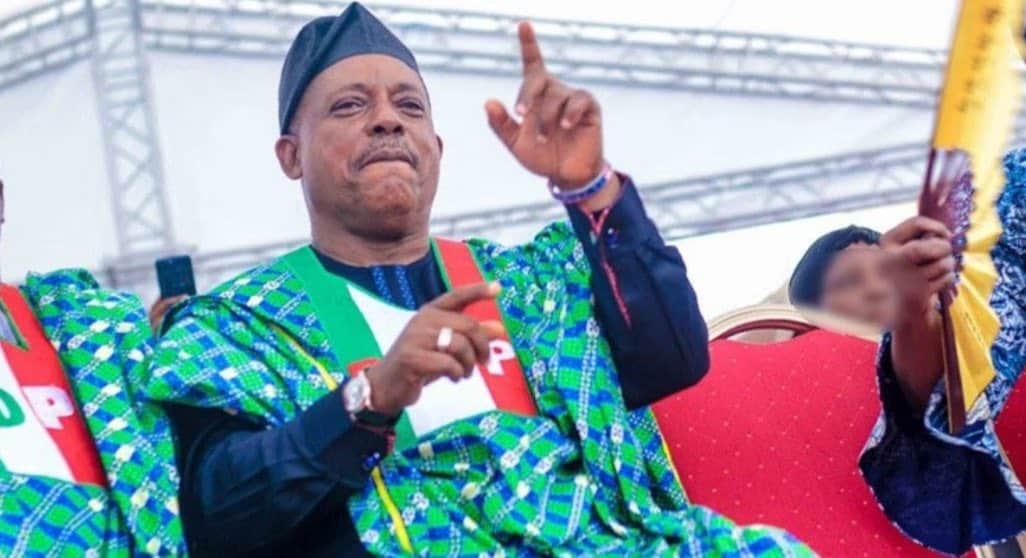
The political landscape of Rivers State recently witnessed a significant development as Uche Secondus, former National Chairman of the Peoples Democratic Party (PDP), publicly endorsed Governor Siminalayi Fubara's full control over the party’s structure in the state. This endorsement comes amid criticisms directed at former Governor Nyesom Wike and other members of the so-called G-5 governors, who played influential roles during the 2023 presidential election. Secondus’ statements, delivered in Port Harcourt, underscore the ongoing power tussle within the PDP and highlight the efforts to consolidate leadership and foster unity within the party’s Rivers State chapter. This article explores the background, key statements, and political implications of Secondus’ stance, as well as the broader context of PDP’s internal dynamics in Rivers State.
Background: The PDP Power Struggle in Rivers State
Rivers State has long been a focal point of political contestation within Nigeria’s Peoples Democratic Party (PDP). With its strategic importance and considerable voter base, control of the PDP structure in Rivers is crucial for any political figure aiming to wield influence both locally and nationally.
The rivalry between former Governor Nyesom Wike and Governor Siminalayi Fubara has been a defining feature of the state's politics. Wike, a prominent PDP heavyweight, played a pivotal role in the 2023 presidential election, while Fubara, his successor, has been consolidating his leadership within the party's state apparatus.
Against this backdrop, the intervention of Uche Secondus, a seasoned political actor and former PDP National Chairman, adds a new dimension to the ongoing contest for control. His support for Fubara signals a shift in the party’s internal power balance and raises questions about the future alignment of key stakeholders in Rivers State.
Secondus’ Critique of Nyesom Wike and the G-5 Governors
During a recent meeting with former members of the Rivers State PDP Presidential Campaign Council in Port Harcourt, Uche Secondus did not hold back in his criticism of Nyesom Wike and the G-5 governors. He accused them of behaviors that undermined party cohesion during the 2023 presidential elections.
Secondus suggested that the actions of these political figures created divisions within the PDP, leading to defections and weakening the party’s overall unity. His remarks reflect frustrations within the party ranks over internal dissent and the challenges it poses to collective success.
By publicly addressing these issues, Secondus aimed to highlight the need for reconciliation and a reassertion of authority within the PDP structure, particularly emphasizing that loyalty to the party must supersede personal ambitions or factional interests.
Endorsement of Governor Siminalayi Fubara’s Leadership
Central to Secondus’ address was a robust endorsement of Governor Siminalayi Fubara as the rightful leader of the PDP in Rivers State. He affirmed that Fubara holds complete control over the party’s structure within the state, a position he insisted is essential for effective governance and party management.
Secondus recounted his policy approach during his tenure as National Chairman, where he granted governors full control of their state party structures to ensure streamlined decision-making and local autonomy. He reiterated that Fubara enjoys 100 percent control of the PDP in Rivers State, reinforcing the governor’s legitimacy.
This declaration is significant as it attempts to quell ongoing disputes and solidify Fubara’s authority, sending a clear message to dissenters within the party that the governor’s leadership is recognized and supported at the national level.
Call for Unity and Forgiveness Within PDP Rivers State
Secondus emphasized the importance of unity among PDP members in Rivers State, urging all factions to forgive past grievances and work collaboratively for the party’s collective progress. He acknowledged that some members had defected to opposition parties but encouraged reconciliation to strengthen the PDP’s grassroots support.
He highlighted Governor Fubara’s repeated calls for inclusivity and non-discrimination, stressing that the party’s strength lies in embracing all members, regardless of previous conflicts or political alignments. This approach aims to heal divisions and build a cohesive political front.
By appealing to former local government chairmen and party leaders, Secondus sought to mobilize the party’s foundation, recognizing that sustainable political success depends on grassroots solidarity and effective collaboration at all levels.
The Historical Context: Lessons from Past Political Battles
Secondus drew parallels between current political challenges and the historical struggles faced by PDP leaders in Rivers State, particularly referencing the 1983 political climate when Lagos-based interests attempted to influence local politics.
He praised grassroots leaders for their resilience in resisting external interference, implying that similar vigilance is necessary today to prevent hijacking of the party by factions based outside the state or those with divergent agendas.
This historical perspective serves as a reminder of the importance of local ownership and control in political affairs, reinforcing the notion that the PDP’s future in Rivers State depends on strong, united leadership rooted in the community.
Implications for the 2027 Elections and PDP’s Future
Secondus expressed optimism about PDP’s prospects in Rivers State, particularly with a unified front under Governor Fubara’s leadership. He suggested that the party is well-positioned to reclaim the governorship in 2027 if internal cohesion is maintained.
He also highlighted the potential for attracting political defectors and former adversaries back into the PDP fold, emphasizing that inclusiveness and collective efforts are key to electoral success.
This forward-looking stance underscores the strategic importance of consolidating party structures now to build momentum for future elections, ensuring that PDP remains a dominant force in Rivers State’s political arena.
Challenges Ahead: Navigating Internal and External Pressures
Despite these positive affirmations, the PDP in Rivers State faces significant challenges, including lingering factionalism, the influence of powerful political figures like Nyesom Wike, and competition from opposition parties such as the All Progressives Congress (APC).
Secondus acknowledged the temporal setbacks at the national level but remained confident that the party’s grassroots strength and strategic leadership would overcome these hurdles.
Moving forward, the PDP must balance internal reconciliation with proactive engagement with voters and stakeholders to maintain relevance and political dominance in Rivers State.
The Role of Party Leaders and Grassroots Mobilization
Secondus called upon party leaders, including former local government chairmen and ward executives, to play active roles in fostering unity and mobilizing support for the PDP at the grassroots level.
He stressed that leadership at the local level is crucial for translating party policies into electoral victories and ensuring that the PDP remains connected to the needs and aspirations of the people.
By working collaboratively and setting aside personal differences, party officials can strengthen the PDP’s foundation, creating a vibrant and resilient political organization capable of sustaining long-term success.
Conclusion
The political discourse surrounding the PDP in Rivers State reveals a complex interplay of power, loyalty, and leadership. Uche Secondus’ endorsement of Governor Siminalayi Fubara as the undisputed leader of the party in the state marks a pivotal moment aimed at consolidating authority and healing internal divisions. While criticisms of Nyesom Wike and the G-5 governors underscore existing tensions, the call for forgiveness and unity offers a pathway toward restoring harmony within the party. As the PDP prepares for future electoral contests, particularly the 2027 governorship race, the emphasis on inclusive leadership and grassroots mobilization will be critical. Navigating the challenges ahead requires a collective commitment to the party’s ideals and a strategic approach to maintaining dominance in Rivers State’s vibrant political landscape.