
Business
Nigeria’s Broken Systems: Why Failure Persists and What Must Change
An analysis of the structural and institutional factors that entrench governance failures in Nigeria, from patronage politics and weakened oversight to the urgent need…
TAMFIS NIG LTDRC 8067447CAC ACTIVEFinima, Bonny Island, Rivers State

Politics tamfitronics
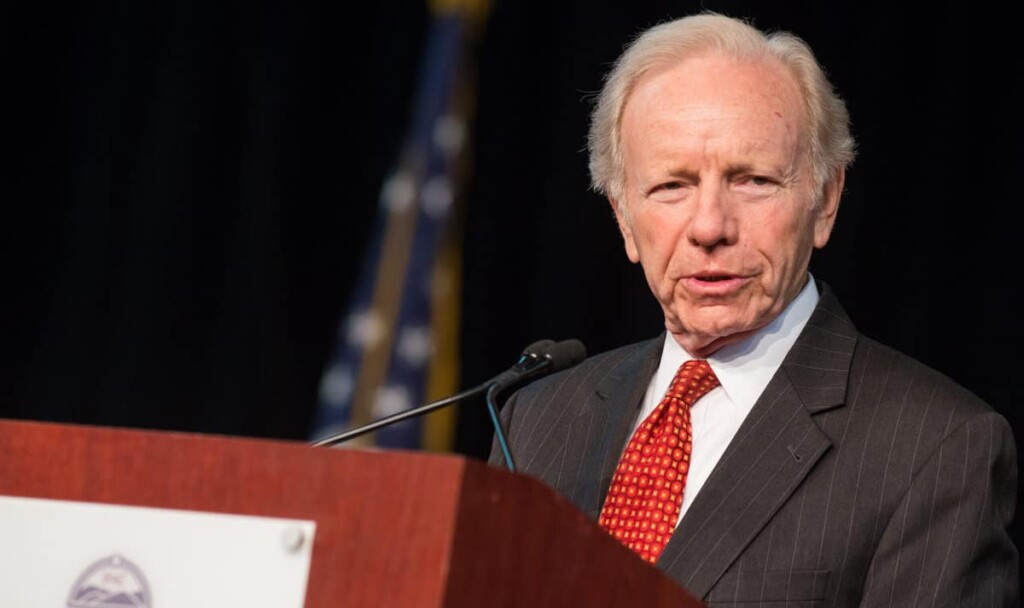
Lieberman demonstrated how persona can conceal morally radical politics.
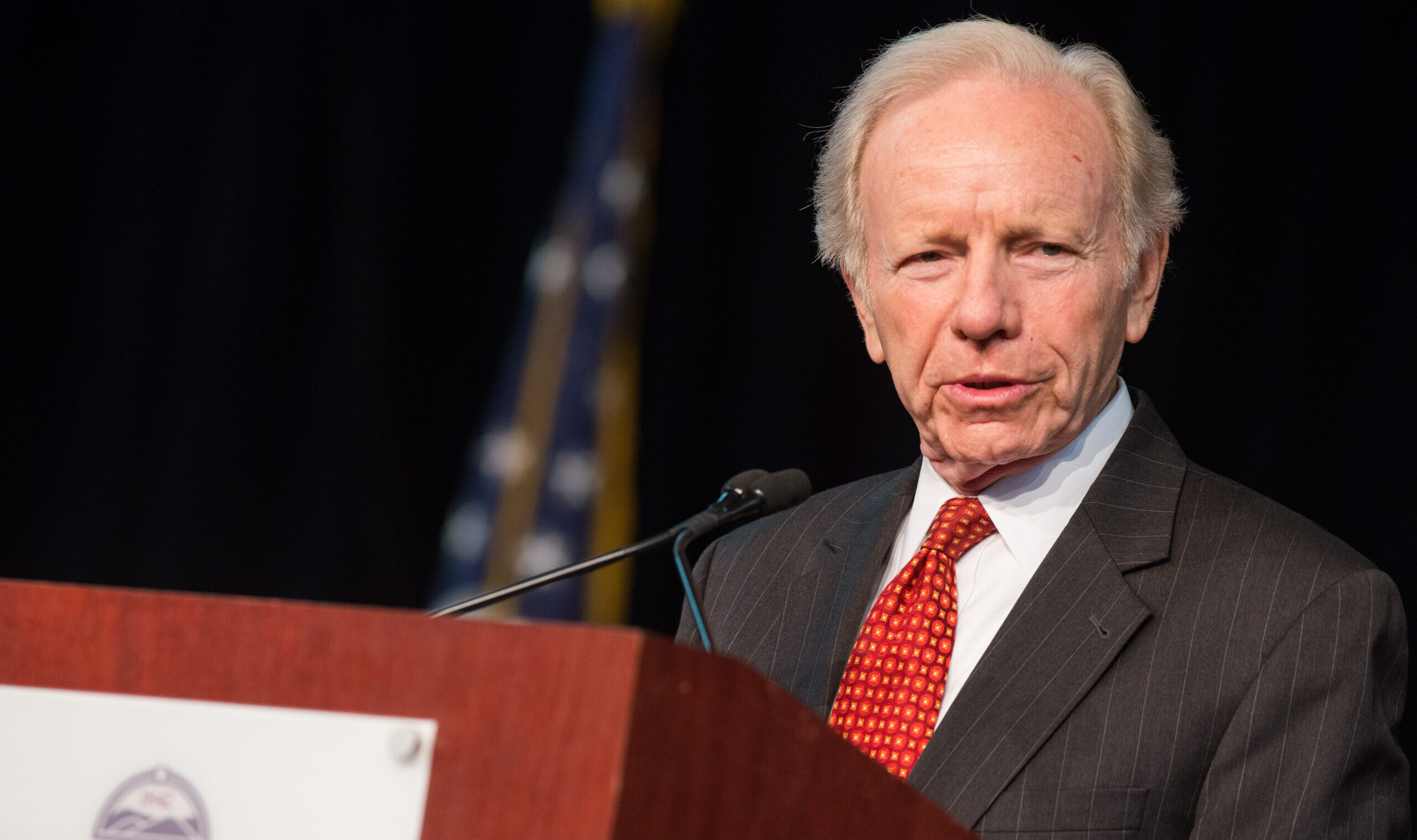
Joseph Lieberman became a Democrat who, by hook or by crook, belonged to both parties without fully fitting in with either. That is another way of saying that Lieberman’s true party was the Inside Party. To the extent that Republicans and Democrats need to respond to outsiders who want to change Washington, the Connecticut senator could never feel entirely at home on either side.
Ironically, Lieberman gained national prominence in the first place because reform-minded conservatives wanted to purge one of the last fossils of the GOP’s broken-down “Eastern establishment.” Sen. Lowell Weicker was a Rockefeller Republican who annoyed figures like William F. Buckley Jr. so much that Buckley—a Connecticut resident—urged his Democratic challenger in 1988. The state went Republican in that year’s presidential election: George H.W. Bush defeated Michael Dukakis by more than 5 points. Lieberman, the Democratic challenger, beat Weicker by less than a single point in the Senate race.
Conservatives made the difference, but they paid a price. Connecticut has never again elected a Republican to the U.S. Senate. And the state—which voted for Ronald Reagan twice in the 1980s and even for Gerald Ford in 1976—has been won by the Democrat in every presidential election of the last 32 years. Rockefeller Republicans and conservative Republicans together could still win federal elections in the state. Nevertheless, conservatives most often preferred a Democrat like Lieberman to a Republican like Weicker, and Rockefeller Republicans likewise came to favor Democrats over any moderately conservative Republican.
Lieberman’s election became a catastrophe for conservatives in a single other capability. The newly minted senator helped to trip the upward thrust of the “Fresh Democrats,” who presented themselves as extra market-oriented than the broad-authorities Democrats of broken-down and much less culturally radical than the left hover of the party. Bill Clinton and Al Gore private been among the many champions of this new motion, and the Clinton-Gore price would glean both presidential elections of the Nineties.
Yet from the outset, the New Democrats were a fraud. In his first two years in office, while his party controlled Congress, President Clinton pursued left-wing policies on every front, from the FACE Act, which restricted the free speech and assembly rights of anti-abortion protesters, to gun control, gays in the military, and socialized medicine (“Hillarycare”). Lieberman was as socially liberal as Clinton, and later in the decade he even voted against a ban on partial-birth abortion. Yet he maintained an appearance of moderation by substituting the personal for the political: He voted radically, but he was guided by his Jewish faith and was outspokenly critical of violent video games and Clinton’s affair with Monica Lewinsky—although that didn’t stop Lieberman from voting against Clinton’s removal from office after he was impeached for lying under oath about the tryst.
Lieberman demonstrated how persona can conceal morally radical politics. He became a form of whitewash, and that earned him a spot on the Democratic presidential ticket in 2000. Vice President Al Gore didn’t need Lieberman as his running mate for policy expertise or factional balance—they had both been New Democrats—and the Connecticut senator wasn’t going to get Gore any state he couldn’t already count on. What Lieberman did was lend his respectable persona to absolve the vice president from association with Clinton’s scandals.
If New Democrats like Lieberman had not been so different from the earlier McGovernite left on abortion and other cultural issues, they were nonetheless a break with the liberal tradition when it came to foreign policy and neoliberal economics. Lieberman, like his close Republican ally John McCain, was one of the most consistently hawkish figures in American politics. He was an early supporter of the Iraq War—and a late one, too, which earned him his party’s nomination for the Senate in 2006. Yet he again relied on Republicans to win a landslide election that he would otherwise have lost.
That November, the Republican nominee for Senate received less than 10 percent of the vote—and while Connecticut had long been a blue state by then, it wasn’t so blue that a Republican could expect to win even single-digit support. The Republican vote simply went to Lieberman instead of the GOP candidate, and enough of the Democratic vote did as well that Lieberman, running as an independent, defeated the antiwar Democratic nominee.
The United States as an entire became in opposition to the Iraq Battle in that election, inflicting Republicans to lose both the Home and the Senate. Nonetheless Lieberman secured re-election with plurality give a boost to in a 3-capability bustle by representing the establishment positions within both occasions—the hawkishness of the Bush-generation GOP and the social liberalism of Democrats then and now.
He continued to vote and caucus with the Democrats, but Lieberman increasingly leveraged his insider status with Republicans as well. He endorsed John McCain for president and spoke at the 2008 Republican National Convention. McCain seriously considered making Lieberman his running mate and was only dissuaded by the unavoidable fact that social conservatives in the GOP would never accept this. Nonetheless, if the decision had come down solely to insider party preferences, Lieberman would have been the pick. There was no other politician in the United States closer to McCain’s priorities. They were kindred spirits in their hawkishness.
Lieberman later acknowledged that voters would not have embraced what he and McCain wanted to promote. He joked that if he had been chosen by McCain, he would have had “the chance to occupy a unique place in history by running for vice president on two different party tickets—and to have lost twice.” He was relieved that “God saved me from that—or the Republican delegates saved me from that.”
Yet as of his death on Wednesday, Lieberman still dreamed of building the Center Party into a force that could also win elections. He was the founding chairman of “No Labels,” an effort meant to field a centrist presidential candidate without a traditional party apparatus. Democrats, especially this year, view the initiative as a threat, given the tensions within Joe Biden’s coalition over Israel and the possibility that No Labels would draw socially liberal voters away from the Democrats while leaving social conservatives united within the GOP.
He will be remembered for being the first Jew on a major party presidential ticket. But he is also important as an archetype of his time. No politician better embodied the overlap between the Clinton and George W. Bush eras. Military adventurism, crony capitalism, and “character” as a quality that could appeal to social conservatives without alienating social liberals—this was the Lieberman formula, and it is still used today, not least by former conservatives who invoke “character” as their justification for siding with the party of the cultural left over the party of Donald Trump.
Lieberman became no longer a realistic. From warfare to abortion, his views private been crude. These that simplest factor in a political spectrum with moderates within the center and maniacs on the ends are inaccurate: Customarily the center is precisely the assign the tradition of dying is strongest. The senator became a person of beautiful persona but defective politics, and simplest voters extra committed to the left and the fair averted him from doing increased anxiety in increased location of job.
Originally reported by theamericanconservative.com. Adapted for our readers.
Keep reading
Business
An analysis of the structural and institutional factors that entrench governance failures in Nigeria, from patronage politics and weakened oversight to the urgent need…
Politics
Yari says the APC will emphasise Tinubu’s achievements in 2027. This analysis explains how voters can examine outcomes, baselines and campaign evidence.
Lifestyle
Obi says his wife funds her own purchases. This analysis separates his explanation, unverified handbag prices and the evidence needed to assess public spending.
TAMFIS NIG LTD
Electrical and instrumentation engineering, bid preparation and consulting, IT and software.

