
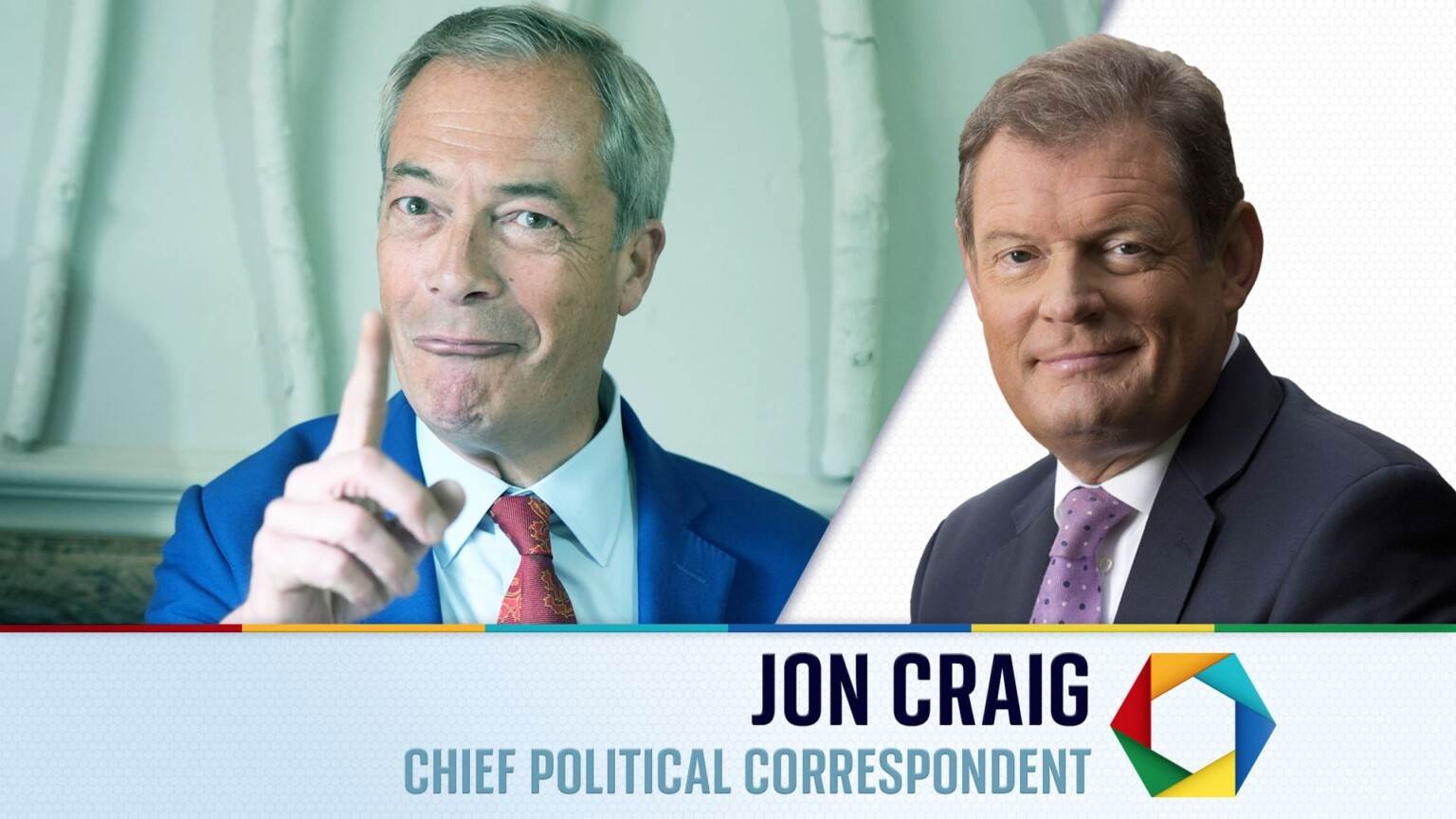
In a dramatic turn of events, Nigel Farage’s Reform UK party has overtaken the Conservative Party in a recent YouGov poll, capturing 19% of voter support compared to the Tories’ 18%. This unexpected shift has intensified the struggle for dominance on the centre-right of British politics. As the general election approaches, the confrontation between the Conservatives and Reform UK is emerging as a pivotal contest, with implications not only for the opposition but for the broader political landscape. This article explores the dynamics of this rivalry, the key moments from a recent televised debate, and what this means for the future of centre-right politics in the UK.
Nigel Farage’s Moment: Reform UK’s Surge in the Polls
Nigel Farage, a veteran figure in British politics known for his staunch Brexit advocacy, entered a recent televised debate with a newfound confidence. The catalyst for this swagger was the latest YouGov poll showing Reform UK surpassing the Conservatives by a single percentage point. This milestone marked a symbolic moment for Farage, who confidently declared his party as the new opposition to Labour.
Farage’s performance during the debate was marked by a relaxed and assertive demeanor. He openly mocked rivals, particularly the SNP’s Stephen Flynn, and positioned himself as a solitary voice challenging the mainstream parties on issues like Brexit and immigration. His ability to dominate the narrative on these topics underscores the appeal Reform UK holds for voters disillusioned with traditional centre-right politics.
Throughout the debate, Farage’s trademark grin and jaunty swagger reflected his sense of momentum. He dismissed both Labour and the Conservatives as “mushy SDP parties in the middle,” positioning Reform UK as the true alternative for voters seeking a harder line on Brexit and immigration. His critique extended beyond party politics to institutions like the House of Lords, which he condemned as “an abomination” filled with party donors, advocating for electoral reform to shake up the establishment.
The Debate Dynamics: Mordaunt, Rayner, and the Unspoken Truce
The televised debate also spotlighted a fierce exchange between Conservative Penny Mordaunt and Labour’s Angela Rayner over Labour’s tax plans. Mordaunt relentlessly attacked Labour’s proposals, repeatedly questioning whether capital gains tax would be raised, while Rayner stuck firmly to the party line, denying any such plans were in the manifesto. Their back-and-forth was a continuation of a bruising rivalry that has characterized recent political clashes.
Notably, Mordaunt refrained from criticizing Farage during the debate, a tactical silence that suggested the Conservatives’ apprehension about openly confronting Reform UK. Instead, she engaged in moments of political flirtation with Farage, which observers interpreted as a subtle acknowledgment of his growing influence and a possible strategic move to court his supporters.
When Rayner challenged Mordaunt by asking if she would welcome Farage into the Conservative Party, Mordaunt’s response was deft and equivocal. She emphasized their shared Brexit credentials and expressed support for leaving European institutions if reform was impossible, a nod to Tory right-wing demands to exit the European Convention on Human Rights. This exchange revealed the complex and evolving relationship between the two centre-right factions, with Mordaunt appearing to court right-wing Tory MPs ahead of a potential leadership bid.
Mordaunt’s refusal to rebuff Farage harshly, coupled with her use of his first name rather than a formal address, underscored a political strategy aimed at rapprochement rather than confrontation. Her approach contrasts with the traditional Tory stance and signals internal party calculations about how to manage Farage’s rising threat.
The Broader Political Implications: A Battle for the Centre-Right’s Soul
Farage’s rise with Reform UK challenges the traditional two-party dominance in British politics, particularly on the centre-right. His party’s appeal to voters frustrated with the Conservatives’ perceived moderation on Brexit and immigration threatens to fragment the right-wing vote. This internal competition could reshape the opposition landscape, potentially positioning Reform UK as the official opposition to Labour after the election.
The Conservative Party faces an existential dilemma: whether to confront Farage aggressively, risking alienation of right-wing voters, or to seek accommodation, which could undermine party unity and leadership authority. The leadership’s cautious approach to Farage reflects this strategic complexity and the fear of losing core supporters to a more hardline alternative.
Farage’s critique of the House of Lords and calls for electoral reform resonate with a segment of the electorate disillusioned by political elitism and establishment politics. His framing of Labour and the Conservatives as centrist and ineffective parties taps into a broader dissatisfaction that could drive further support for Reform UK.
For Labour, the fragmentation on the right presents both an opportunity and a challenge. While a divided opposition may improve Labour’s chances of forming a government, it also complicates the electoral calculus and could lead to unpredictable outcomes in marginal constituencies. Labour’s steady positioning contrasts with the volatility on the right, but the evolving centre-right dynamics will be a critical factor in the election’s outcome.
Key Takeaways from the Political Showdown
The televised debate and recent polling data reveal a shifting political terrain where traditional party loyalties are increasingly fluid. Nigel Farage’s Reform UK is capitalizing on voter dissatisfaction with mainstream parties, particularly on Brexit and immigration.
Penny Mordaunt’s reluctance to confront Farage directly and her strategic engagement with his positions suggest that the Conservative Party may consider alliances or accommodations to retain centre-right voters.
Labour remains focused on presenting itself as the stable governing alternative, but the fragmentation of the opposition could complicate electoral dynamics, especially if Reform UK continues to erode Conservative support.
The battle for the centre-right is not just about winning seats but about defining the ideological direction of British politics in the post-Brexit era.
The upcoming general election on 4 July is shaping up as a critical moment not only for party leadership but for the future identity of Britain’s centre-right political landscape.
What this means
The rise of Reform UK under Nigel Farage represents a critical juncture for British centre-right politics. As the Conservative Party grapples with an internal challenge that threatens to redefine its voter base and political identity, the coming months will be decisive. Whether the Tories can reconcile with or counteract Farage’s insurgency will shape the opposition landscape and influence the broader political balance in the UK. For voters and political observers alike, this unfolding battle is a key story to watch as the country approaches the general election.
This article was curated with AI assistance and reviewed according to Tamfis editorial settings.