
Educational Resources
The Impact of Digital Twins in Oil & Gas Plant Maintenance
The Impact of Digital Twins in Oil & Gas Plant Maintenance is a topic that deserves thorough explora...
TAMFIS NIG LTDRC 8067447CAC ACTIVEFinima, Bonny Island, Rivers State

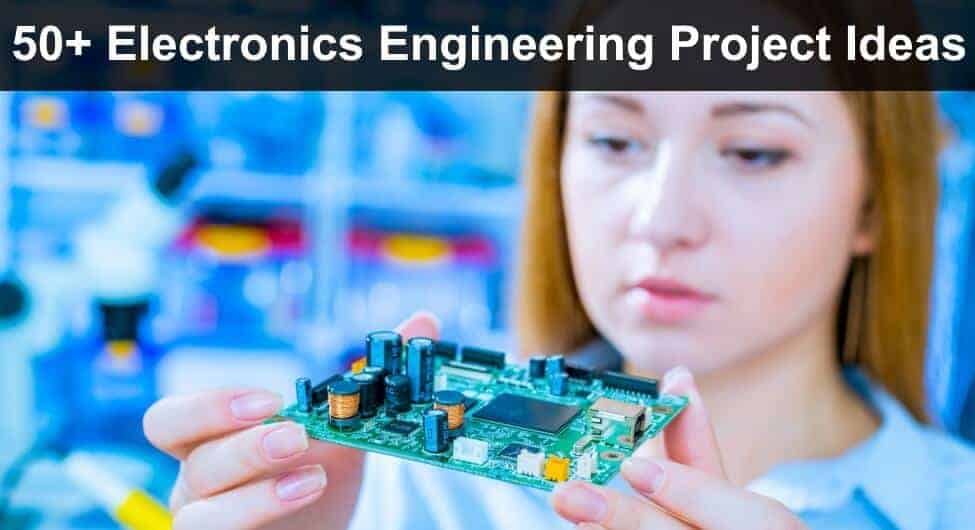
Microcontroller-based projects play a crucial role in shaping the practical skills of electronics engineering students, especially in their early academic years. For 2nd year students, engaging in projects that integrate microcontrollers not only strengthens theoretical knowledge but also fosters creativity, problem-solving, and technical expertise. In 2023, numerous electronics project ideas are designed to be both educational and innovative, enabling students to explore real-world applications. This article delves into the top 12 microcontroller-based projects suited for 2nd year electronics engineering students, providing detailed insights and guidance to help them excel in their academic journey.
Microcontrollers serve as the brain of many electronic systems, enabling automation, control, and communication in various applications. For electronics engineering students, working with microcontrollers bridges the gap between theoretical concepts and practical implementation, making learning more effective and engaging.
In the 2nd year of electronics engineering, students are introduced to fundamental microcontroller programming and interfacing techniques. Undertaking microcontroller-based projects at this stage enhances their understanding of embedded systems, sensor integration, and real-time processing, which are essential skills for modern electronics design.
Moreover, microcontroller projects encourage students to develop critical thinking and troubleshooting abilities, as they must debug hardware and software issues. This hands-on experience is invaluable for preparing students for industry challenges and advanced studies in embedded systems and IoT technologies.
The Automated Plant Watering System is an excellent beginner-level project that introduces students to sensor interfacing and control algorithms. By using a soil moisture sensor connected to a microcontroller, the system can detect the dryness of soil and activate a water pump accordingly.
This project teaches fundamental concepts such as analog-to-digital conversion, relay control, and power management. Additionally, students learn to program the microcontroller to read sensor data, make decisions based on thresholds, and control actuators effectively.
Implementing this project enhances students’ understanding of environmental monitoring and automation, which are relevant in agricultural technology. It also encourages sustainability by promoting efficient water usage through automated irrigation.
The Digital Temperature Monitoring System is a practical project that involves interfacing temperature sensors like the LM35 or DS18B20 with a microcontroller to measure and display temperature readings in real-time.
Students gain experience in sensor calibration, data acquisition, and display technologies such as LCD or seven-segment displays. The project also covers serial communication protocols if the data is transmitted to a PC or mobile device for monitoring.
This project is fundamental for understanding sensor data processing, signal conditioning, and user interface design, which are critical in industrial automation and environmental control systems.
Traffic Light Control Systems are essential in managing urban traffic flow, and designing one using a microcontroller enables students to learn about timing algorithms and sequential control.
The project involves programming the microcontroller to operate LEDs representing traffic signals with precise timing intervals. Students also explore interrupt handling and state machines to simulate real-world traffic scenarios.
This project is ideal for teaching control logic, time management, and hardware interfacing, making it relevant for students interested in transportation engineering and smart city applications.
Home security remains a vital aspect of modern living, and building a microcontroller-based security system introduces students to motion sensors, alarm systems, and wireless communication.
By integrating PIR sensors with a microcontroller, students develop a system that detects unauthorized movement and triggers alarms or notifications. The project may also incorporate GSM modules for sending alerts via SMS.
This project enhances knowledge in sensor integration, embedded communication protocols, and real-time system design, preparing students for careers in IoT security and automation.
The Line Following Robot project combines robotics and microcontroller programming, challenging students to design a robot that autonomously follows a predefined path using infrared sensors.
Students learn about sensor calibration, motor control techniques such as PWM, and developing algorithms for path detection and correction. This project also introduces basic robotics concepts and embedded system integration.
Completing this project builds skills in mechatronics, control systems, and algorithm development, which are essential for robotics and automation fields.
Wireless communication is a trending topic in electronics, and this project involves interfacing a microcontroller with a Bluetooth module to enable wireless data exchange between devices.
Students program the microcontroller to send and receive sensor data or control commands via Bluetooth, learning about serial communication protocols like UART and Bluetooth standards.
This project is crucial for understanding wireless protocols, embedded system communication, and IoT applications, providing a foundation for future wireless technology projects.
Designing a Digital Voltmeter introduces students to analog signal measurement, ADC (Analog to Digital Converter) operation, and display interfacing with microcontrollers.
The project involves reading analog voltage inputs, converting them to digital values, and displaying the measurements on an LCD or seven-segment display. Calibration and accuracy optimization are key learning points.
This project strengthens understanding of instrumentation, signal processing, and embedded system design, which are fundamental in electronic measurement and testing.
Energy meters are critical for monitoring electricity consumption, and a microcontroller-based smart energy meter project introduces students to current and voltage sensing techniques along with data logging.
Students learn to interface current sensors (like CT sensors) and voltage sensors with the microcontroller to calculate power consumption and display the results. Advanced versions may include wireless data transmission for remote monitoring.
This project provides practical experience in power electronics, embedded data processing, and smart grid technologies, aligning with modern energy management trends.
Microcontroller-based projects are indispensable for 2nd year electronics engineering students aiming to build a strong foundation in embedded systems and practical electronics. The top 12 projects outlined in this article provide a diverse and comprehensive roadmap to mastering microcontroller applications, sensor integration, and automation techniques. By undertaking these projects, students not only enhance their technical skills but also cultivate innovation and problem-solving abilities crucial for future careers. Embracing these hands-on experiences ensures that students remain competitive and well-prepared for the evolving landscape of electronics engineering and related technologies.
Keep reading
Educational Resources
The Impact of Digital Twins in Oil & Gas Plant Maintenance is a topic that deserves thorough explora...
Educational Resources
Smart homes have transitioned from futuristic concepts to tangible realities that enhance everyday livin...
Educational Resources
As a small or medium-sized business owner in Nigeria, you are a master of spinning plates. You are the CEO, the head of sales,…
TAMFIS NIG LTD
Electrical and instrumentation engineering, bid preparation and consulting, IT and software.

