Educational Resources
Top Instrumentation Software for Engineers: Your Essential Toolkit
For engineers and consultants w...
TAMFIS NIG LTDRC 8067447CAC ACTIVEFinima, Bonny Island, Rivers State

In modern industrial environments, continuous processes demand precise monitoring and control to ensure product quality, operational efficiency, and safety. Process control and instrumentation are the backbone of these systems, enabling industries to automate and regulate complex processes seamlessly. From chemical plants to oil refineries, the integration of advanced instrumentation and control strategies plays a pivotal role in maintaining consistent operations. This article provides an in-depth exploration of process control and instrumentation for continuous processes, highlighting key components, technologies, and methodologies that drive industrial excellence.
Process control refers to the methods and technologies used to regulate variables within an industrial process to maintain desired outputs. In continuous processes, where operations run non-stop over long periods, controlling parameters such as temperature, pressure, flow, and level is essential for product consistency and safety.
Continuous processes differ from batch processes in that they require constant adjustments to maintain equilibrium and quality. Any deviations can lead to suboptimal product quality, increased waste, or even hazardous situations. Hence, effective process control systems are designed to respond dynamically to changing conditions.
The primary goal of process control in continuous industries is to achieve stability and optimal performance. This involves monitoring process variables in real-time and making necessary corrections through feedback mechanisms, ensuring the process remains within predefined limits.
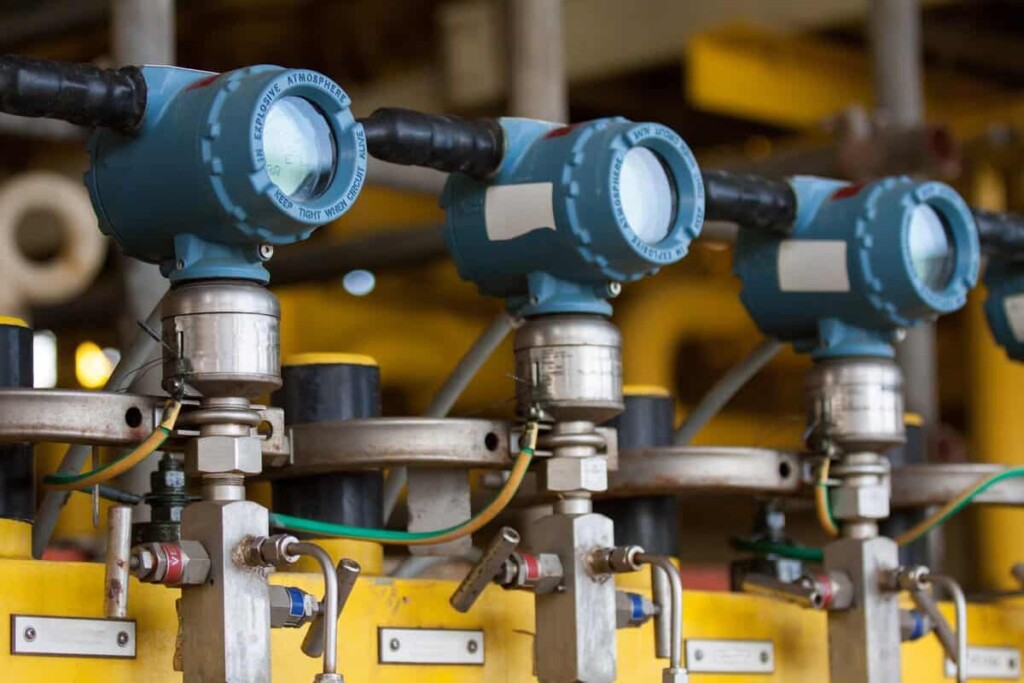
Instrumentation forms the sensory network of any process control system. Instruments measure critical process variables such as temperature, pressure, flow rate, level, and composition. These measurements provide the data needed for control decisions and process optimization.
Temperature sensors like thermocouples and RTDs (Resistance Temperature Detectors) are widely used for accurate temperature monitoring. Pressure transmitters convert pressure values into electrical signals, enabling remote monitoring and control.
Flow meters, including electromagnetic, ultrasonic, and differential pressure types, measure the flow of liquids or gases. Level sensors, such as ultrasonic or capacitance-based devices, monitor the quantity of material in tanks or vessels, ensuring continuous process regulation.
Control strategies in continuous processes vary from simple on/off controls to advanced feedback and feedforward systems. The most common approach is the use of PID (Proportional-Integral-Derivative) controllers, which adjust control inputs based on error correction to maintain process variables at setpoints.
Feedforward control anticipates disturbances by measuring them before they affect the process, allowing preemptive adjustments. This strategy is often combined with feedback control for enhanced stability and responsiveness.
Advanced process control (APC) techniques, including model predictive control (MPC), leverage mathematical models of the process to optimize control actions. These methods improve efficiency, reduce variability, and enhance safety in complex continuous operations.
Distributed Control Systems (DCS) are integral to managing continuous industrial processes. They consist of interconnected controllers distributed throughout the plant, providing localized control and centralized supervision.
DCS architecture enhances reliability and flexibility by isolating control loops, reducing the risk of system-wide failures. Operators can monitor process conditions and adjust parameters through user-friendly human-machine interfaces (HMIs).
Integration of DCS with instrumentation enables real-time data acquisition, process visualization, and advanced analytics. This facilitates proactive maintenance, process optimization, and compliance with regulatory standards.
Accurate instrumentation is critical for reliable process control. Calibration ensures instruments provide precise measurements by comparing them against known standards and adjusting as necessary. Regular calibration prevents drift and measurement errors that could compromise process quality.
Maintenance routines, including inspections, cleaning, and repairs, maximize instrument uptime and accuracy. Preventive maintenance schedules help identify potential failures before they impact operations, reducing downtime and maintenance costs.
In continuous processes, where interruptions can be costly, robust calibration and maintenance practices are essential for sustaining process integrity and safety over extended periods.
Continuous processes face challenges such as sensor drift, process disturbances, and equipment wear, which can affect control accuracy. Environmental factors like temperature fluctuations and corrosive conditions also impact instrumentation performance.
To address these challenges, industries invest in ruggedized instruments designed for harsh environments, implement redundant sensors for reliability, and utilize advanced diagnostics to detect anomalies early.
Digitalization and Industry 4.0 technologies, including IoT sensors and cloud-based analytics, enable predictive maintenance and real-time optimization, helping overcome traditional limitations in process control.
The future of process control and instrumentation is shaped by advancements in smart sensors, wireless communication, and artificial intelligence. Smart instruments with self-diagnostics improve data accuracy and reduce manual intervention.
Wireless instrumentation reduces installation costs and enhances flexibility, enabling easier retrofitting of existing plants. AI-driven control algorithms optimize process parameters dynamically, improving yield and energy efficiency.
Sustainability is also a growing focus, with instrumentation designed to minimize waste and energy consumption. Integration of digital twins and simulation tools allows operators to test control strategies virtually before implementation.
Process control and instrumentation form the foundation of efficient and safe continuous industrial processes. By integrating precise measurement devices, advanced control strategies, and robust automation systems like DCS, industries can achieve consistent product quality and operational excellence. Ongoing innovations in digitalization and smart instrumentation promise to further enhance process reliability and sustainability. Investing in proper calibration, maintenance, and adopting future-ready technologies will enable industries to meet evolving production demands and regulatory requirements effectively.
Keep reading
Educational Resources
For engineers and consultants w...
Educational Resources
Modern industrial landscapes, from vast petrochemical complexes and power generation plants to intricate manufacturing facilities, are ...
Educational Resources
Instrumentation engineering has moved far beyond basic gauges and dials. Today’s systems combine sensors...
TAMFIS NIG LTD
Electrical and instrumentation engineering, bid preparation and consulting, IT and software.