Top Stories
KFF Health News’ ‘What the Health?’: The Supreme Court and the Abortion Pill
Since the Supreme Court overturned Roe v. Wade in 2022, the landscape of abortion rights in the United S...
TAMFIS NIG LTDRC 8067447CAC ACTIVEFinima, Bonny Island, Rivers State

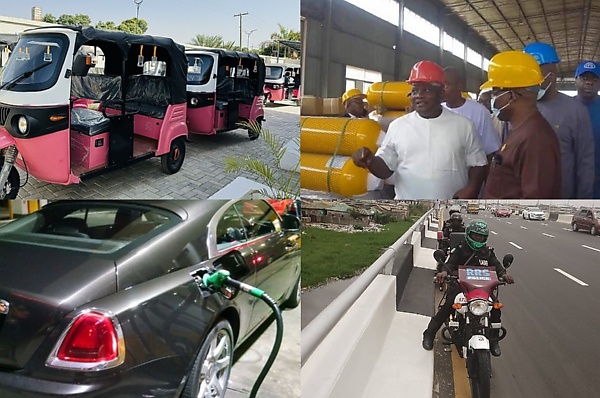
Nigeria's transport and petroleum sectors have witnessed significant advancements and strategic initiatives aimed at fostering sustainability, security, and economic growth. From innovative electric tricycle deployments empowering women in Kano to high-profile visits and inspections in vehicle manufacturing and gas processing facilities, these developments reflect a dynamic shift towards cleaner energy and enhanced infrastructure protection. Additionally, the recent surge in petrol prices across Nigerian states and the Lagos State Police Command's deployment of a 24-hour bike patrol on the Third Mainland Bridge underscore ongoing efforts to balance economic realities with public safety. This article delves into these key stories, providing a comprehensive overview of their implications and impact.
In a groundbreaking move to promote sustainable transportation and women empowerment, Nord Automobiles recently delivered 120 battery-powered tricycles, commonly known as Kekes, exclusively for female transporters in Kano State. This initiative is part of a larger project supported by Sterling Bank-backed Qore Mobility and local women’s cooperatives, Mata Zalla and Yar Baiwa. The electric Kekes represent a shift towards cleaner, eco-friendly transport solutions in one of Nigeria's busiest regions.
The delivery event, held at Meena Events Center in Kano, was a milestone in advancing gender inclusivity within the traditionally male-dominated transport sector. Nord Automobiles CEO Oluwatobi Ajayi highlighted that these tricycles were assembled locally in Kano, underlining a commitment to job creation and local industry growth. The project not only reduces carbon emissions but also enhances the safety and economic independence of women transporters.
By deploying electric vehicles, the initiative aligns with global trends towards sustainable urban mobility. It aims to reduce noise pollution and fuel dependency, factors critical in densely populated cities. Furthermore, this project serves as a blueprint for other Nigerian states seeking to modernize their transport systems while empowering marginalized groups.
Honorable Ekperike Ekpo, the Minister of Petroleum Resources (Gas), recently paid a courtesy visit to the Innoson Vehicle Manufacturing (IVM) plant in Nnewi, Anambra State. The visit was aimed at inspecting ongoing manufacturing processes and the newly installed Compressed Natural Gas (CNG) plant, which has a production capacity of over 30,000 buses annually. This underscores the government’s commitment to diversifying Nigeria’s energy matrix and reducing reliance on petrol.
Chief Dr. Innocent Chukwuma, Chairman of IVM, led the Minister and his delegation on a comprehensive tour of the factory. The Minister expressed admiration for the company’s innovation in producing CNG vehicles, which aligns with President Bola Ahmed Tinubu's directive to transition from petrol-powered cars to cleaner alternatives. The CNG initiative promises to significantly lower vehicular emissions and fuel costs.
This visit also highlighted the importance of local manufacturing in Nigeria’s economic development. By integrating CNG technology into vehicle production, IVM is positioning itself as a pioneer in green automotive solutions. The partnership between government and private sector players like IVM is crucial to achieving national goals in environmental sustainability and industrial growth.
The National Bureau of Statistics (NBS) reported that the average retail price for Premium Motor Spirit (petrol) in Nigeria in April 2024 was N701.24 per litre. This figure represents a modest increase of 0.64% from the previous month’s average of N696.79. More strikingly, it reflects a 176.02% increase compared to April 2023, before the removal of fuel subsidies. These figures highlight the economic impact of subsidy policies and global fuel market dynamics.
Regional disparities in petrol prices remain significant. Kogi State recorded the highest average retail price at N797.78 per litre, followed closely by Nasarawa and Zamfara States at N778.89 and N754.29 respectively. These variations are influenced by distribution challenges, local demand, and transportation costs. Conversely, Lagos, Niger, and Ogun States enjoyed the lowest average prices, with Lagos at N602.55 per litre.
The rising fuel prices have broad implications for Nigeria’s economy, affecting transportation costs, inflation rates, and household budgets. Policymakers face the delicate task of balancing fiscal sustainability with social welfare. Consumers and businesses alike are adapting to the new pricing realities, which may accelerate the push towards alternative energy sources and fuel-efficient technologies.
In a strategic move to enhance security and protect vital infrastructure, the Lagos State Police Command has initiated a 24-hour bike patrol on the Third Mainland Bridge (3MB). The Rapid Response Squad (RRS), under the leadership of CSP Olayinka Egbeyemi, deployed operatives to provide continuous surveillance and quick response capabilities. This initiative aims to safeguard commuters and maintain the integrity of one of Lagos' most important transportation arteries.
The patrols are designed to deter criminal activities such as harassment and robbery, which have occasionally plagued road users on the bridge. By utilizing bike riders, the police can navigate traffic congestion more efficiently, ensuring swift intervention when incidents occur. This proactive approach reflects the Lagos State Government’s commitment to public safety and infrastructure preservation.
In addition to security, the patrols help monitor the condition of the newly renovated bridge, allowing authorities to identify and address maintenance needs promptly. This continuous oversight is critical for prolonging the lifespan of the bridge and preventing disruptions that could impact millions of daily commuters.
Electric tricycles, such as those delivered by Nord Automobiles, are revolutionizing urban transport in Nigerian cities. These vehicles offer a cleaner alternative to traditional petrol-powered Kekes, significantly reducing greenhouse gas emissions and air pollutants. As cities grapple with congestion and environmental degradation, electric tricycles provide a sustainable mobility solution that aligns with global climate goals.
Beyond environmental benefits, electric Kekes reduce operational costs for transport operators due to lower fuel and maintenance expenses. This affordability encourages wider adoption among transporters, potentially transforming the informal transport sector. Moreover, the quiet operation of electric vehicles contributes to reduced noise pollution, improving urban living conditions.
The empowerment of women through access to electric tricycles also promotes economic inclusion and gender equality. By facilitating safer and more reliable transport options for female operators, these initiatives help break down social barriers and create new opportunities for entrepreneurship within the transport industry.
While the adoption of Compressed Natural Gas (CNG) vehicles presents a promising pathway to reduce fuel dependency and carbon emissions, several challenges remain. Infrastructure for CNG refueling is still limited, requiring substantial investment to establish a widespread network accessible to vehicle owners nationwide. This gap could slow the transition unless addressed through public-private partnerships.
Consumer awareness and acceptance also play vital roles. Many vehicle owners are unfamiliar with CNG technology and may have concerns about safety, performance, and cost. Educational campaigns and incentives can help overcome these barriers, encouraging more Nigerians to consider CNG as a viable alternative to petrol.
On the opportunity side, CNG vehicles offer cost savings on fuel and lower emissions, contributing to improved air quality and public health. The government's support, exemplified by the Petroleum Minister’s visit to IVM, signals strong policy backing that can accelerate market growth and stimulate local manufacturing capabilities.
The introduction of continuous bike patrols on the Third Mainland Bridge significantly enhances the security framework for one of Lagos' busiest corridors. This proactive policing strategy deters criminal elements by increasing police visibility and rapid response times. Road users benefit from increased confidence in their safety during all hours, potentially reducing traffic-related stress and incidents.
The patrols also serve as a platform for community engagement, allowing officers to interact with commuters, gather intelligence, and address concerns promptly. This approach fosters trust between law enforcement and the public, which is crucial for effective crime prevention and community policing.
Furthermore, the security presence helps preserve the newly renovated bridge infrastructure by discouraging vandalism and unauthorized activities. Protecting this critical asset ensures uninterrupted connectivity and supports economic activities dependent on reliable transportation networks.
The recent developments in electric tricycle deployment, CNG vehicle manufacturing, and strategic policing on vital infrastructure illustrate Nigeria’s commitment to integrating sustainable transport and energy policies. These initiatives collectively contribute to environmental protection, economic empowerment, and public safety.
As Nigeria continues to grapple with urbanization challenges and energy demands, scaling up such projects will be essential. Expanding electric vehicle adoption, enhancing CNG infrastructure, and maintaining robust security measures will require coordinated efforts among government agencies, private sector stakeholders, and communities.
Looking ahead, policy frameworks that incentivize clean energy use, support local manufacturing, and promote inclusive economic participation will be critical. These efforts will help Nigeria achieve sustainable development goals and improve the quality of life for its citizens across urban and rural areas.
The convergence of innovative transport solutions, government engagement, and enhanced security measures signals a transformative period for Nigeria's transport and energy sectors. Nord Automobiles' electric tricycle project exemplifies how technology can empower marginalized groups while promoting environmental sustainability. Simultaneously, the Petroleum Ministry’s focus on CNG vehicles and the Lagos Police Command’s proactive security patrols reflect a holistic approach to addressing Nigeria’s infrastructural, economic, and social challenges. With rising petrol prices emphasizing the need for cleaner alternatives, these initiatives pave the way for a more resilient and inclusive future. Continued collaboration between government, industry, and communities will be essential to sustain this momentum and realize Nigeria’s vision for sustainable transport and energy development.
Originally reported by autojosh.com. Adapted for our readers.
Keep reading
Top Stories
Since the Supreme Court overturned Roe v. Wade in 2022, the landscape of abortion rights in the United S...
Top Stories
Top Stories Tamfitronics One evening in May, nursing assistant Debra Ragoonanan’s vision blurred during her shift at a state-run Massachusetts vet...
Top Stories
2:54 PM Saudi Arabia shouldn’t be part of Iran-U.S. war, Turkish foreign minister says Turkish Foreign Minister Hakan Fidan spoke out Saturday about…
TAMFIS NIG LTD
Electrical and instrumentation engineering, bid preparation and consulting, IT and software.