Business
Nigeria’s Broken Systems: Why Failure Persists and What Must Change
An analysis of the structural and institutional factors that entrench governance failures in Nigeria, from patronage politics and weakened oversight to the urgent need…
TAMFIS NIG LTDRC 8067447CAC ACTIVEFinima, Bonny Island, Rivers State

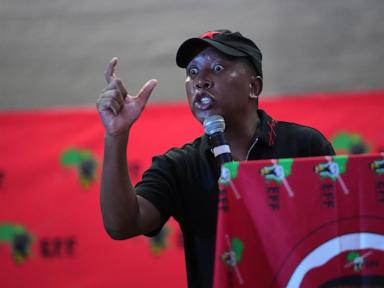
South Africa heads to the polls on May 29, 2024, in what could be the most consequential election since the end of apartheid. The African National Congress (ANC), once revered globally as Nelson Mandela's liberation movement, now confronts the prospect of losing its parliamentary majority after three decades of dominance. With support polling below 50%, the ANC may be forced into coalition governance—a shift that will reverberate through Africa's largest economy and signal a new chapter for post-liberation democracies worldwide. This election represents not just a political contest but a referendum on whether the promise of 1994 has been fulfilled for ordinary South Africans.
The ANC earned its moral authority through decades of resistance to apartheid, culminating in the 1994 democratic transition. In its first decade, the party delivered measurable progress: expanding basic services, introducing social grants that now support millions, and stabilising the economy after years of sanctions. Internationally, South Africa was celebrated for its peaceful transfer of power and the Truth and Reconciliation Commission, drawing foreign investment and re-establishing the country as a gateway to Africa.
These early achievements created high expectations for continued improvement in living standards. The ANC successfully integrated South Africa into the global economy while maintaining a commitment to redressing historical injustices through progressive policies. However, the complexity of transforming a deeply unequal society proved more challenging than anticipated, setting the stage for future frustrations as economic growth failed to keep pace with population growth and urbanization.
Despite political freedom, economic inclusion has stalled. South Africa remains among the world's most unequal nations, with a Gini coefficient consistently near the top. Nearly half of 62 million people live below the poverty line, and unemployment exceeds 30%—among the highest globally. Daily life underscores the failure: rolling blackouts from Eskom's collapsing grid, sewage-contaminated water, uncollected rubbish, and millions housed in informal settlements. These service breakdowns fuel protests nationwide, especially among the 'born-free' generation with no memory of apartheid.
The persistence of these basic service failures has become particularly galling to younger South Africans who expected democracy to deliver tangible improvements in their quality of life. Community protests over electricity outages, water shortages, and uncollected waste have become regular features of South African political life, demonstrating the disconnect between the ANC's liberation legacy and its current governance capabilities. This gap between promise and performance has eroded trust across racial and generational lines.
The Jacob Zuma presidency (2009–2018) became synonymous with 'state capture'—the alleged diversion of state resources to private interests, notably the Gupta family. Investigations documented manipulated procurement, looted state-owned enterprises, and the disappearance of $15 million earmarked for removing asbestos from poor communities' homes. President Cyril Ramaphosa pledged reform after 2018 but has been constrained by factional resistance and his own farm-donation scandal, which triggered an impeachment vote he survived but which deepened public cynicism.
These corruption scandals represented more than isolated incidents; they revealed systemic weaknesses in oversight mechanisms that allowed private interests to influence public policy for personal gain. The perception that political connections mattered more than public service damaged the ANC's credibility irreparably. Even as Ramaphosa attempted to distance himself from this legacy, the lingering effects of state capture continued to undermine government effectiveness and deter investment, creating a vicious cycle of declining resources and growing public disillusionment.
Since Mandela's 1999 departure, the ANC's 'broad church' has splintered. Thabo Mbeki was recalled in 2008; Zuma's ouster in 2018 prompted loyalists to regroup, now challenging Ramaphosa from within. Factional battles stall policy on land reform, mining, and labour—creating regulatory unpredictability for investors. The party that once commanded 70% of the vote now manages competing patronage networks rather than a unified national agenda.
This internal division has prevented the ANC from developing coherent long-term strategies to address South Africa's structural challenges. Instead of presenting a unified vision for economic transformation, the party has become preoccupied with managing internal power struggles. The resulting policy inconsistency has created uncertainty for businesses and further diminished public confidence in the ANC's ability to govern effectively, particularly as competing factions prioritize loyalty to leaders over national interests.
Polls consistently place the ANC below 50%, though it remains the largest party. A lost majority would necessitate coalitions with rivals such as the Democratic Alliance, Economic Freedom Fighters, or uMkhonto weSizwe—Zuma's new vehicle. This introduces both accountability and risk: power-sharing may improve oversight but could also produce policy gridlock or populist concessions. For businesses, the critical variables are fiscal discipline, regulatory stability, and investment incentives in mining, energy, and finance—sectors where policy certainty drives capital allocation.
The prospect of coalition government marks a fundamental shift in South Africa's political landscape after three decades of ANC dominance. While power-sharing could introduce valuable checks and balances, it also raises concerns about decision-making efficiency and policy continuity. Investors will closely monitor how any potential coalition partners negotiate policy compromises, particularly on contentious issues like land reform, mining regulation, and labor relations, as these determinations will significantly influence South Africa's investment climate and economic trajectory.
South Africa's election is a stress test for post-liberation governance worldwide. The ANC's trajectory—from moral authority to embattled incumbent—illustrates how political legitimacy erodes when liberation dividends fail to materialise in daily life. For businesses and investors, the lesson is clear: institutional integrity and service delivery are not optional; they are prerequisites for sustainable markets. As coalition politics looms, stakeholders must assess whether power-sharing produces the accountability South Africa needs or the paralysis it fears. Either outcome will reshape the investment case for Africa's most industrialised economy and influence how other liberation-era parties navigate the transition from struggle to stewardship. In an ESG-conscious era, South Africa underscores that durable commerce depends on the strength of the institutions underpinning it. This moment represents not just a political calculation but a fundamental reckoning with whether the promises of 1994 can still be redeemed through democratic means, regardless of which party or coalition ultimately governs the nation.
Originally reported by abcnews.go.com. Adapted for our readers with AI assistance.
Keep reading
Business
An analysis of the structural and institutional factors that entrench governance failures in Nigeria, from patronage politics and weakened oversight to the urgent need…
Lifestyle
Obi says his wife funds her own purchases. This analysis separates his explanation, unverified handbag prices and the evidence needed to assess public spending.
Politics
Yari says the APC will emphasise Tinubu’s achievements in 2027. This analysis explains how voters can examine outcomes, baselines and campaign evidence.
TAMFIS NIG LTD
Electrical and instrumentation engineering, bid preparation and consulting, IT and software.

