Politics
Yari’s 2027 Campaign Strategy: How to Evaluate Claims About Tinubu’s Record
Yari says the APC will emphasise Tinubu’s achievements in 2027. This analysis explains how voters can examine outcomes, baselines and campaign evidence.
TAMFIS NIG LTDRC 8067447CAC ACTIVEFinima, Bonny Island, Rivers State

The recent attack on a mosque in Gadan village, Gezawa Local Government Area of Kano State, has sent shockwaves across Nigeria. Initially feared to be an act of terrorism or politically motivated violence, Governor Abba Kabir Yusuf has now categorically stated that the incident is unrelated to such causes. Instead, it is the tragic outcome of a domestic dispute over inheritance. This revelation shifts the narrative and highlights the complexities behind violent acts often misattributed to larger socio-political issues. This article offers an in-depth look at the governor's statements, the suspect's legal proceedings, and the broader security and justice implications in Kano.
On a somber day in Gadan village, Gezawa Local Government Area, Kano State, an attack on a local mosque resulted in the deaths of 15 individuals. The mosque, a place traditionally seen as a sanctuary of peace and worship, became the site of a horrifying violent incident that shocked the local community and the nation at large.
Initial reports and speculation suggested that the attack might have been driven by terrorism or political rivalry, given the sensitivity surrounding religious and political tensions in parts of Nigeria. However, subsequent investigations have painted a different picture, unraveling the true nature of the incident.
The suspect, identified as Shafi'u Abubakar, was apprehended following the attack. Early accounts indicated that the violence arose from a personal dispute, specifically related to family inheritance issues, rather than any organized terrorist or political agenda.
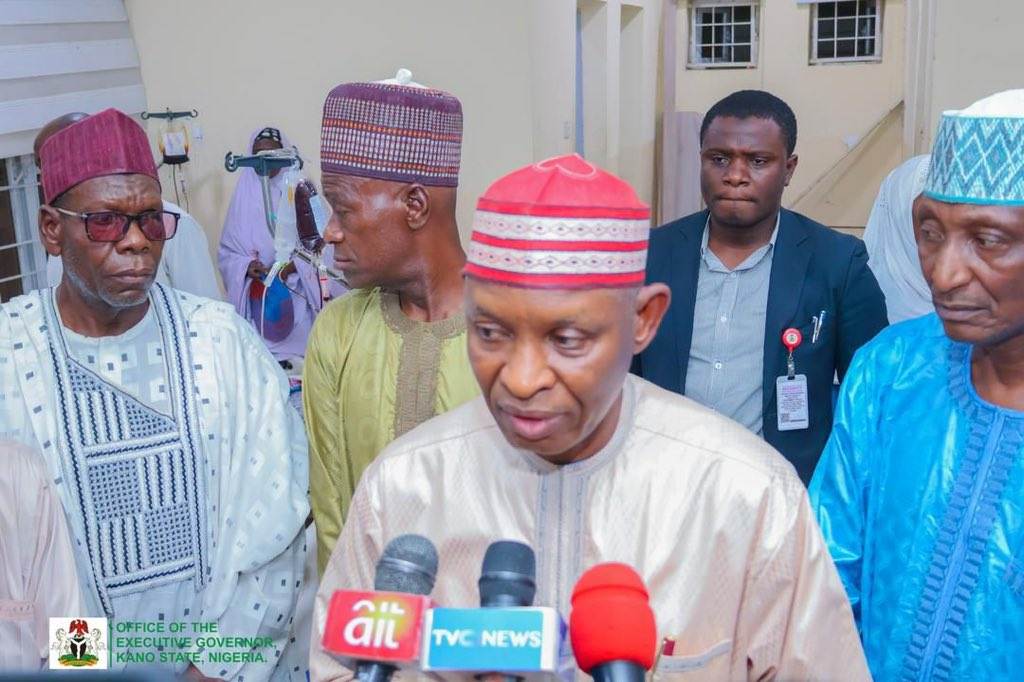
Governor Abba Kabir Yusuf of Kano State publicly addressed the incident during a visit to the victims at the Murtala Specialist Clinic in Kano. His visit underscored the government’s commitment to providing support to the victims and their families amid this tragedy.
During his address, Governor Yusuf emphatically rejected the notion that the attack was linked to terrorism or political violence. Instead, he confirmed that the attack stemmed from a domestic dispute over inheritance, dispelling rumors that could have escalated tensions in the region.
The governor condemned the attack in strong terms, describing it as a grave violation of peace and security in the state. He reassured the public that the suspect would be held accountable under the law and that justice would be served transparently and swiftly.
Following the attack, authorities moved quickly to detain Shafi'u Abubakar, who is now facing charges in a Shariah court. The choice of the Shariah court aligns with Kano State’s legal framework, where Islamic law governs certain criminal matters, particularly those related to murder and personal disputes.
Governor Yusuf stated that if the suspect is found guilty after a fair trial, he would personally sign the death warrant, upholding the strict provisions of the law concerning murder. This statement reflects the governor’s resolve to ensure that justice is not only done but is seen to be done by the public.
The use of Shariah law in this case highlights the interplay between religious jurisprudence and state law in Kano State, emphasizing the importance of culturally and legally appropriate judicial processes in addressing such crimes.
The attack has had a profound impact on the Gadan village community, leaving families grieving and the local population shaken. Places of worship, typically viewed as safe havens, have been thrust into the spotlight as potential targets of violence, undermining community trust and security.
Governor Yusuf’s visit to the victims at the hospital was a gesture aimed at offering solace and demonstrating government empathy. His presence also signaled the administration’s commitment to addressing the aftermath of the attack and providing necessary support to those affected.
The incident has also sparked conversations within the community about the dangers of unresolved family disputes escalating into violence, emphasizing the need for effective conflict resolution mechanisms at the grassroots level.
In response to the attack, the Kano State government has pledged to strengthen security measures around places of worship to prevent future incidents. Security agencies have been directed to intensify patrols and surveillance, particularly in vulnerable rural areas like Gezawa Local Government Area.
Governor Yusuf assured residents that the state government, in collaboration with security operatives, would pursue the investigation to its logical conclusion, leaving no stone unturned in bringing justice to the victims and restoring peace.
The government’s proactive stance also involves community engagement initiatives aimed at fostering peace and reducing the risk of similar conflicts, with an emphasis on dialogue and mediation in family disputes.
The clarification that the attack was not terrorism or politically motivated is significant in the Nigerian context, where incidents of violence are often quickly attributed to extremist groups or political unrest. This distinction helps prevent unnecessary panic and misdirected security responses.
Domestic violence and familial disputes, while often overlooked in broader security discussions, can lead to severe consequences, as evidenced by this tragic event. Recognizing the root causes of such violence is crucial for effective prevention and intervention strategies.
Governor Yusuf’s emphasis on the non-terrorist nature of the attack serves to educate the public and media, encouraging responsible reporting and understanding of complex security issues beyond simplistic narratives.
The media plays a pivotal role in shaping public perception of violent incidents. Early misreporting or speculation linking the mosque attack to terrorism could have inflamed tensions and spread misinformation, highlighting the need for responsible journalism.
Governor Yusuf’s clear and detailed communication helped to correct the narrative, providing factual information that aids in calming public fears and promoting social cohesion in Kano State and beyond.
Going forward, media outlets and public officials must collaborate to ensure accurate dissemination of information, especially in sensitive cases involving religion and community security, to avoid misunderstandings and communal unrest.
The Kano mosque attack serves as a stark reminder of the devastating consequences that can arise from unresolved family disputes. It underscores the importance of accessible legal and mediation services at the community level to address conflicts before they escalate.
Governor Yusuf’s administration has an opportunity to build on this incident by enhancing community policing, improving judicial processes, and promoting peacebuilding initiatives aimed at preventing similar tragedies in the future.
Ultimately, the incident calls for a balanced approach to security and justice in Kano State—one that recognizes the nuances of local conflicts while maintaining firm legal standards to protect citizens and uphold the rule of law.
The tragic attack on the mosque in Kano’s Gadan village has been definitively clarified by Governor Abba Kabir Yusuf as a result of a family inheritance dispute, dispelling earlier fears of terrorism or political violence. This distinction is vital for maintaining public calm and ensuring that justice is served appropriately through the Shariah court system. The incident not only highlights the devastating impact of unresolved domestic conflicts but also underscores the need for enhanced security and community engagement in Kano State. Moving forward, the government’s commitment to justice, security, and accurate public communication will be essential in healing the affected community and preventing future violence. This case serves as a poignant reminder of the complexities behind violent incidents and the importance of addressing their root causes with sensitivity and firmness.
Originally reported by pulse.ng. Adapted for our readers.
Keep reading
Politics
Yari says the APC will emphasise Tinubu’s achievements in 2027. This analysis explains how voters can examine outcomes, baselines and campaign evidence.
Lifestyle
Obi says his wife funds her own purchases. This analysis separates his explanation, unverified handbag prices and the evidence needed to assess public spending.
Politics
Politics tamfitronics Minnesota Gov. Tim Walz attends a rally in Asheville, North Carolina, on Sept. 17. Minnesota led the way on in...
TAMFIS NIG LTD
Electrical and instrumentation engineering, bid preparation and consulting, IT and software.