News
RUSSIA versus NATO and BRICS vs. NATO Military SWOT
Recall that Poland’s Minister Sikorski’s core claim is partially supported by the numbers, but the framing “quite quickly” and “without the U.S.” does not…
TAMFIS NIG LTDRC 8067447CAC ACTIVEFinima, Bonny Island, Rivers State

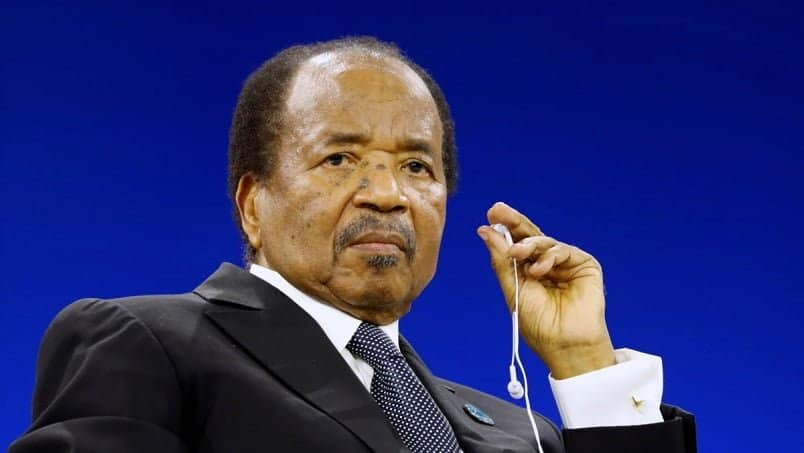
In the realm of global politics, longevity in leadership is a rare and remarkable achievement. While many presidents serve limited terms, a select few have managed to remain at the helm of their countries for decades, influencing the political, social, and economic trajectories of their nations. This article explores the world’s 10 longest-serving presidents, examining their paths to power, the duration of their rule, and the legacies they leave behind. From Africa to Europe and Asia, these leaders exemplify diverse approaches to governance, stability, and control amid evolving political landscapes.
Paul Biya, the president of Cameroon, stands as one of the world’s longest-serving heads of state. Having assumed office in 1982, his tenure has stretched over 41 years, making him not only one of the oldest elected leaders globally but also a dominant force in Cameroonian politics. His prolonged rule is characterized by a firm grip on power, sustained through constitutional amendments and political maneuvering.
Biya’s leadership has been marked by both stability and controversy. While he has maintained relative peace in a diverse country with multiple ethnic groups, critics accuse his administration of authoritarianism, election irregularities, and suppressing dissent. Despite these challenges, Biya’s ability to adapt to changing political climates has ensured his continued presidency.
His impact on Cameroon is undeniable, with his policies influencing the country’s economic development and international relations. However, questions about democratic governance and human rights remain central to discussions about his legacy.
Emomali Rahmon has led Tajikistan since 1994, shortly after the dissolution of the Soviet Union plunged the country into civil war. His leadership played a crucial role in stabilizing the nation, guiding it through reconstruction and political consolidation. Rahmon’s presidency spans over three decades, during which he has maintained his position through successive elections and constitutional changes.
Rahmon’s tenure has been vital in shaping Tajikistan’s post-Soviet identity, focusing on national unity and economic development. Yet, his administration has faced criticism for restricting political opposition, limiting freedom of expression, and concentrating power within the executive branch.
Despite these concerns, Rahmon’s governance has ensured relative stability in a region known for volatility, positioning Tajikistan as a significant player in Central Asia’s geopolitical landscape.
Teodoro Obiang Nguema has been the president of Equatorial Guinea since 1979, making him the longest-serving current non-royal head of state worldwide. His rule, lasting over four decades, has transformed the country from a neglected state to an oil-rich nation, albeit with persistent allegations of corruption and human rights abuses.
Obiang’s leadership style is often described as authoritarian, with tight control over political opposition and the media. The regime’s wealth from oil resources has not translated into widespread prosperity, leading to significant disparities and international criticism.
Nonetheless, Obiang’s ability to maintain power for such an extended period highlights his political resilience and the complex dynamics of governance in resource-rich African nations.
Isaias Afwerki has been Eritrea’s president since its independence in 1993, making him one of the longest-serving leaders in Africa. His rule has been instrumental in shaping Eritrea’s post-colonial identity but has also been marked by isolationism and a lack of democratic reforms.
Afwerki’s government is often described as highly centralized and militarized, with limited political freedoms and no national elections held since independence. His leadership has focused on national unity and defense, often at the cost of suppressing dissent and curtailing civil liberties.
Despite international criticism, Afwerki remains firmly in power, illustrating the complexities of governance in a nation emerging from prolonged conflict and striving for sovereignty.
Yoweri Museveni has been Uganda’s president since 1986, marking a 37-year tenure that has seen both economic growth and political controversy. Coming to power after a period of civil unrest, Museveni initially garnered praise for stabilizing the country and implementing reforms.
Over time, Museveni’s presidency has been criticized for increasingly authoritarian tendencies, including constitutional amendments to remove term limits and crackdowns on opposition. Despite this, he remains a dominant political figure, securing multiple re-elections and maintaining significant influence in the region.
His complex legacy reflects both the benefits of prolonged leadership in fostering stability and the challenges of balancing power with democratic principles.
Ismail Omar Guelleh has served as Djibouti’s president since 1999, succeeding his uncle and solidifying his family’s political influence. His leadership has been marked by strategic alliances and infrastructural development, positioning Djibouti as a critical hub for international trade and military presence.
Guelleh’s tenure includes multiple election victories, often criticized for lack of genuine political competition and restrictions on opposition parties. Nonetheless, his administration has focused on economic growth and regional stability.
His prolonged rule underscores the interplay between political continuity and economic strategy in small but geopolitically significant nations.
Vladimir Putin’s leadership of Russia began in 1999, and with his latest re-election in March 2024, he is set to extend his rule to approximately 25 years. Putin’s tenure has been characterized by efforts to restore Russia’s global influence and consolidate power domestically.
Under Putin, Russia has experienced significant political centralization, with reduced opposition space and increased control over media and institutions. His leadership style combines nationalism with strategic geopolitical maneuvers, impacting global affairs profoundly.
Putin’s enduring presence in Russian politics exemplifies how political acumen and control over state mechanisms can sustain long-term leadership amid evolving national and international challenges.
Alexander Lukashenko has been Belarus’s president since 1994, earning the moniker “Europe’s last dictator” due to his authoritarian governance style. His nearly three-decade rule is marked by suppression of political opposition, control over the media, and disputed elections.
Lukashenko’s regime has maintained political stability but at the cost of international sanctions and widespread protests. His leadership reflects a resistance to democratic reforms and a preference for centralized power.
Despite growing domestic and international pressure, Lukashenko’s ability to hold onto power highlights the complexities of governance in post-Soviet states facing demands for change.
Denis Sassou Nguesso has cumulatively ruled the Republic of Congo for nearly 39 years, with two distinct terms spanning from 1979 to 1992 and from 1997 to the present. His presidency has been marked by political turmoil, civil conflict, and eventual consolidation of power.
Sassou Nguesso’s governance includes navigating post-conflict reconstruction, managing natural resource wealth, and maintaining political dominance through constitutional changes and elections often criticized by observers.
His lengthy tenure illustrates the challenges of leadership in countries grappling with instability and the balancing act between authoritarian control and attempts at modernization.
Paul Kagame has been Rwanda’s president since 2000, playing a pivotal role in the country’s recovery following the 1994 genocide. His leadership focuses on national unity, economic development, and technological advancement, transforming Rwanda into a model of post-conflict reconstruction.
While Kagame’s presidency is credited with significant progress, it has also faced criticism for limited political freedoms and suppression of dissent. His administration maintains tight control over political processes, raising questions about democratic governance.
Kagame’s enduring leadership exemplifies how long-term governance can facilitate stability and growth while posing challenges to pluralistic political engagement.
The world’s longest-serving presidents illustrate the intricate relationship between power, governance, and political survival. Their extended tenures have deeply influenced their nations’ paths, often balancing between fostering stability and provoking criticism over democratic backsliding. While some have driven economic and social progress, others have maintained authority through restrictive measures. Studying these leaders offers valuable perspectives on the complexities of political longevity, the resilience of authoritarianism, and the diverse trajectories nations follow under prolonged leadership. As global political landscapes evolve, the legacies of these presidents will continue to shape discussions on governance, democracy, and human rights.
Originally reported by businesselitesafrica.com. Adapted for our readers.
Keep reading
News
Recall that Poland’s Minister Sikorski’s core claim is partially supported by the numbers, but the framing “quite quickly” and “without the U.S.” does not…
Politics
In August 2025, Zespri, the world’s largest marketer of kiwifruit, announced that the European Commission had approved what it described as the first health…
News
By Engr. Tamunofiniarisa BrownReading Time: 6 Minutes The conflict between Russia and Ukraine is often framed in the media as a simple battle between…
TAMFIS NIG LTD
Electrical and instrumentation engineering, bid preparation and consulting, IT and software.