Rumors about cars exploding, catching fire or failing in dramatic ways spread quickly because they are vivid and frightening. A single post can make it sound as if a specific model is unsafe everywhere, even when the actual incident is unconfirmed, local, old or unrelated to the vehicle design. The problem is not only the rumor itself. The problem is how quickly people turn an allegation into a conclusion.
That is why the first response should be verification, not outrage. If a video, caption or headline claims that a vehicle exploded at a certain place and time, check what is actually visible, who posted it first, whether any official response exists and whether the details match across independent sources. A responsible reader slows down before sharing. A responsible publisher slows down before amplifying.
Start with the evidence, not the caption
Captions are often the weakest part of a rumor. They may contain a precise-sounding location, a brand name or a dramatic description that is not supported by the media attached to the post. Before you believe the text, inspect the image or video itself. Look for signs of editing, reuse, missing context or a scene that could belong to a different event entirely.
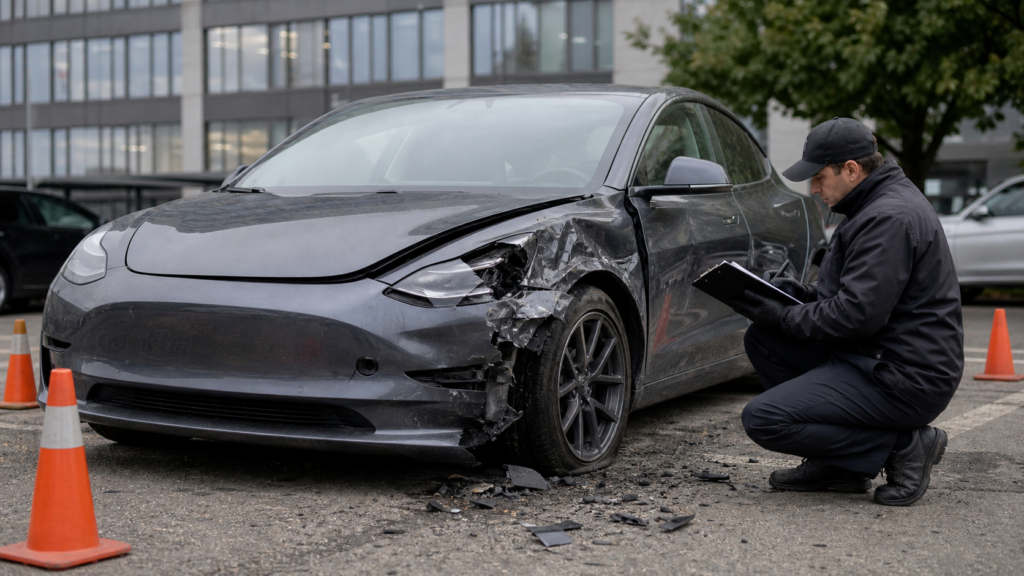
If the material is recycled from another incident, the original date and setting matter more than the repost. A clip of a wrecked vehicle is not proof of a new explosion. A damaged front end is not proof of battery failure. And a dramatic headline is not proof of anything unless it can be linked back to a verifiable source.
Ask the basic incident questions
- Where did the event happen, and is that place named by an official source?
- When did it happen, and does the timestamp match the media or report?
- Who observed it first, and are they a direct witness or a second-hand account?
- Was there a fire, a collision, a mechanical failure or a different cause entirely?
- Has any authority, insurer, manufacturer or emergency service confirmed the event?
These questions matter because dramatic claims often compress several separate issues into one sentence. A collision can become an explosion story. A battery investigation can become a branding attack. An unrelated fire nearby can become a claim about a specific car. The details decide the meaning, so they need to be established before the conclusion is drawn.
Watch for the usual rumor traps
- Old footage: a real incident from another day or city is reposted as new.
- Geographic drift: the caption says one location while the media suggests another.
- Brand leap: a damaged vehicle is automatically assigned to a manufacturer without proof.
- Causal leap: an accident is described as a fire or explosion without evidence.
- Quote drift: someone’s reaction becomes a supposed official confirmation.
Those traps are common because they reward speed. The first account to post dramatic content often gets attention whether or not the claim survives scrutiny. Once the rumor is widely shared, the correction has to fight against familiarity. That is another reason to keep your own language careful and narrow until the facts are solid.
Use official sources where possible
For a vehicle incident, the most useful sources are usually emergency services, police, transport authorities, the manufacturer, the owner’s statement or a verified local reporter with direct access to the scene. If those sources are unavailable, say so. Silence is better than pretending certainty. The goal is not to win an argument on the internet. The goal is to avoid making the wrong claim sound authoritative.
If a manufacturer later issues a recall, technical note or safety update, distinguish that from the original rumor. A later real safety concern does not retroactively validate a false post about a specific explosion. Likewise, a false rumor does not mean every later report about the product is unimportant. Accuracy requires separate timelines, not one blended story.
How to write the correction
- State the corrected fact plainly.
- Explain what was wrong in the original claim.
- Remove speculative wording that could keep the rumor alive.
- Keep the correction visible where readers are likely to encounter the original item.
- Update social previews and syndication copies so the old headline does not continue circulating.
A good correction is specific and calm. It does not over-apologize, but it does not hide. The best outcome is that readers can tell exactly what changed and why. When the correction is precise, it reduces confusion and preserves trust. When it is vague, the rumor survives in the gap between versions.
Keep a verification record
Save the original link, screenshots, timestamps and the names of sources you contacted. This record helps an editor reconstruct what was known at publication time and prevents the same misleading material from returning under a new caption. It also makes later corrections faster because the evidence trail is already organised. For recurring claims about a model or manufacturer, compare each new report with that record instead of assuming that repetition proves the allegation. A documented process turns verification from a one-off reaction into a dependable newsroom habit. It also gives legal and standards reviewers a clear account of the editorial decision.
Bottom line
Before you share a dramatic vehicle incident, verify the source, the date, the location and the actual evidence. If any of those pieces are missing, treat the claim as unconfirmed. Rumor control is not slow thinking. It is the minimum standard for not making a bad situation worse.
Originally reported by techau.com.au. Adapted for our readers.