Business
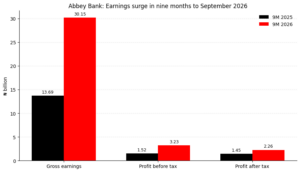
Abbey Bank’s 56% Profit Surge Signals Strategic Shift to Commercial Banking in Nigeria
Abbey Bank Plc's profit after tax rose 55.9 percent to N2.26 billion in the nine months to September 2026, driven by a 120 percent…
TAMFIS NIG LTDRC 8067447CAC ACTIVEFinima, Bonny Island, Rivers State


In the hustle and bustle of daily life, couples often find themselves juggling logistics and responsibilities, leaving little room for meaningful emotional connection. Yet, a simple morning ritual practiced by emotionally intelligent partners can pave the way for stronger relationships and smoother days. This ritual involves asking a straightforward question that gauges each partner's emotional and mental capacity for the day ahead. Psychologist Mark Travers, who specializes in couples therapy, highlights how this practice fosters empathy, reduces misunderstandings, and helps couples manage their expectations effectively. This article explores the concept of the 'capacity check,' its benefits, and practical ways to incorporate it into your relationship.
Morning routines in many households are often a whirlwind of activity, filled with logistical questions such as who will pick up the kids or what time dinner will be. These practical exchanges are essential but tend to dominate the brief moments couples share before the day begins.
Beyond these logistical queries, some couples take a step further by asking about each other's well-being—questions like 'How did you sleep?' or 'How are you feeling?' While these questions are meaningful, they often elicit generic answers like 'fine,' especially when asked in the rush of the morning.
Psychologist Mark Travers observed that while these questions are useful, they may not fully capture a partner's emotional state or capacity to handle the day's demands. This insight led to the identification of a more effective question that emotionally intelligent couples ask.
The 'capacity check' is a simple yet powerful question designed to assess how much emotional and mental energy a partner has available on any given day. Instead of a broad 'How are you?' it asks, 'How much do you have available today, and what should I expect from you?'
Couples may phrase this question in various ways, such as 'I'm about a 60 today, where are you?' or 'Is today a light one or a heavy one?' Some use metaphors like weather or seasons to describe their emotional state. The key is that the question invites an honest and quick assessment of one's capacity without requiring deep emotional excavation.
This approach acknowledges that people’s energy and emotional reserves fluctuate daily, and recognizing this can prevent misunderstandings and misplaced expectations.
Knowing your partner’s capacity early in the day allows you to adjust your expectations and interactions accordingly. For example, if your partner indicates they are at a 40 on a 100-point scale, you might decide to postpone sensitive conversations or take on more household responsibilities to ease their load.
Without this insight, behaviors such as irritability or withdrawal might be misinterpreted as personal rejection or criticism, leading to unnecessary conflict. Instead, understanding that a partner is simply low on energy fosters empathy and patience.
Mark Travers notes that many couples’ arguments stem from these misinterpretations. By incorporating capacity checks, couples can preemptively address potential friction points, leading to more harmonious relationships.
Asking and answering capacity checks requires emotional intelligence—the ability to recognize, understand, and manage one’s own emotions and those of others. It involves acknowledging that each partner’s experience is unique, even when sharing the same environment.
The timing of the check-in is crucial. Conducting it in the calm of the morning, before stressors accumulate, demonstrates a proactive approach to relationship care rather than reactive problem-solving after issues arise.
This practice signals a commitment to mutual support and respect, showing that partners are attuned to each other’s needs and willing to adjust their behavior to foster well-being.
To make capacity checks work, couples should follow three key principles:
1. Lead by Example: One partner should initiate the check-in by sharing their own capacity first. This openness lowers the barrier for honest communication and sets a tone of vulnerability and trust.
2. Accept Low Scores Without Judgment: If a partner indicates a low capacity, resist the urge to fix the problem immediately or question their feelings. Simply acknowledging their state encourages continued honesty.
3. Act on the Information: The purpose of the check-in is to inform behavior. This might mean taking over a task, postponing a difficult conversation, or lowering expectations without making a fuss. These small adjustments can significantly improve daily interactions.
Incorporating these steps helps transform the capacity check from a routine question into a meaningful ritual that strengthens the relationship.
While the capacity check concept originates in personal relationships, its principles have valuable applications in business and consumer interactions, particularly in the Nigerian and global e-commerce markets.
Understanding the emotional and mental capacity of partners, employees, or clients can improve communication, reduce conflicts, and enhance collaboration. For example, procurement teams negotiating tenders or bids can benefit from recognizing when stakeholders are operating at lower capacity and adjusting timelines or expectations accordingly.
Similarly, customer service interactions that account for the emotional state of consumers can lead to better satisfaction and loyalty. Businesses that foster emotional intelligence in their teams can navigate challenges more effectively and create more resilient partnerships.
As e-commerce and digital business environments become increasingly complex, integrating emotional intelligence practices like capacity checks can differentiate successful companies and improve overall market dynamics.
In an era where both personal and professional relationships are often strained by busy schedules and high demands, the simple act of asking ‘How much do you have available today?’ can be transformative. This capacity check fosters emotional intelligence, enabling couples to navigate daily challenges with empathy and understanding. Beyond the home, businesses and consumers can also benefit from applying these principles to improve communication and collaboration. By embracing this straightforward yet profound question, individuals and organizations alike can build stronger, more resilient connections that stand the test of time.
Originally reported by cnbc.com. Adapted for our readers with AI assistance.
Keep reading
Business
Abbey Bank Plc's profit after tax rose 55.9 percent to N2.26 billion in the nine months to September 2026, driven by a 120 percent…
Business
Federal Government launches comprehensive digital procurement training program for micro, small and medium enterprises to enhance e-commerce capabilities and market access.
Business
Global investment banking giant J.P. Morgan is preparing to establish its first merchant banking operation in Nigeria, targeting a pre-year-end 2026 commencement pending regulatory…
TAMFIS NIG LTD
Electrical and instrumentation engineering, bid preparation and consulting, IT and software.