
Business
Nigeria’s Economic Performance: Domestic Debt Rise and Agriculture Trade Shift in Q2 2026
Nigeria's economic landscape in the second quarter of 2026 presents a mixed picture of fiscal press...
TAMFIS NIG LTDRC 8067447CAC ACTIVEFinima, Bonny Island, Rivers State

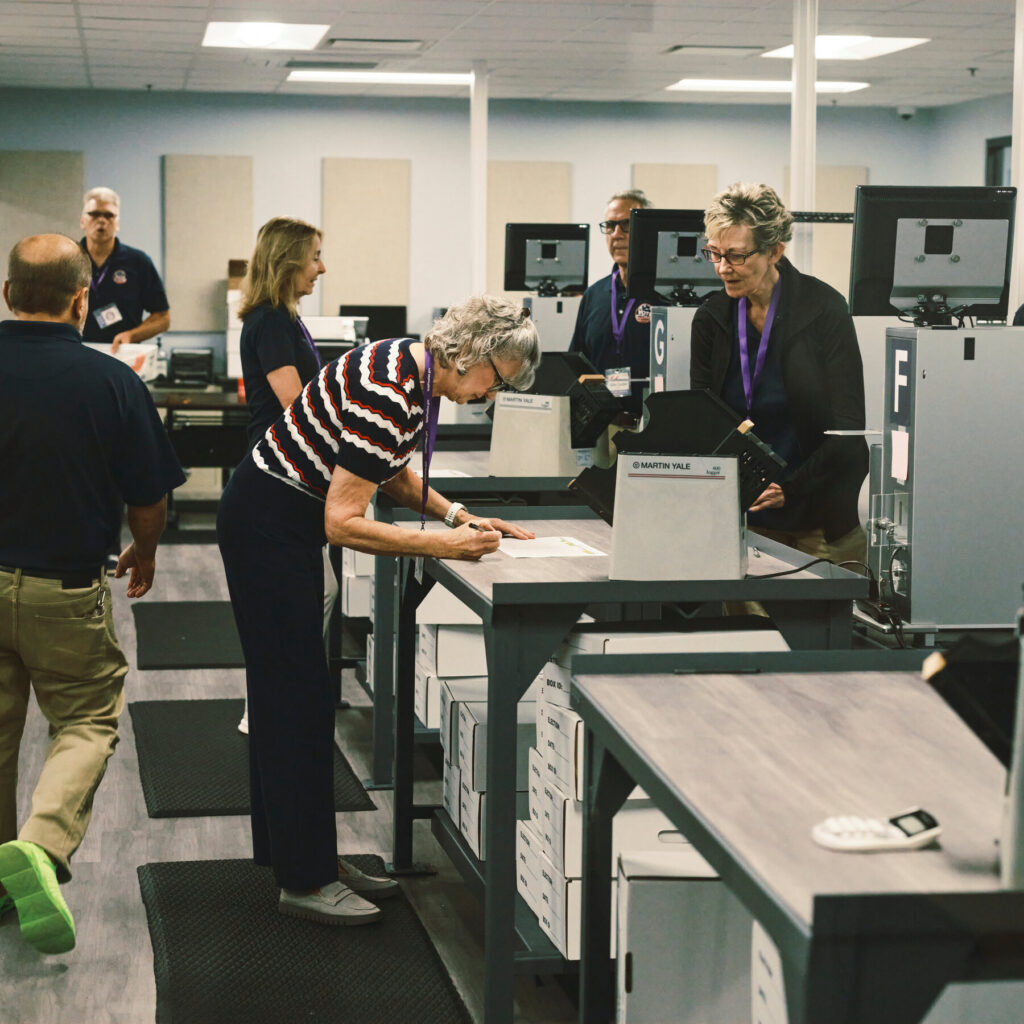
From Oregon to Florida, officials are at once reassuring voters that their ballots are safe and encouraging them to use drop boxes or vote in person. The message is being delivered at a moment when Americans are hearing fierce, often contradictory claims about how their votes will be counted. Voters who planned to return a ballot by mail are now being told, in the same breath, that the system is secure and that they should consider an alternative method. That pairing has left many people unsure of what to trust, and it has turned a routine election-administration announcement into a larger political flash point.
The core development is a coast-to-coast shift in tone from election officials. Across the country, from Oregon to Florida, officials are at once reassuring voters that their ballots are safe and encouraging them to use drop boxes or vote in person. Rather than simply defending mail voting on its own, many offices are coupling their reassurances with practical advice to bypass the postal system entirely. The result is a two-part communication: a promise that ballots are protected, and a recommendation to take extra steps to make sure they arrive.
This dual message matters because it comes during a season of heightened suspicion toward mail-in ballots. For years, absentee and mail voting were generally treated as one of several ordinary ways to participate. Recently, however, they have been singled out in national debates as uniquely vulnerable, even though election administrators routinely describe them as safeguarded by bar codes, signature verification, ballot-tracking systems, and bipartisan observation. Against that backdrop, an official statement that a mail ballot is safe but that a voter should still use a drop box or vote in person can feel less like a neutral tip and more like a coded warning.
The confusion is compounded by the breadth of the advice. When guidance spans from Oregon, a state with a long history of voting by mail, to Florida, a state with different rules and customs, it signals that the unease is not limited to one region or party. Voters in states with mature mail systems and voters in states where absentee voting has been more restricted are hearing the same cautionary refrain. That nationwide echo can make a routine procedural recommendation sound like an emergency measure, even when officials do not use alarming language.
Drop boxes and in-person voting are legal, well-established options almost everywhere. A drop box allows a voter to return a completed absentee ballot to a secure, monitored location without relying on the mail. Voting in person, whether on Election Day or during an early-voting period, gives a voter immediate confirmation that the ballot has been accepted. Both methods are legitimate and, in normal times, are presented simply as choices. The unusual element now is the framing: officials are not merely listing options; they are actively steering voters away from mail submission while simultaneously saying mail submission is fine.
This framing can have real consequences. For voters who have already requested a mail ballot, a public suggestion to use a drop box may be welcome, because it offers a reliable backup. For others, especially those who live far from a drop box, have mobility limits, or cannot easily take time off to vote in person, the message can create anxiety without offering a practical solution. The line between useful guidance and inadvertent discouragement is thin, and officials are walking it in public view.
There is also a trust problem. If a voter is told both that the mail system is secure and that they should avoid it, the reassurance may ring hollow. People tend to weigh preventive advice more heavily than abstract assurances, so a voter who hears “your ballot is safe, but use a drop box” may remember only the second half. Over time, that can erode confidence in mail voting itself, even when no specific threat has been documented. The resulting skepticism can make election administration harder, because skeptical voters are more likely to call hotlines, demand extra verification, or challenge processes that were previously uncontroversial.
The most useful response is to follow the practical part of the guidance. Voters who have a mail ballot can return it through an official drop box if one is available, or they can vote in person according to local rules. Those who choose the mail should make sure they understand their jurisdiction’s deadlines, tracking options, and signature requirements. In every case, the safest source of information is the state or local election office itself, not social-media rumors or unofficial flyers.
It also helps to remember that having multiple ways to vote is a feature, not a bug. Drop boxes exist precisely to give voters another secure path for returning a ballot. Early in-person voting exists to reduce crowding and give people flexibility. When officials encourage these methods, they are often trying to reduce risk and increase certainty, not to declare an entire voting channel broken.
The nationwide pattern of officials reassuring voters about ballot safety while steering them toward drop boxes or in-person voting captures the strange politics of this election season. The same sentence is meant to calm fears and change behavior, and that is a difficult balance to strike. For voters, the best approach is to treat the practical advice as exactly that: practical advice. Ballot return options exist to serve different needs, and using the one that is most reliable in a given situation is a reasonable choice. At the same time, the confusion itself is a reminder that how election information is framed can matter as much as the facts behind it. When reassurance and redirection are delivered together, the message voters hear may not be the one officials intended.
Originally reported by nytimes.com. Adapted for our readers with AI assistance.
Keep reading
Business
Nigeria's economic landscape in the second quarter of 2026 presents a mixed picture of fiscal press...
Business
Liverpool manager Andoni Iraola is confronting a significant selection headache as two key forwards, Cod...
News
Health News tamfitronics [Editor’snote:[Editor’snote: This transcript was generated using both transcription ...
TAMFIS NIG LTD
Electrical and instrumentation engineering, bid preparation and consulting, IT and software.