
Business
Nigeria’s Economic Performance: Domestic Debt Rise and Agriculture Trade Shift in Q2 2026
Nigeria's economic landscape in the second quarter of 2026 presents a mixed picture of fiscal press...
TAMFIS NIG LTDRC 8067447CAC ACTIVEFinima, Bonny Island, Rivers State

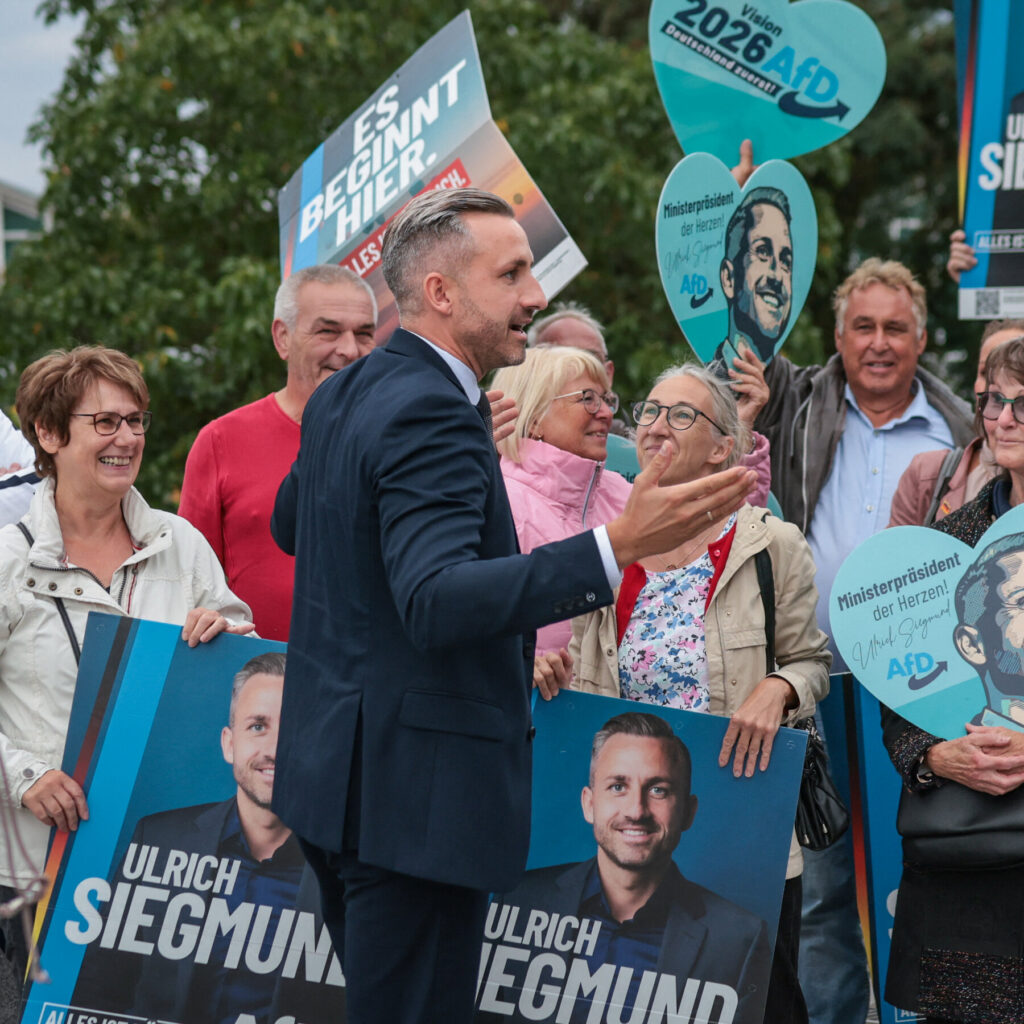
Sunday's state election in Saxony-Anhalt has delivered what may be the Alternative for Germany (AfD) party's strongest-ever result, potentially making it the largest party in a German state legislature for the first time since World War II. This development challenges the decades-long 'firewall' (Brandmauer) that has prevented extremist parties from participating in government at any level. With structural economic grievances in former East Germany fuelling AfD support and the 2025 federal election on the horizon, the vote serves as a critical stress test for democratic institutions whose resilience directly impacts commercial confidence and cross-border trade relations.
The AfD's projected victory in Saxony-Anhalt marks a dramatic escalation since its 2013 founding as a eurosceptic party. What began as an academic critique of eurozone policy has evolved into a nationalist, anti-immigration force that has expelled moderate voices and embraced hardline factions. In Saxony-Anhalt—a state of 2.2 million in former East Germany—the party consistently outperforms its national average, benefiting from decades of economic dislocation following reunification, persistent youth outmigration and demographic ageing. Unemployment historically exceeds national averages while per capita GDP remains substantially below western levels, creating fertile ground for the AfD's narrative of abandonment. For business observers, this dynamic mirrors patterns where economic distress fuels political extremism, potentially disrupting investment climates and operational predictability.
Germany's postwar consensus has relied on a formal 'firewall' preventing cooperation with the AfD, maintained by the CDU, SPD, Greens, FDP and Left Party. However, Saxony-Anhalt's electoral arithmetic may force an unprecedented test. If the AfD emerges as the largest party—or if no majority can form without its tacit support—mainstream parties face an unenviable choice: govern with ideological opponents, accept minority administrations, call new elections, or normalize extremist participation. Coalition negotiations in Magdeburg will determine whether AfD influence translates into policy control over economic development, infrastructure, skills training and regulation—areas directly affecting business. For exporters and importers reliant on German markets, any shift toward protectionist policies could disrupt established supply chains. The CDU faces an existential decision: maintain the firewall and risk paralysis, or accommodate the AfD and shatter the postwar consensus, potentially triggering capital flight and market volatility.
Germany's constitutional architecture includes barriers to extremist governance. The Federal Constitutional Court can ban parties seeking to undermine democracy, though the threshold has been met only twice (Socialist Reich Party, 1952; Communist Party, 1956). The Office for the Protection of the Constitution monitors the AfD as a 'suspected extremist' organization in several states including Saxony-Anhalt. These checks operate alongside civil society resistance from trade unions, churches and grassroots groups mobilizing against AfD normalization. For business leaders, these counterweights provide reassurance that extreme policy shifts may be contained, preserving the stable regulatory environment that makes Germany Africa's largest European trading partner. Nevertheless, the mere prospect of AfD governance introduces uncertainty into business planning, complicating long-term investment decisions on environmental regulations, labour laws and trade policy.
The Saxony-Anhalt outcome will influence Germany's 2025 federal election. A normalized AfD presence at state level could legitimize its national participation, forcing mainstream parties into difficult strategic choices. The CDU's dilemma—maintain isolation or breach the postwar consensus—will shape campaign narratives nationwide. Chancellor Olaf Scholz's government has warned that AfD participation would represent a 'caesura' in German democracy, reflecting awareness that democratic backsliding in Europe's largest economy would reverberate globally through financial markets and trade relations. For African economies integrated into European value chains, German political stability remains a cornerstone of predictable business conditions; rising extremist influence risks triggering risk-off sentiment, increasing borrowing costs and complicating long-term infrastructure and industrial projects with German partners.
The Federal Republic's 1949 founding explicitly rejected the Weimar Republic's failure against extremist capture—a lesson embedded in the Basic Law's Article 79 'eternity clause' protecting human dignity, democracy and rule of law. For many Germans, the AfD's rise represents a moral test of the nation's confrontation with its Nazi past, particularly as party leaders have minimized Nazi crimes and questioned remembrance culture. This historical consciousness extends to business, where German companies maintain rigorous standards on ethical supply chains, human rights due diligence and historical accountability. Nigerian firms engaging German partners benefit from these compliance frameworks, now competitive advantages in ESG-focused markets. Should AfD influence grow, questions arise about the durability of these standards in a climate potentially less receptive to supranational human rights frameworks or historical reparations discussions.
The Saxony-Anhalt election constitutes a critical stress test for Germany's democratic resilience whose outcome will significantly influence business confidence, investment climates and trade stability across European and global markets. Whether the firewall holds depends on mainstream parties' willingness to accept political discomfort—governing with ideological opponents, tolerating minority administrations or calling new elections—rather than normalizing the AfD. For Nigerian businesses and investors, the resolution will determine whether Germany continues to offer the predictable, rules-based environment that has facilitated decades of economic partnership or enters a period of heightened uncertainty complicating long-term planning. As coalition negotiations unfold in Magdeburg, the stakes extend well beyond state politics to the foundations of the democratic order underpinning postwar prosperity.
Originally reported by nytimes.com. Adapted for our readers with AI assistance.
Keep reading
Business
Nigeria's economic landscape in the second quarter of 2026 presents a mixed picture of fiscal press...
Business
Liverpool manager Andoni Iraola is confronting a significant selection headache as two key forwards, Cod...
News
Health News tamfitronics [Editor’snote:[Editor’snote: This transcript was generated using both transcription ...
TAMFIS NIG LTD
Electrical and instrumentation engineering, bid preparation and consulting, IT and software.