Business News
NDLEA Intensifies Operations Against Narcotic Trade and Illegal Trafficking
The National Drug Law Enforcement Agency has arrested multiple suspects and seized significant drug consignments in recent operations across Nigeria.
TAMFIS NIG LTDRC 8067447CAC ACTIVEFinima, Bonny Island, Rivers State

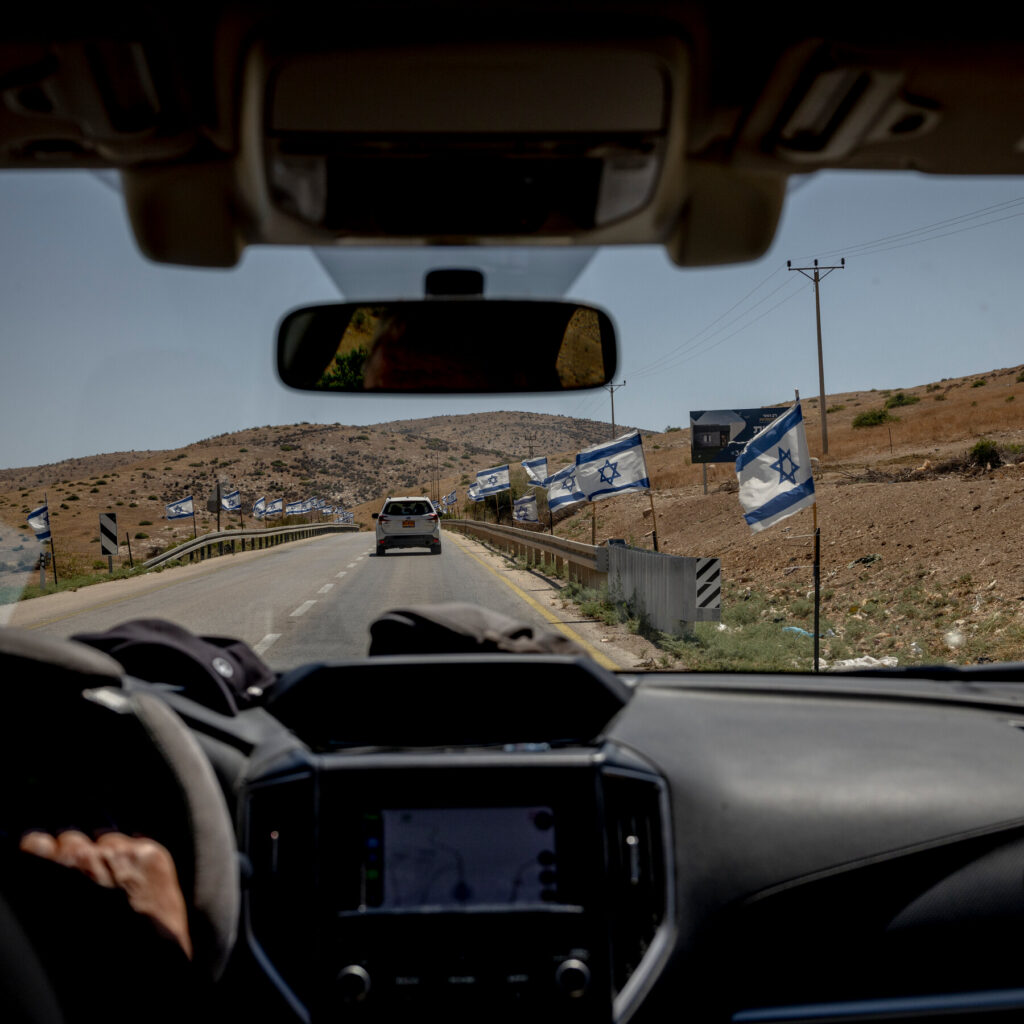
In recent years, a growing chorus of former Israeli military and intelligence leaders, alongside ex-prime ministers, has voiced grave concerns about the escalating violence perpetrated by settlers in the West Bank. These influential figures characterize the phenomenon not merely as isolated incidents but as a systemic campaign of ethnic cleansing, often facilitated or tolerated by government policies. Their warnings underscore a critical and contentious issue within Israeli society, reflecting fears about the erosion of democratic values and the potential for widespread conflict.
Traditionally, discussions about terrorism in the Israeli-Palestinian conflict have focused on attacks against Israeli civilians by Palestinian militants. However, a significant shift is occurring as former Israeli generals and intelligence officials highlight violence committed by Jewish settlers in the West Bank. They describe this violence as “Jewish terrorism,” a term that signals the severity and organized nature of attacks against Palestinian communities.
These former leaders argue that settler violence is not random but part of a broader strategy that includes intimidation, property destruction, and forced displacement of Palestinians. This campaign has been likened to ethnic cleansing because it aims to remove Palestinian presence from key areas in the West Bank, thereby consolidating Israeli control over these territories. The systematic nature of these acts, including coordinated attacks on Palestinian villages and agricultural lands, underscores the strategic intent behind them.
The use of the term “Jewish terrorism” is particularly striking coming from individuals who once held positions of authority within Israel’s security apparatus. Their perspective challenges prevailing narratives and calls attention to a dangerous internal threat that could undermine Israel’s democratic foundations. This internal threat is compounded by the fact that these acts are committed by citizens within the state, blurring lines between state security and extremist violence.
A critical aspect of the former officials’ warnings is the allegation of government complicity in settler violence. They contend that certain policies and political rhetoric have emboldened extremist settlers by providing implicit or explicit support.
This support can take various forms, including inadequate law enforcement responses to settler attacks, legal leniency, and political endorsements of settlement expansion. Such actions create an environment where settlers feel empowered to act with impunity, exacerbating tensions and violence. The failure to hold perpetrators accountable sends a message that violence against Palestinians is tolerated or even encouraged.
The former leaders emphasize that when a state tolerates or facilitates violence by a segment of its population against another, it risks eroding the rule of law and democratic norms. This dynamic, they warn, could lead to increased polarization and instability within Israeli society. Moreover, the international community’s condemnation of these policies further isolates Israel diplomatically, complicating its relations with allies and neighbors.
The group raising these concerns includes high-ranking former military commanders, heads of intelligence agencies, and ex-prime ministers who have intimate knowledge of Israel’s security challenges. Their collective voice lends significant weight to the issue and signals a rare moment of introspection within Israel’s leadership circles.
One former official succinctly captured the gravity of the situation by stating, “Once a society behaves this way, that society is doomed.” This stark warning reflects fears that unchecked settler violence and government tolerance could lead to the breakdown of social cohesion and democratic governance.
Their public statements also aim to galvanize Israeli society and policymakers to confront the problem directly, advocating for stronger measures to curb settler extremism and uphold the principles of justice and equality. By speaking out, these leaders seek to break the silence that has allowed such violence to flourish and to encourage a national dialogue on the future direction of Israeli policy in the West Bank.
The rise of settler violence and the associated accusations of ethnic cleansing have profound implications for Israel’s internal stability and its relations with Palestinians.
Domestically, these developments deepen divisions within Israeli society, pitting those who support the settlement movement against those who fear its consequences. The polarization threatens to weaken democratic institutions and fuel cycles of violence. The social fabric is strained as communities become increasingly segregated and distrustful.
On the diplomatic front, the expansion of settlements and the violence against Palestinians complicate efforts to achieve a negotiated peace. International actors have repeatedly condemned settlement activity, viewing it as a major obstacle to a two-state solution. The ongoing violence undermines confidence in peace talks and fuels resentment on both sides.
The warnings from former Israeli leaders thus resonate beyond Israel’s borders, highlighting the urgent need for a comprehensive approach that addresses both security concerns and human rights. Without addressing these issues, prospects for a lasting peace remain dim.
Experts and former officials suggest that addressing the crisis requires a multifaceted strategy. This includes enforcing the rule of law impartially, ensuring accountability for settler violence, and revisiting policies that enable settlement expansion.
Strengthening dialogue between Israeli and Palestinian communities is also seen as essential to reduce tensions and build trust. Grassroots initiatives and cooperative projects can help bridge divides and foster mutual understanding.
Moreover, political leadership must unequivocally condemn violence from all sides and commit to upholding democratic values and human rights. Failure to do so risks further entrenching extremism and undermining Israel’s international standing.
The voices of former generals and prime ministers serve as a crucial call to action, urging Israeli society to confront these challenges before they escalate beyond control. Their warnings emphasize that the future stability of Israel depends on confronting this internal threat decisively and justly.
The warnings issued by former Israeli generals, intelligence officials, and prime ministers about settler violence in the West Bank represent a significant and sobering development. Their insights reveal a complex and deeply troubling challenge that goes beyond traditional security concerns, touching on fundamental questions about democracy, justice, and the future of Israeli society. As tensions escalate and the international community watches closely, the imperative for decisive and principled action becomes ever more urgent. Only through a comprehensive and balanced approach—one that enforces the rule of law, holds perpetrators accountable, and fosters dialogue—can Israel hope to address this internal threat and pave the way for a more stable and peaceful future.
Originally reported by nytimes.com. Adapted for our readers with AI assistance.
Keep reading
Business News
The National Drug Law Enforcement Agency has arrested multiple suspects and seized significant drug consignments in recent operations across Nigeria.
Business
Nigerian shoppers are increasingly turning to AI assistants like ChatGPT, Claude and Gemini for product ...
Business
The global developer workforce has undergone a transformative expansion over the past five years, fundam...
TAMFIS NIG LTD
Electrical and instrumentation engineering, bid preparation and consulting, IT and software.