Business News
NDLEA Intensifies Operations Against Narcotic Trade and Illegal Trafficking
The National Drug Law Enforcement Agency has arrested multiple suspects and seized significant drug consignments in recent operations across Nigeria.
TAMFIS NIG LTDRC 8067447CAC ACTIVEFinima, Bonny Island, Rivers State

The Himalayan region, renowned for its towering peaks and stunning landscapes, is also one of the most hazard-prone areas in the world. It faces a multitude of natural threats, including glacial floods, landslides, and flash floods, all exacerbated by climate change. After a major glacial flood event in 2025, Chinese authorities strengthened flood defenses at a critical border crossing with Nepal. Despite these efforts, a recent unexpected cascade of hazards overwhelmed these measures, exposing significant challenges in managing the region’s complex natural risks. This article examines the recent disaster’s dynamics, the prior mitigation efforts, and the broader implications for disaster preparedness and regional cooperation in the Himalayas.
In 2025, a significant glacial flood originating from the Tibetan side of the Himalayas caused widespread alarm. This flood was triggered by the sudden release of water from a glacial lake, a phenomenon known as a glacial lake outburst flood (GLOF). Such events are becoming more frequent due to accelerated glacial melt driven by climate change. The flood threatened key infrastructure and border crossings between China and Nepal, raising concerns about the vulnerability of communities and transit routes in this mountainous region.
In response, Chinese officials undertook a series of measures to reinforce flood defenses along the border. These included constructing stronger barriers, enhancing early warning systems, and increasing monitoring efforts of glacial lakes to detect potential risks earlier. The primary focus was on mitigating the impacts of GLOFs, which pose a direct threat to lives and infrastructure downstream. These steps represented a significant advancement in disaster preparedness, aiming to reduce the likelihood and severity of future floods.
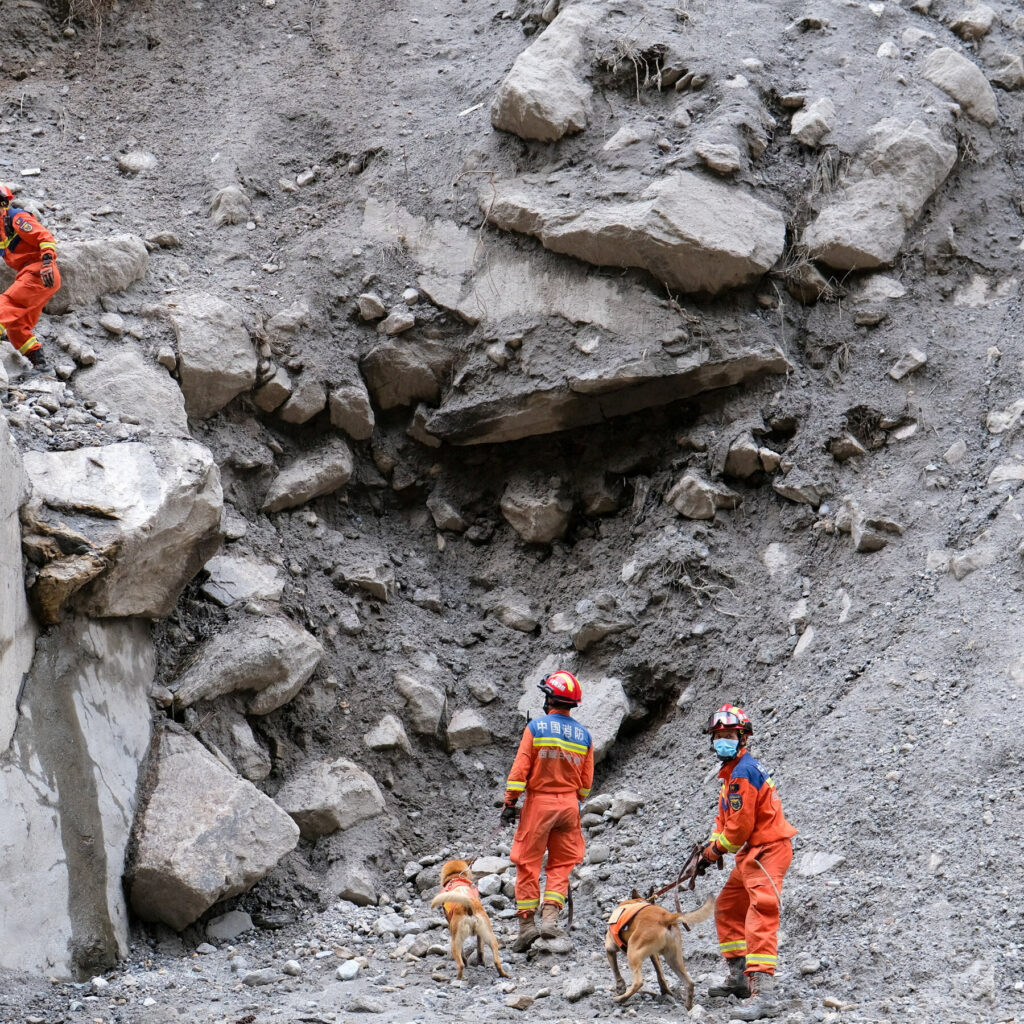
Last week, the Himalayan border region experienced a complex and unprecedented series of natural events described as a 'cascade of hazards.' Unlike the 2025 glacial flood, this disaster involved multiple interconnected factors, including intense monsoon rains, landslides, and flash floods occurring in rapid succession. The cumulative effect overwhelmed the existing flood defenses, causing extensive damage to both Chinese and Nepalese border areas.
The heavy monsoon rains saturated the soil, destabilizing slopes and triggering numerous landslides. These landslides blocked river channels, forming temporary natural dams. When these dams eventually breached, they released sudden and powerful floods downstream, compounding the destruction caused by the initial rainfall and landslides. This sequence of events was particularly challenging to predict and manage because it involved a dynamic interaction between meteorological and geological processes.
Chinese officials acknowledged that while preparations had primarily focused on glacial flood risks, the multifaceted nature of this recent disaster revealed significant gaps in hazard assessment and emergency response strategies. The event highlighted the need to consider a broader spectrum of natural hazards and their potential interactions when planning disaster mitigation efforts.
The Himalayas present unique and formidable challenges for disaster preparedness due to their complex terrain, climatic variability, and the accelerating impacts of climate change. Glacial retreat is rapidly creating unstable lakes that are prone to sudden outbursts, while intense monsoon rains frequently trigger landslides and flash floods. This combination of hazards makes the region highly vulnerable to cascading disasters.
Infrastructure along the border areas is often limited, remote, and difficult to maintain, which complicates efforts to implement and sustain robust flood defenses. Additionally, the transboundary nature of these hazards requires effective coordination between China and Nepal. Political sensitivities and logistical difficulties can hinder this cooperation, reducing the effectiveness of joint disaster management.
The recent events underscore the critical importance of adopting a holistic and integrated approach to risk management. Rather than focusing solely on single threats like glacial floods, authorities need to consider multiple hazard scenarios and their potential interactions. Incorporating real-time monitoring data, enhancing communication channels, and actively engaging local communities are vital components of building effective disaster resilience in this challenging environment.
The cascade of hazards affected territories on both sides of the China-Nepal border, underscoring the interconnectedness of natural risks in the Himalayan region. Effective disaster management in such a complex and shared environment depends heavily on strong cross-border cooperation. This includes sharing timely information, coordinating emergency responses, and developing joint mitigation strategies to protect vulnerable populations and critical infrastructure.
China’s recent experience with the cascade of hazards may serve as a catalyst for deeper collaboration with Nepal. Opportunities exist to establish joint monitoring of glacial lakes, develop shared early warning systems, and coordinate infrastructure planning to enhance resilience. Such cooperation is essential not only for safeguarding communities but also for maintaining the safety and functionality of vital transit routes that facilitate trade and cultural exchange.
Moreover, international scientific research and support can play a crucial role in improving the understanding of the region’s complex hazards. This knowledge can inform policies that balance economic development with environmental sustainability, ensuring that disaster risk reduction is integrated into broader regional planning efforts.
As climate change continues to reshape the Himalayan environment, the frequency, intensity, and complexity of natural disasters are expected to increase. This evolving risk landscape demands adaptive and forward-looking disaster preparedness strategies that can respond to multiple and interacting hazards.
Investing in advanced monitoring technologies, such as satellite imagery and remote sensing, will be critical for improving early detection of changes in glacial lakes, slope stability, and flood risks. Additionally, community-based disaster risk reduction programs can empower local populations by enhancing their capacity to respond effectively during emergencies, reducing vulnerability at the grassroots level.
Ultimately, resilience in the Himalayas will depend on integrated approaches that combine scientific knowledge, infrastructure improvements, policy coordination, and active community engagement. The recent cascade of hazards serves as a stark reminder that preparedness must evolve beyond addressing single threats to encompass the full spectrum of potential hazards in this fragile and vital region.
The recent cascade of hazards in the Himalayan border region highlights the evolving nature of natural disaster risks in a changing climate. While China’s efforts to prepare for glacial floods marked important progress, the unexpected combination of heavy rains, landslides, and flash floods revealed the limitations of focusing on a single threat. Moving forward, a broader, more integrated approach to disaster preparedness—rooted in cross-border collaboration, scientific innovation, and community involvement—is essential to safeguard lives, infrastructure, and ecosystems in this fragile yet vital region.
Originally reported by nytimes.com. Adapted for our readers with AI assistance.
Keep reading
Business News
The National Drug Law Enforcement Agency has arrested multiple suspects and seized significant drug consignments in recent operations across Nigeria.
Business
Nigerian shoppers are increasingly turning to AI assistants like ChatGPT, Claude and Gemini for product ...
Business
The global developer workforce has undergone a transformative expansion over the past five years, fundam...
TAMFIS NIG LTD
Electrical and instrumentation engineering, bid preparation and consulting, IT and software.