
Business News
NDLEA Intensifies Operations Against Narcotic Trade and Illegal Trafficking
The National Drug Law Enforcement Agency has arrested multiple suspects and seized significant drug consignments in recent operations across Nigeria.
TAMFIS NIG LTDRC 8067447CAC ACTIVEFinima, Bonny Island, Rivers State

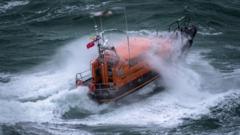
A maritime rescue operation is underway in the English Channel following reports of a vessel in distress southwest of the Eddystone Lighthouse near Plymouth. With two of the five crew members still unaccounted for, authorities and volunteer organizations are intensifying search efforts to locate the missing individuals. This incident not only highlights the risks faced by those at sea but also demonstrates the critical role of coordinated rescue operations in maritime safety.
The distress call was received shortly after 18:00 BST on Saturday, prompting an immediate response from the Maritime and Coastguard Agency. The vessel, carrying five people, was located in the waters southwest of the Eddystone Lighthouse, a prominent navigational point off the coast of Plymouth. The exact nature of the vessel and the emergency has not been disclosed by authorities, who are focusing on the rescue operation.
HM Coastguard deployed a variety of resources including a rescue helicopter, a fixed-wing aircraft, and two Royal National Lifeboat Institution (RNLI) lifeboats to conduct an extensive search operation. The search area was expanded as the night progressed, with multiple assets working in tandem to cover the challenging maritime environment. The use of both aerial and sea-based assets allows for a comprehensive search over a wide area, essential in such emergencies.
By early Sunday, three crew members had been located and accounted for, but two remained missing. The search continued intensively overnight and into Sunday morning, with no indication yet of the missing crew members’ whereabouts. The Maritime and Coastguard Agency emphasized the ongoing nature of the operation, underscoring the urgency and complexity involved in locating individuals at sea.
The search has seen significant involvement from civilian vessels, which have joined the official rescue teams to assist in the intensive search. This collaboration between professional agencies and local mariners is crucial in expanding the search radius and increasing the chances of locating missing persons quickly. Civilian vessels often provide invaluable local knowledge and additional manpower during such emergencies.
The RNLI lifeboat crews from Plymouth and Falmouth initially led the overnight search operations. As daylight broke, the responsibility was handed over to crews from Newlyn and Salcombe, ensuring continuous coverage without interruption. This handover reflects the coordinated effort and resource management among rescue organizations, allowing crews to rest and maintain effectiveness.
The Maritime and Coastguard Agency confirmed that the search was maintained throughout the night and resumed at dawn with multiple assets deployed. Such persistence is vital in maritime rescue scenarios where time is often a critical factor in survival. The dedication of volunteer lifeboat crews and professional coastguard teams exemplifies the commitment to saving lives at sea.
The English Channel is one of the world's busiest shipping lanes, characterized by heavy maritime traffic, variable weather conditions, and strong currents. These factors complicate search and rescue operations, requiring precise coordination and rapid response to maximize the chances of success.
Locating missing persons in open water is inherently difficult due to the vast search areas and the potential for individuals to drift away from the last known position. Strong currents and tides can carry people or debris far from the incident site, making timely and wide-ranging searches essential.
The use of aerial assets like helicopters and fixed-wing planes allows for broader coverage and quicker identification of possible sightings, while RNLI lifeboats, specially equipped for rough sea conditions, provide critical support in close-range search and recovery efforts. Their expertise in coastal waters and ability to operate in adverse weather conditions make them indispensable partners in such emergencies.
Additionally, the busy nature of the Channel means that rescue teams must carefully coordinate with commercial shipping traffic to ensure safety and avoid further incidents during search operations. This adds a layer of complexity to the already challenging task of maritime rescue.
Incidents like this underscore the importance of maritime safety protocols and preparedness. Vessels operating in busy and potentially hazardous waters must adhere to strict safety standards, including regular communication with coastguard authorities and carrying appropriate safety equipment such as life jackets, emergency position-indicating radio beacons (EPIRBs), and automatic identification systems (AIS).
Training for crew members on emergency procedures and survival techniques can significantly improve outcomes in the event of distress. Knowing how to react quickly and effectively during an emergency can be the difference between life and death.
Advances in technology have also enhanced maritime safety. Devices such as EPIRBs automatically send distress signals with location data, helping rescue teams to respond faster. AIS systems allow vessels to be tracked in real time, improving situational awareness for both mariners and rescue coordinators.
Public awareness and community engagement also play a role in maritime safety. The willingness of civilian vessels to assist in search operations demonstrates the maritime community’s commitment to mutual aid and safety at sea. Encouraging such cooperation and preparedness can strengthen overall response capabilities during emergencies.
The ongoing search for the missing crew members in the English Channel serves as a stark reminder of the inherent risks of maritime travel and the critical importance of coordinated rescue efforts. While the situation remains unresolved, the collaboration between HM Coastguard, RNLI, and civilian vessels exemplifies the collective commitment to safety and rapid response at sea. This incident highlights the need for continuous vigilance, preparedness, and community support to mitigate the dangers faced by those navigating these busy waters.
Originally reported by bbc.co.uk. Adapted for our readers with AI assistance.
Keep reading
Business News
The National Drug Law Enforcement Agency has arrested multiple suspects and seized significant drug consignments in recent operations across Nigeria.
Business
Nigerian shoppers are increasingly turning to AI assistants like ChatGPT, Claude and Gemini for product ...
Business
The global developer workforce has undergone a transformative expansion over the past five years, fundam...
TAMFIS NIG LTD
Electrical and instrumentation engineering, bid preparation and consulting, IT and software.