
Business News
NDLEA Intensifies Operations Against Narcotic Trade and Illegal Trafficking
The National Drug Law Enforcement Agency has arrested multiple suspects and seized significant drug consignments in recent operations across Nigeria.
TAMFIS NIG LTDRC 8067447CAC ACTIVEFinima, Bonny Island, Rivers State

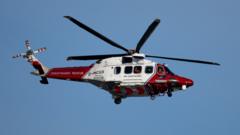
A vessel with five individuals aboard has been reported in distress in the English Channel, southwest of the Eddystone Lighthouse near Plymouth. The Maritime and Coastguard Agency (MCA) promptly initiated a search and rescue operation involving multiple assets, including helicopters, fixed-wing aircraft, and lifeboats from the Royal National Lifeboat Institution (RNLI). While details about the vessel and the specific nature of the emergency remain limited, the ongoing efforts highlight the complexities and importance of maritime rescue operations in busy and often challenging waters.
The Maritime and Coastguard Agency was alerted to the vessel in distress shortly after 18:00 BST. The exact circumstances leading to the emergency have not been disclosed, and no additional information about the vessel's condition or the health of those on board has been made available at this time.
In response, the MCA deployed a coastguard rescue helicopter and a fixed-wing aircraft to the area. Additionally, two RNLI lifeboats from Falmouth and Plymouth were dispatched to assist in the search and rescue operation. This swift and coordinated deployment of air and sea assets underscores the urgency and seriousness with which the situation is being treated.
The location of the distress, southwest of the Eddystone Lighthouse, is a notable maritime landmark off the coast of Plymouth, an area known for both its scenic beauty and challenging sea conditions. The proximity to busy shipping lanes adds complexity to the rescue efforts.
The English Channel is one of the busiest maritime routes in the world, with heavy commercial shipping traffic, recreational vessels, and fishing boats navigating its waters daily. This high traffic density, combined with often unpredictable weather and sea conditions, increases the risk of maritime incidents.
Search and rescue operations in such a complex environment require rapid coordination between multiple agencies and resources. The MCA’s ability to mobilize helicopters, fixed-wing aircraft, and RNLI lifeboats quickly is critical to improving the chances of a successful rescue.
The use of a fixed-wing aircraft alongside helicopters allows for broader search area coverage, as planes can quickly scan large regions from above. Meanwhile, helicopters provide the capability to hover and perform direct rescues or deliver emergency supplies. Lifeboats, with their ability to operate in rough sea conditions, are essential for close-range assistance and recovery efforts.
Operating in the English Channel also means contending with busy shipping lanes, which complicate search patterns and require constant communication to ensure the safety of rescue teams as well as commercial vessels. This coordination is vital to prevent collisions and to maintain clear routes for both rescue and commercial traffic.
The Maritime and Coastguard Agency is the UK government body responsible for coordinating maritime search and rescue operations. It acts as the central command for incidents like this, ensuring that all available resources are effectively utilized and that communication flows smoothly between different responders.
The Royal National Lifeboat Institution (RNLI) is a charity organization that operates lifeboats and lifeguards around the UK and Ireland. Their lifeboats from Falmouth and Plymouth are among the first responders in coastal emergencies, providing vital support alongside government agencies. The RNLI’s volunteer crews are highly trained and prepared to respond to emergencies at any time.
Coastguard helicopters, operated by the MCA, are equipped for rapid response, medical evacuation, and direct rescue missions. They can quickly reach vessels in distress and perform hoist rescues if necessary. Fixed-wing aircraft complement these efforts by conducting wide-area searches, relaying critical information back to command centers, and helping to pinpoint the vessel’s location.
Together, these agencies form a comprehensive maritime emergency response network that leverages both government resources and charitable organizations to maximize coverage and effectiveness.
Maritime rescue operations face numerous challenges, including variable weather conditions, rough seas, and limited visibility. These factors can complicate locating and reaching vessels in distress, especially if the vessel is small or drifting.
Communication with the distressed vessel is often limited or non-existent, making it difficult to assess the situation accurately. Rescuers must rely on radar, visual sightings, and reports from other vessels in the area to guide their efforts.
The English Channel’s busy shipping lanes also pose risks to rescue teams, requiring careful coordination to avoid collisions and ensure the safety of all involved. Additionally, the urgency of these operations means that responders must balance speed with caution to maximize the chances of a successful rescue without endangering themselves or others.
Environmental factors such as tides and currents also influence the search patterns and timing of rescue attempts, requiring expert knowledge and adaptability from the teams involved.
Incidents like this highlight the importance of preparedness for those venturing into coastal and offshore waters. Proper safety equipment, communication devices, and knowledge of emergency procedures can make a critical difference in survival and rescue outcomes.
Public awareness campaigns by organizations such as the MCA and RNLI emphasize the need for boaters to file float plans, carry life jackets, and maintain regular communication with coastguard authorities. These measures help ensure that in the event of an emergency, rescuers have accurate information and can respond more effectively.
These efforts aim to reduce the frequency of maritime emergencies and improve outcomes when incidents do occur, ultimately enhancing safety for all who use the sea for work or recreation.
Furthermore, ongoing training and education for maritime users, including recreational sailors and commercial operators, contribute to a culture of safety that benefits everyone navigating these waters.
The ongoing rescue operation in the English Channel serves as a reminder of the inherent risks associated with maritime travel and the vital role played by coastguard and lifeboat services. While details about the vessel and its occupants remain scarce, the swift and coordinated response demonstrates the effectiveness of the UK's maritime emergency infrastructure. Continued vigilance, preparedness, and cooperation among all maritime users are essential to ensuring safety on these busy waters.
Originally reported by bbc.co.uk. Adapted for our readers with AI assistance.
Keep reading
Business News
The National Drug Law Enforcement Agency has arrested multiple suspects and seized significant drug consignments in recent operations across Nigeria.
Business
Nigerian shoppers are increasingly turning to AI assistants like ChatGPT, Claude and Gemini for product ...
Business
The global developer workforce has undergone a transformative expansion over the past five years, fundam...
TAMFIS NIG LTD
Electrical and instrumentation engineering, bid preparation and consulting, IT and software.