
Business
Nigeria’s Economic Performance: Domestic Debt Rise and Agriculture Trade Shift in Q2 2026
Nigeria's economic landscape in the second quarter of 2026 presents a mixed picture of fiscal press...
TAMFIS NIG LTDRC 8067447CAC ACTIVEFinima, Bonny Island, Rivers State

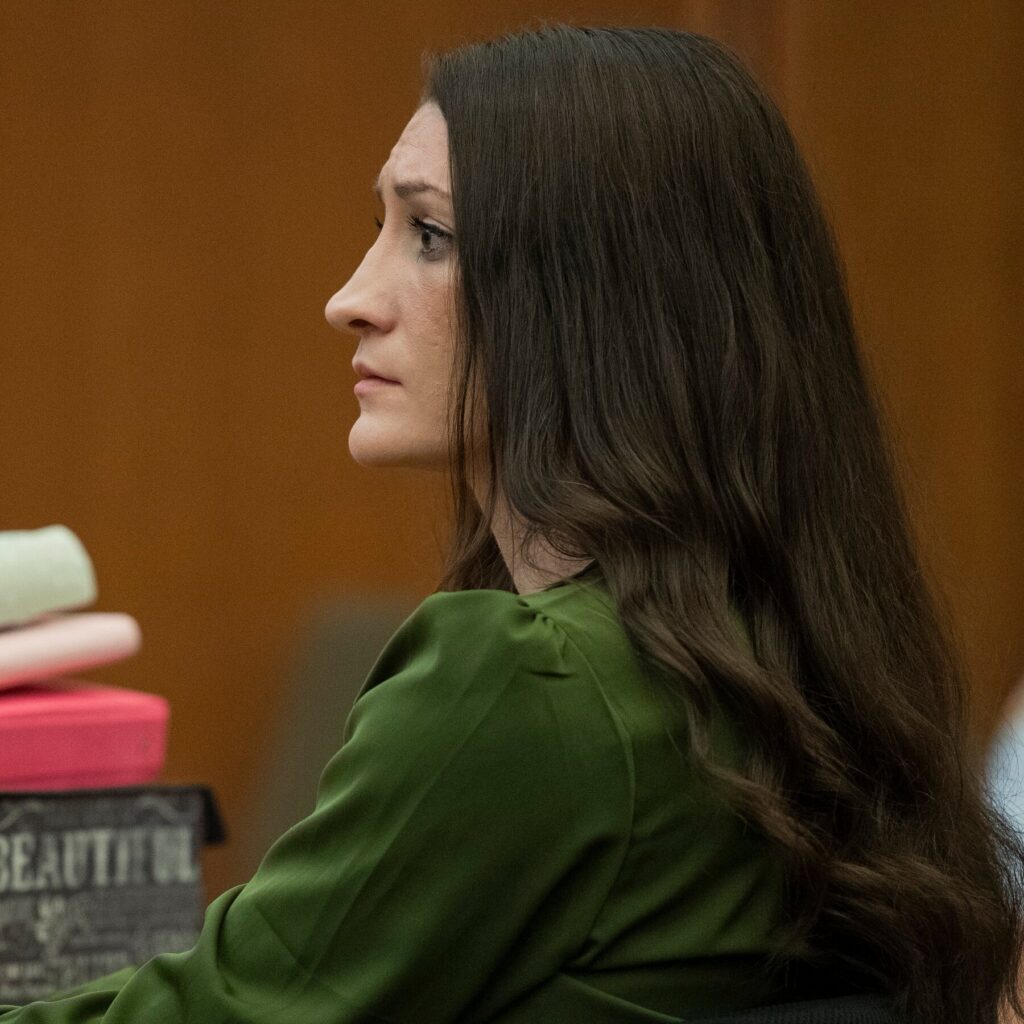
The case of Lindsay Clancy has been described as “America’s saddest murder trial.” In 2023, the 36-year-old Duxbury, Massachusetts, mother was accused of killing her three children—Cora, Dawson, and Callan, aged five, three, and eight months. After the deaths, Clancy herself was found injured in an apparent suicide attempt. She survived and is now being tried on murder charges. What has made the case more than a local tragedy is the central question it forces the public to confront: Is a woman who kills her children after documented mental-health crises a criminal who must be punished, or a victim of illness who slipped through the gaps in care? The debate has split legal analysts, medical professionals, parents, and commentators across the country, turning a single family’s devastation into a national referendum on maternal mental health and criminal responsibility.
In January 2023, emergency responders were called to the Clancy home in Duxbury, Massachusetts. Inside, they found the three Clancy children dead and Lindsay Clancy seriously injured. Authorities later said the children had been strangled. Clancy was hospitalised and, after her recovery, was charged with murder.
Prosecutors portray the killings as deliberate and pre-planned. They have pointed to Clancy’s actions before the deaths—arranging for her husband to be out of the house, picking up prescriptions, and other behaviour they argue shows awareness and intent. From the state’s perspective, the planning undermines any claim that she was incapable of understanding what she was doing.
The defence, by contrast, argues that Clancy was suffering from severe postpartum mental illness, including postpartum psychosis. Her attorneys and medical experts have described a woman who was anxious, medicated, and increasingly detached from reality in the months after her youngest child was born. They contend that her psychiatric condition, not criminal intent, drove the violence. The trial, which began on 20 July 2026, has therefore turned less on whether the children died at her hands and more on what was happening in her mind when they did.
At its core, the Clancy trial presents two incompatible ways of interpreting the same set of facts. The prosecution’s narrative is legal and behavioural: a mother made choices, created opportunity, and carried out a plan. In this reading, mental suffering may explain motive, but it does not erase culpability. The children were helpless dependents, and the law’s first duty is to protect them.
The defence’s narrative is medical and contextual: a trained nurse, a woman who had helped deliver other people’s babies, was overcome by a psychiatric condition that distorted her thoughts and perceptions. Postpartum psychosis is rare—far less common than postpartum depression—but it is recognised as a severe illness that can produce delusions, hallucinations, and a break from reality. Supporters of this view argue that Clancy was not a predator hiding behind a diagnosis; she was a patient whose illness was missed, undertreated, or dismissed until it became catastrophic.
The difficulty for jurors—and for the public—is that both readings contain some truth. Severe postpartum mental illness can be real and incapacitating, yet the law also requires accountability when children are killed. The trial is therefore not simply about Clancy’s guilt or innocence; it is about where society draws the line between sickness and criminal responsibility.
The Clancy case has resonated far beyond Massachusetts because it touches on unresolved tensions in how American culture and the legal system treat mothers with mental illness. On one side, advocates for maternal mental health say the trial exposes a system that fails women during and after pregnancy. They note that postpartum psychiatric disorders are often minimised, that new mothers are told to “power through,” and that psychiatric care can be difficult to access. For them, Clancy is a warning about what can happen when warning signs are ignored.
On the other side, many people see the children as the only true victims. They argue that a psychiatric diagnosis cannot be allowed to excuse the killing of three dependents, and that reducing Clancy’s actions entirely to illness risks minimising the lives lost. This camp often stresses that justice requires a clear moral signal: society will not tolerate the murder of children, regardless of the defendant’s struggles.
Media coverage has amplified the divide. Some outlets frame the trial as a mental-health story; others treat it as a true-crime murder case. Social media has further polarised opinion, with hashtags and commentary supporting both “justice for the children” and “compassion for Lindsay.” The result is that a single courtroom proceeding has become a proxy argument about motherhood, mental illness, feminism, and the purpose of punishment.
Whatever the jury decides, the Clancy trial is likely to shape conversations about postpartum mental illness in courtrooms and clinics for years. If she is convicted of murder, the message will be that planning and outcome outweigh psychiatric state. If she is found not criminally responsible or convicted of a lesser charge, it will raise questions about how the law should weigh severe illness against the protection of children.
The case also puts pressure on hospitals, insurers, and policymakers. If postpartum psychosis is accepted as a credible factor in such violence, then early screening, emergency psychiatric intervention, and better follow-up care become public-safety issues, not only health issues. Defenders of Clancy argue that prevention is the only morally coherent response: a society that recognises the danger should invest in stopping it before a tragedy occurs.
The Lindsay Clancy case is painful because it offers no easy labels. A father lost his children, a community lost three young lives, and a woman who once cared for newborns now faces the possibility of spending the rest of her life in prison. Whether she is ultimately seen as a criminal, a victim of illness, or someone caught between the two will depend on the jury’s reading of medical testimony and the law. Yet the case has already done one thing clearly: it has forced Americans to ask hard questions about how well the country recognises and treats maternal mental illness before tragedy strikes. The verdict may answer what happens to Lindsay Clancy, but the broader debate about prevention, responsibility, and compassion is only beginning.
Originally reported by nytimes.com. Adapted for our readers with AI assistance.
Keep reading
Business
Nigeria's economic landscape in the second quarter of 2026 presents a mixed picture of fiscal press...
Business
Liverpool manager Andoni Iraola is confronting a significant selection headache as two key forwards, Cod...
News
Health News tamfitronics [Editor’snote:[Editor’snote: This transcript was generated using both transcription ...
TAMFIS NIG LTD
Electrical and instrumentation engineering, bid preparation and consulting, IT and software.