
Business
Nigeria’s Economic Performance: Domestic Debt Rise and Agriculture Trade Shift in Q2 2026
Nigeria's economic landscape in the second quarter of 2026 presents a mixed picture of fiscal press...
TAMFIS NIG LTDRC 8067447CAC ACTIVEFinima, Bonny Island, Rivers State

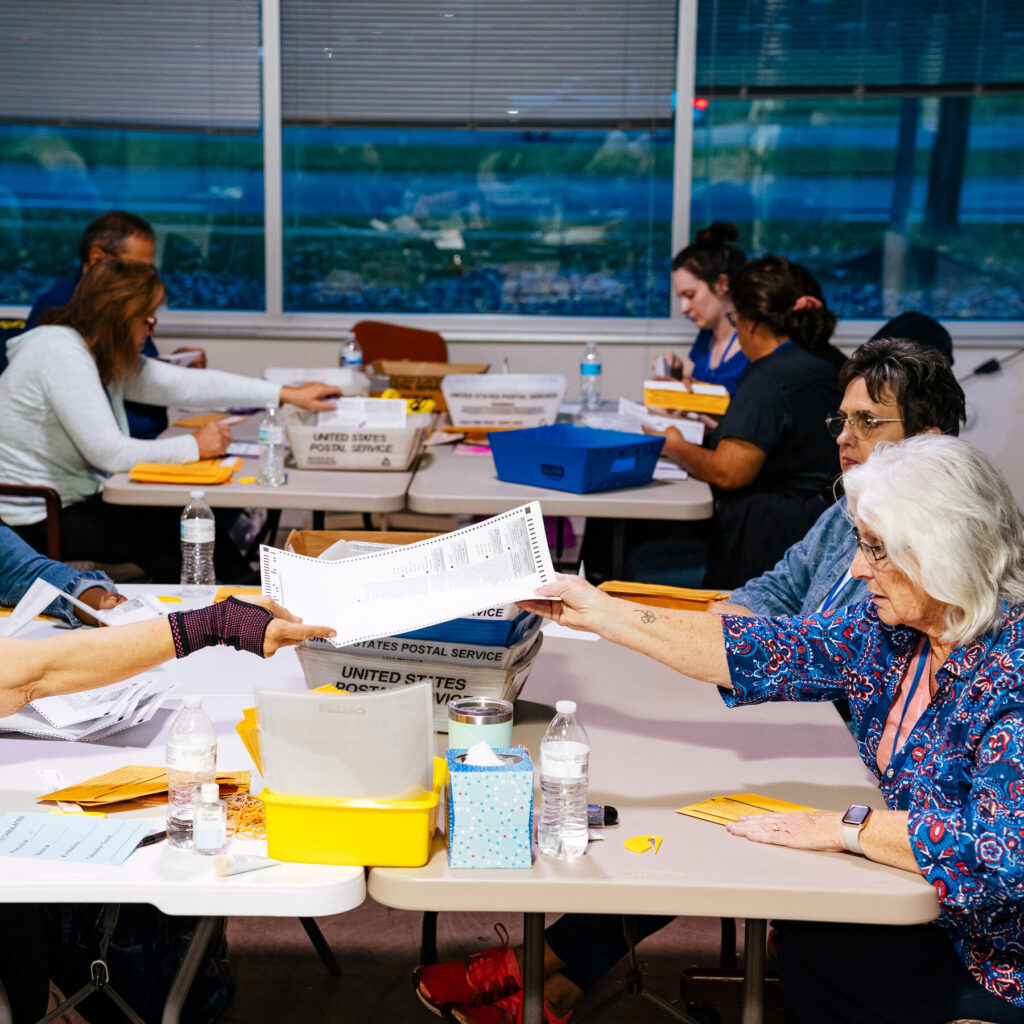
In a significant but preliminary development for American election administration, the United States Supreme Court has allowed the Trump administration to move forward with a controversial executive order that would fundamentally alter how mail-in ballots are distributed. The court's decision, issued without a full ruling on the merits, permits the administration to begin implementing a policy that would establish "state citizenship lists" and designate the United States Postal Service as the gatekeeper for mail-in ballot eligibility. For voters, election officials, and businesses monitoring regulatory change, the ruling introduces immediate uncertainty while the underlying legal battle continues.
The executive order at the centre of the dispute contains two principal components. First, it would require the creation of "state citizenship lists" — databases intended to identify citizens within each state so that citizenship could serve as a threshold qualification for receiving a mail-in ballot. Second, it would direct the Postal Service to determine which voters receive a mail-in ballot, effectively making the federal mail agency the arbiter of ballot eligibility rather than state or local election authorities.
Both elements represent a marked departure from current practice. Under existing arrangements, state and local election officials verify voter registration and qualifications, while the Postal Service performs a logistical function — delivering and returning ballots. The order would insert a new federal eligibility screen into that process, with the Postal Service exercising a substantive decision-making role.
The court's action is expressly temporary. It does not hold that the order is constitutional, nor does it endorse the policy's merits. Instead, it lifts the immediate barrier to implementation, allowing the administration to proceed while litigation over the order's lawfulness continues. Such interim relief is common when a party seeks to set aside a preliminary injunction or stay, but its practical consequences can be profound in the context of election administration, where timing is critical.
Because mail-in ballots must be requested, distributed, completed, and returned within strict statutory windows, even a short-lived change in who controls eligibility can affect whether eligible voters receive and cast their ballots. The ruling keeps the policy in play but leaves the door open for subsequent judicial intervention should challengers demonstrate that the order violates federal law or the Constitution.
Introducing citizenship lists into the ballot-eligibility chain raises immediate concerns about accuracy, privacy, and due process. If a voter's name is omitted from a list, or if the list incorrectly classifies a citizen as a non-citizen, that individual could be denied a ballot without the procedural safeguards that currently accompany registration challenges. The compilation and maintenance of such lists also create data-security and privacy risks, particularly if they draw on multiple federal and state databases.
Assigning eligibility determinations to the Postal Service compounds these risks. The agency's statutory mission is mail delivery, not election administration. Expanding its role to include substantive eligibility decisions raises separation-of-powers questions and may conflict with the Postal Service's existing regulatory framework. Moreover, coordination between election officials and postal managers — already complex during peak election periods — would become more fraught if two separate authorities are involved in verifying voter eligibility.
The order also highlights a longstanding tension in American election law: the division of authority between the states and the federal government. States have historically managed voter registration, ballot distribution, and the day-to-day conduct of elections, while Congress sets baseline rules for federal contests. By directing a federal agency to make eligibility decisions traditionally reserved for state officials, the order could disrupt established lines of responsibility and create a patchwork of requirements if different jurisdictions interpret the citizenship-list mandate differently.
For businesses and organisations that engage in voter-registration drives, civic-education campaigns, or get-out-the-vote efforts, this uncertainty complicates planning. A shift in who controls mail-ballot access may require revised outreach strategies, updated compliance checklists, and new coordination protocols with both state election offices and the Postal Service.
The administration's victory is procedural, not final. Challengers can continue to argue that the order exceeds presidential authority, conflicts with statutes such as the National Voter Registration Act and the Help America Vote Act, or violates constitutional protections including the Due Process Clause and the Elections Clause. Lower courts may issue further rulings, and the Supreme Court could ultimately be asked to decide the case on its merits.
In the meantime, election administrators, postal workers, and voters must operate under a cloud of uncertainty. The practical effects will depend on how quickly the administration moves to implement the citizenship lists and Postal Service directives, and whether lower courts issue stays or injunctions that limit the order's reach while the appeals process unfolds.
Although the case arises from domestic US law, its implications resonate internationally. Election-observation missions, democracy-assistance organisations, and foreign governments often look to American election practices as a reference point — for better or worse. A shift toward federalised ballot-eligibility determinations and citizenship-based screening could influence how other countries design their own absentee-voting systems, particularly in transitional democracies where postal voting is being introduced or expanded.
For multinational businesses and consulting firms that advise on electoral reform or civic-technology procurement, the case underscores the importance of monitoring not only legislation but also executive action and judicial interim orders. The speed with which a policy can move from executive order to partial implementation — even before a final court ruling — demonstrates how rapidly the regulatory landscape can shift.
For now, the Trump administration has a green light to advance a policy that would reshape a core element of American election infrastructure. The Supreme Court's refusal to block the order pending full review is a procedural win with potentially far-reaching practical consequences. Voters, election officials, businesses, and international observers should treat the ruling as the opening chapter of a longer legal and operational contest, not the final word. As litigation proceeds, the key questions — whether the president has the authority to create citizenship lists, whether the Postal Service can lawfully adjudicate ballot eligibility, and whether the policy violates statutory or constitutional safeguards — remain unanswered. Stakeholders would do well to prepare for multiple scenarios while the courts deliberate.
Originally reported by nytimes.com. Adapted for our readers with AI assistance.
Keep reading
Business
Nigeria's economic landscape in the second quarter of 2026 presents a mixed picture of fiscal press...
Business
Liverpool manager Andoni Iraola is confronting a significant selection headache as two key forwards, Cod...
News
Health News tamfitronics [Editor’snote:[Editor’snote: This transcript was generated using both transcription ...
TAMFIS NIG LTD
Electrical and instrumentation engineering, bid preparation and consulting, IT and software.