
Business
Nigeria’s Economic Performance: Domestic Debt Rise and Agriculture Trade Shift in Q2 2026
Nigeria's economic landscape in the second quarter of 2026 presents a mixed picture of fiscal press...
TAMFIS NIG LTDRC 8067447CAC ACTIVEFinima, Bonny Island, Rivers State

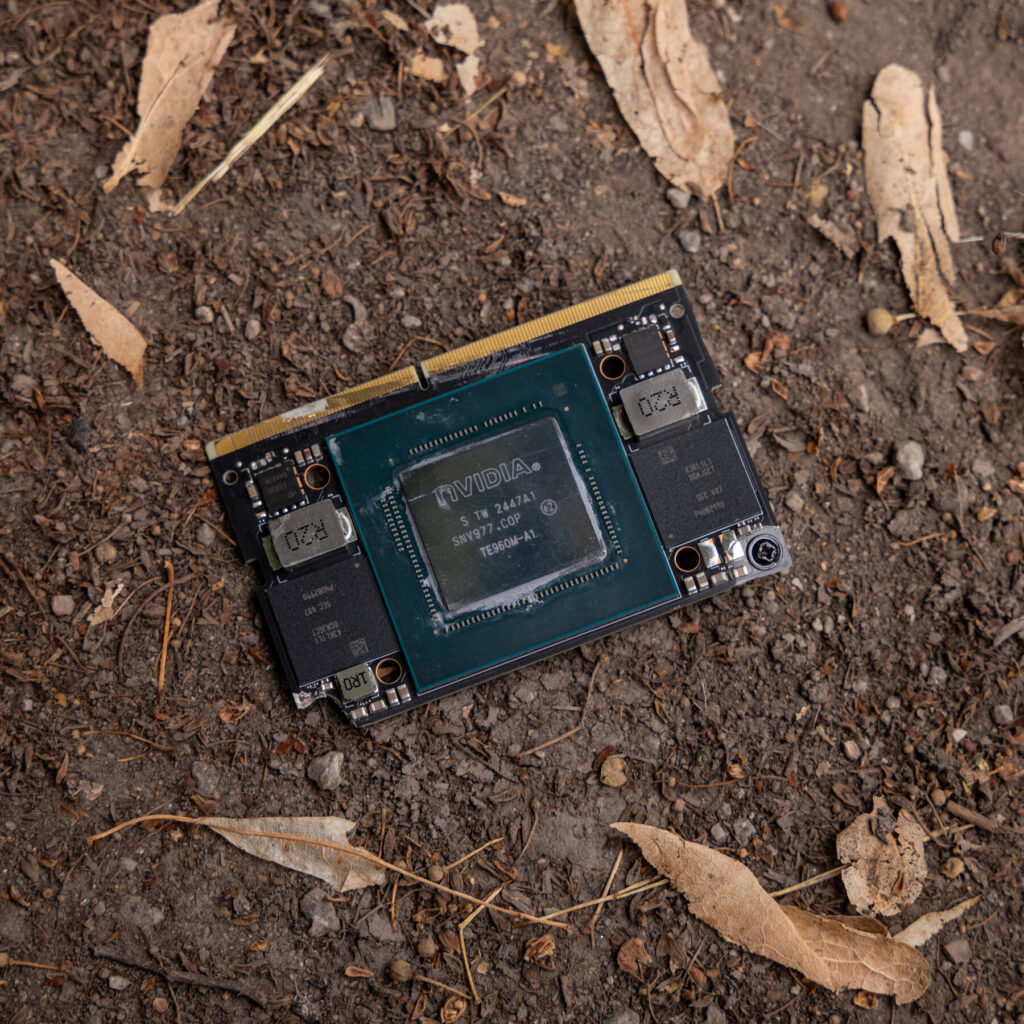
Recent claims by Ukrainian officials that Russian artificial intelligence drones contain Nvidia microcomputers have reignited debate over the effectiveness of Western technology sanctions. While Nvidia states it does not sell products in Russia, the presence of its components in battlefield equipment reveals a critical vulnerability: global resale markets enable sanctioned goods to reach end users through opaque, multi-layered supply chains. This issue extends beyond one company or conflict, posing systemic challenges for export control enforcement in an interconnected electronics industry where traceability diminishes with each transaction.
Ukrainian battlefield assessments indicate that certain Russian AI-equipped drones incorporate Nvidia microcomputers, components subject to export restrictions targeting Russia's military capabilities. Nvidia has consistently stated it does not sell these devices in Russia, maintaining compliance with international sanctions regimes. However, the reported presence of its hardware in Russian systems suggests a divergence between official sales policies and actual end-use destinations. This gap is not unique to Nvidia; it reflects a broader pattern where Western technology appears in sanctioned contexts despite corporate denials of direct sales. For businesses and policymakers, the situation underscores that adherence to non-sale declarations alone cannot prevent technology diversion when intermediary networks operate outside formal oversight.
The core issue lies in the distinction between preventing direct sales and controlling post-sale redistribution. Manufacturers can restrict shipments to listed end users or jurisdictions, but once products enter legitimate commerce—such as sale to distributors in non-sanctioned countries—further tracking becomes contractually and technically complex. In the case of high-demand AI components, strong secondary market demand creates incentives for resale that can bypass geographic restrictions. Ukrainian officials' claims, while not proving direct Nvidia-Russia transactions, highlight how easily controlled electronics can enter military supply chains via civilian markets when end-use verification weakens after the first sale.
Global electronics supply chains inherently involve multiple intermediaries: manufacturers sell to distributors, who supply value-added resellers, system integrators, or exporters, each adding a layer of separation from the original producer. For regulated components like Nvidia's microcomputers—used in everything from industrial automation to consumer AI devices—this fragmentation means a chip sold legally in Germany or Singapore could, through successive transactions, end up in a drone factory thousands of kilometres away. Online marketplaces, grey-market traders, and repair shops further complicate oversight, particularly when transactions use cash, shell entities, or jurisdictions with limited customs cooperation.
Critical to this dynamic is the ease with which identifiers can be obscured. Serial numbers may be stripped during refurbishment, components repackaged without documentation, or lot records lost during consolidation. When a microcomputer is embedded into a drone's guidance system, reconstructing its commercial history requires cooperation from every prior handler—distributors, resellers, logistics providers—along with access to shipping invoices, payment records, and end-user declarations. In practice, such cooperation is rarely forthcoming, especially when intermediaries operate in grey zones or face reputational risk. The result is a near-impossibility of tracing a battlefield component back to its point of origin, rendering manufacturer self-policing ineffective against determined diversion.
This challenge is amplified by the dual-use nature of modern AI hardware. The same microprocessors powering commercial robotics or smart cameras can, with minimal adaptation, support autonomous targeting or surveillance systems. Regulators struggle to distinguish between benign and militarily critical applications at the point of resale, especially when buyers declare civilian end uses that are difficult to verify. Consequently, export control regimes based on end-user certificates or pre-sale screening face fundamental limits when dealing with sophisticated, adaptable technology that traverses complex commercial networks before reaching a final military user.
For technology firms, the Nvidia drone example raises reputational and legal risks beyond immediate sales compliance. Discovery of their components in adversarial weapons systems invites scrutiny of due diligence practices, even when no direct violation is proven. Shareholders, regulators, and advocacy groups may question whether companies have done enough to monitor secondary markets or implement stronger contractual controls with distributors. In response, some tech manufacturers have begun exploring blockchain-based tracking, tamper-resistant packaging, or AI-driven anomaly detection in resale patterns—though adoption remains uneven due to cost and complexity.
Policymakers face parallel pressures to strengthen enforcement mechanisms. Current export controls often focus on licensing initial transfers but lack tools to monitor downstream proliferation. Recent regulatory responses in the EU and US have included stricter due-diligence requirements for intermediaries, penalties for knowingly facilitating sanctions evasion, and expanded lists of dual-use items subject to tracking. However, as the Nvidia case illustrates, these measures may still fail if resale markets remain opaque and intermediaries can obscure transaction trails. Experts suggest that meaningful progress requires greater transparency in global electronics trade, including harmonised reporting of component movements and improved cooperation between customs authorities and industry groups to flag anomalous resale patterns.
Ultimately, the incident highlights a systemic limitation: relying solely on manufacturer declarations of non-sale in sanctioned countries is insufficient to keep advanced technology off battlefields. Effective control demands a shift from point-of-sale restrictions to end-use assurance, combining tighter intermediary oversight, traceability technologies, and international cooperation to disrupt the circuits that enable sanctioned goods to reach unintended users—whether in Ukraine or other conflict zones where Western tech appears in unexpected hands.
The revelation that Nvidia microcomputers may be powering Russian AI drones serves as a stark reminder that export control effectiveness depends not just on what companies say they do not sell, but on how well the global system can track what happens after the first sale. For businesses operating in dual-use technology sectors, this means looking beyond compliance checklists to invest in supply chain transparency and end-use verification. For regulators, it signals the need to evolve controls from licensing gateways to continuous monitoring systems capable of detecting diversion through resale channels. Until such measures are adopted widely, the flow of Western technology into sanctioned or hostile end uses will remain a persistent challenge—one where technical ingenuity in evasion often outpaces the ability to prevent it, with real-world consequences for security, corporate accountability, and the integrity of international sanctions regimes.
Originally reported by nytimes.com. Adapted for our readers with AI assistance.
Keep reading
Business
Nigeria's economic landscape in the second quarter of 2026 presents a mixed picture of fiscal press...
Business
Liverpool manager Andoni Iraola is confronting a significant selection headache as two key forwards, Cod...
News
Health News tamfitronics [Editor’snote:[Editor’snote: This transcript was generated using both transcription ...
TAMFIS NIG LTD
Electrical and instrumentation engineering, bid preparation and consulting, IT and software.