
Business
Nigeria’s Economic Performance: Domestic Debt Rise and Agriculture Trade Shift in Q2 2026
Nigeria's economic landscape in the second quarter of 2026 presents a mixed picture of fiscal press...
TAMFIS NIG LTDRC 8067447CAC ACTIVEFinima, Bonny Island, Rivers State

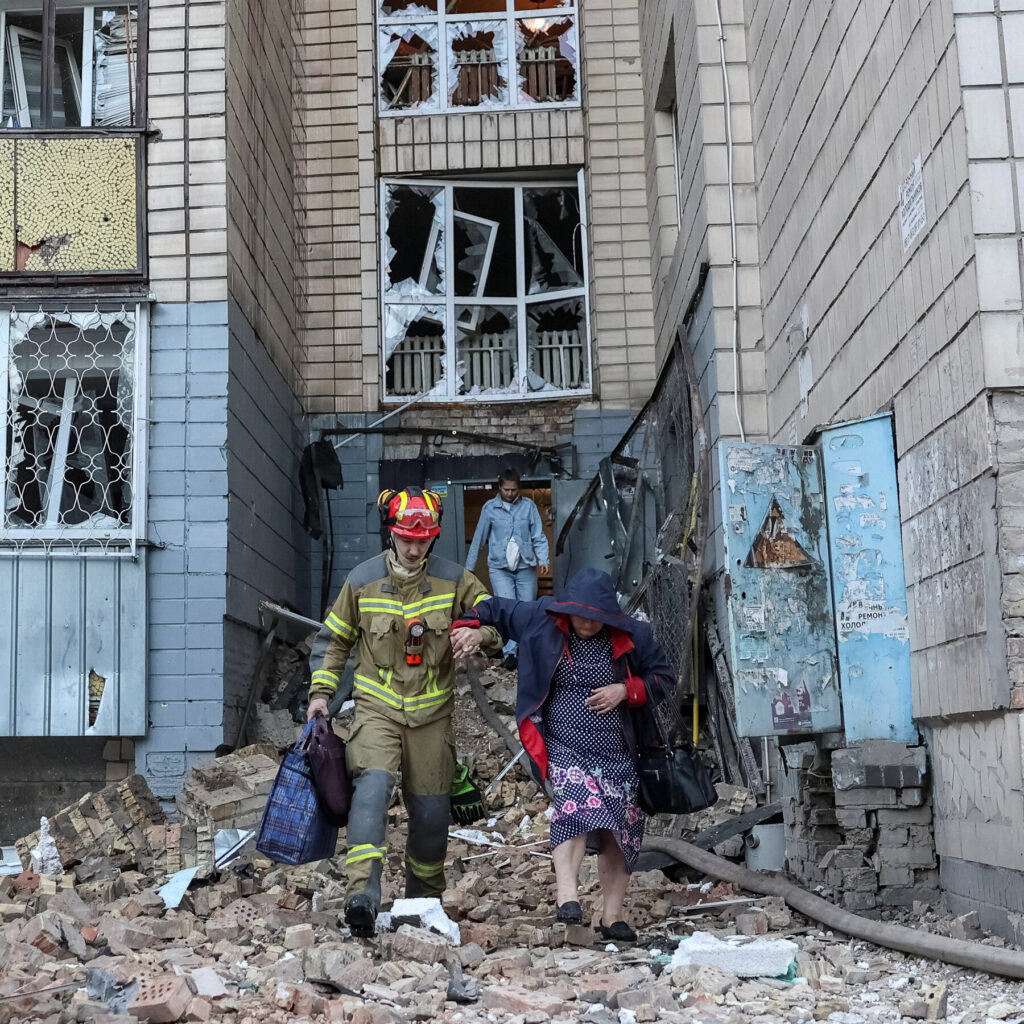
A sustained Russian missile offensive against Kyiv and surrounding regions in August 2026 has laid bare a dangerous gap in Ukraine's air defenses. With U.S.-made Patriot interceptor stocks depleted to roughly one-third of 2025 delivery levels, Russian ballistic missiles are penetrating Ukrainian airspace with increasing frequency. The result has been a sharp rise in civilian casualties — at least 15 to 17 killed in each of several major barrages since early August — and a stark illustration of how munitions shortages translate directly into lost lives.
Ukraine's air defense network relies heavily on the Patriot system for intercepting ballistic missiles, the most lethal weapons in Russia's long-range arsenal. According to President Volodymyr Zelenskyy, deliveries of Western-made interceptors have fallen to about a third of their 2025 pace in 2026, leaving launchers empty during critical windows. The shortage is not unique to Ukraine; a global scramble for Patriot missiles — intensified by Middle East conflicts — has strained production lines in the United States and Europe, limiting the ability of allies to replenish Ukrainian stocks quickly.
Ukrainian officials have described the situation as a "serious shortage" and a "window of vulnerability" that Russia is actively exploiting. In early August, Zelenskyy warned that Ukraine had effectively run out of interceptors for its Patriot batteries, a statement corroborated by open-source analysis showing that no Russian ballistic missiles were intercepted during a major strike on Kyiv on August 5.
Russia has shifted toward heavier use of ballistic missiles — including Iskander-M and North Korean-supplied KN-23 variants — which follow high-speed, predictable trajectories that only advanced systems like Patriot can reliably defeat. Since early August, Moscow has launched a series of large-scale combined missile and drone attacks on the capital region:
• August 1: A pre-dawn ballistic missile strike killed at least nine people in Kyiv, prompting Zelenskyy to publicly appeal for interceptor resupply.
• August 4: A barrage of missiles and drones killed 14 and injured 27 in the Kyiv region, according to the city's military administration.
• August 5: One of the deadliest single attacks of the summer killed at least 17 civilians and injured 44, with the UN Human Rights Monitoring Mission confirming the toll. The New York Times reported that Ukrainian air defenses were unable to engage the ballistic missiles due to empty Patriot launchers.
• August 19–20: A renewed overnight assault killed 15 to 17 people and wounded 33 to 44, according to the Guardian, Reuters, AP, and Bloomberg. Mayor Vitali Klitschko reported strikes on residential districts and infrastructure.
The UN Human Rights Office reported that August 2026 was among the deadliest months for Ukrainian civilians since the full-scale invasion began, with ballistic missile strikes on densely populated areas driving the increase. Emergency responders have described scenes of apartment buildings, warehouses, and civilian infrastructure destroyed in seconds. The psychological impact on Kyiv's population — which had grown accustomed to relatively effective air defense — is profound; air raid alerts now carry a heightened sense of helplessness.
Hospitals in the capital have treated dozens of blast injuries, shrapnel wounds, and trauma cases. Local authorities have expanded shelter capacity and distributed emergency kits, but the fundamental problem remains: without interceptors, civil defense measures can only mitigate, not prevent, casualties.
Analysts assess that Russia's intensified campaign reflects a calculated bet that Ukraine's air defense umbrella is fraying irreversibly. CSIS data shows that from September 2022 through 2024, Russia launched 11,466 missiles at Ukraine, with Ukrainian defenses intercepting 83.5 percent on average. That intercept rate has dropped sharply in 2026 as interceptor stocks dwindle. In a single recent month, Ukraine's air force reported engaging roughly 9,000 incoming drones and missiles but destroying only about 5,300 — a success rate just under 60 percent.
By concentrating ballistic missile strikes on Kyiv, Moscow seeks to demonstrate that Western support is insufficient to protect even the capital, thereby eroding Ukrainian morale and pressuring European governments to confront the limits of their own stockpiles. The use of North Korean missiles also signals a diversification of supply chains that could sustain Russian strike capacity regardless of Western sanctions.
European governments have acknowledged the shortage and are scrambling to procure additional Patriot interceptors for Ukraine. However, new production from U.S. defense contractors — primarily Raytheon (RTX) — faces lead times of 18 to 24 months. Existing European stocks are limited; Germany, the Netherlands, and Spain have each donated Patriot batteries but hold few surplus interceptors. A Politico report noted that Europe is "running out of Patriot missiles" and that hundreds of interceptors requested by Kyiv will not arrive before winter.
The U.S. has prioritized Patriot production for its own forces and key allies, with Ukraine competing for slots on the same production line. Congressional funding delays in late 2025 and early 2026 further slowed delivery schedules. While alternative systems — such as NASAMS, IRIS-T, and SAMP/T — provide medium-range coverage, none match Patriot's proven capability against high-speed ballistic threats.
As autumn approaches, Ukrainian and Western officials anticipate a renewed Russian strategic bombing campaign targeting energy infrastructure, a pattern established in the winters of 2022 and 2023. Without a significant influx of interceptors before November, Ukraine faces the prospect of widespread blackouts and heating failures in major cities. Zelenskyy has urged partners to accelerate deliveries through direct transfers from national stocks, not just new production orders.
Diplomatic efforts are also underway to secure interceptors from non-NATO partners and to explore licensed production arrangements that could expand manufacturing capacity. Yet the fundamental mismatch — Russia's ability to produce or procure missiles faster than the West can supply interceptors — remains unresolved. Unless addressed, each successive barrage will deepen the perception that Ukraine's skies are no longer defensible.
The August 2026 missile barrages on Kyiv are not merely a spike in violence; they are a demonstration of what happens when a defender's most capable interceptor runs out. Russia's willingness to expend scarce ballistic missiles on civilian targets reflects a judgment that Ukraine cannot stop them — and so far, that judgment has been borne out. The civilian death toll is the direct, measurable cost of a supply-chain failure that Western governments have known about for months but have not yet solved. Unless interceptor deliveries accelerate dramatically before winter, the coming months will test whether Ukraine's air defense can survive the loss of its most effective layer. The stakes are not abstract: every empty launcher means more missiles reaching their targets, more families mourning, and a deeper erosion of the deterrence that has kept Kyiv relatively safe for over two years.
Originally reported by nytimes.com. Adapted for our readers with AI assistance.
Keep reading
Business
Nigeria's economic landscape in the second quarter of 2026 presents a mixed picture of fiscal press...
Business
Liverpool manager Andoni Iraola is confronting a significant selection headache as two key forwards, Cod...
News
Health News tamfitronics [Editor’snote:[Editor’snote: This transcript was generated using both transcription ...
TAMFIS NIG LTD
Electrical and instrumentation engineering, bid preparation and consulting, IT and software.