
Business
Nigeria’s Economic Performance: Domestic Debt Rise and Agriculture Trade Shift in Q2 2026
Nigeria's economic landscape in the second quarter of 2026 presents a mixed picture of fiscal press...
TAMFIS NIG LTDRC 8067447CAC ACTIVEFinima, Bonny Island, Rivers State

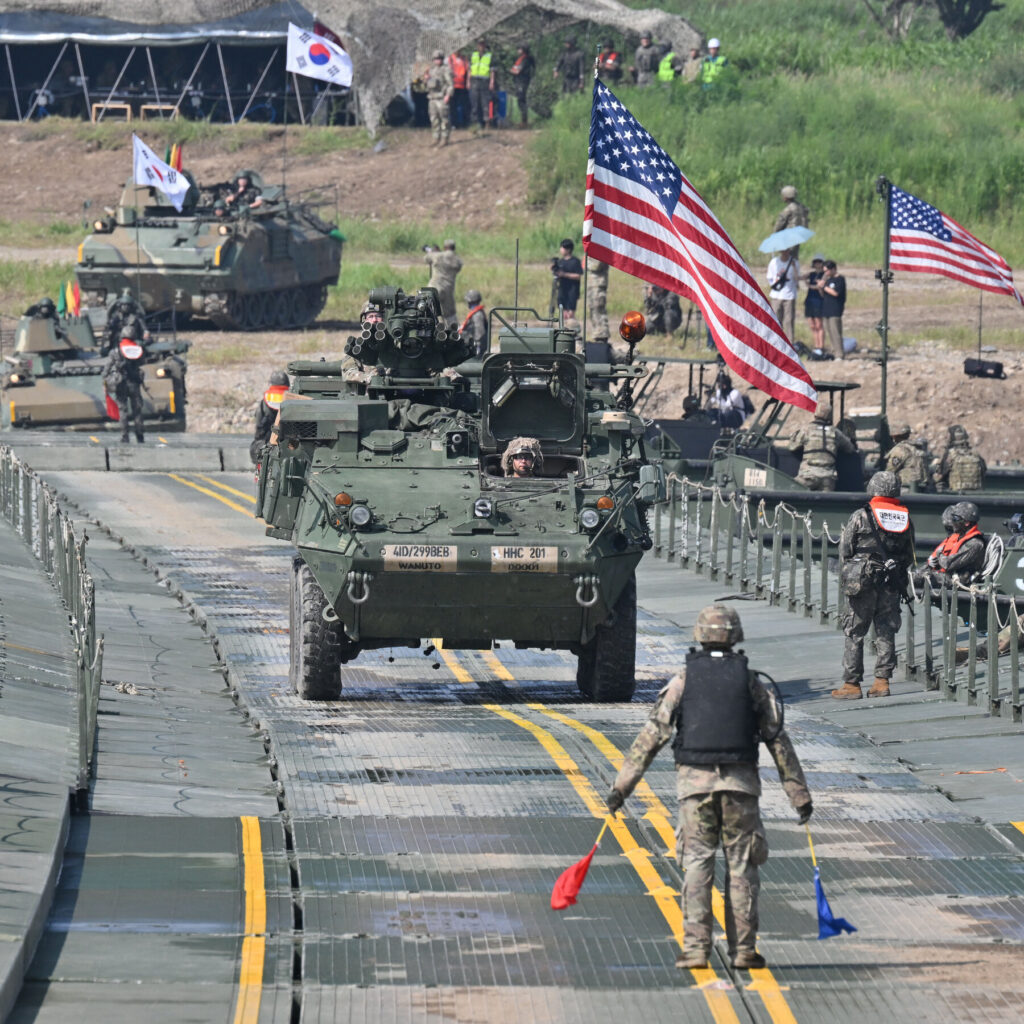
President Trump’s decision to curtail the military exercises came as allies question the U.S. commitment to longstanding alliances. Joint military drills are one of the most visible ways the United States reassures partners that its security guarantees remain reliable. When a president scales back those exercises, the move is read not only in Washington and Seoul but in other allied capitals as well. Allies look for consistency in U.S. policy, and any reduction in training can feed broader anxieties about whether the United States will stay engaged in the defense relationships it has built over decades. The decision therefore carries implications that extend beyond the Korean Peninsula, touching on the credibility of American security commitments worldwide.
Military exercises with South Korea have long served as a concrete demonstration that the United States stands behind its ally. They are not merely routine training events; they are public acts of reassurance. When American and South Korean forces train together, they signal to each other and to observers that the alliance is active, prepared, and capable of coordinating under pressure. Curtailing those exercises removes one of the most prominent symbols of that partnership. Even if the practical training value of any single drill is modest, the political message can be significant. Partners often measure commitment by what they can see, and visible steps backward can be interpreted as a cooling of American interest in the relationship.
The decision also highlights the tension between diplomatic outreach and traditional alliance management. Reducing exercises may be intended to lower tensions or to advance negotiations, but it can simultaneously unsettle a partner who depends on U.S. military presence for its security. South Korea has built its defense posture around the expectation that the United States will remain engaged, and joint drills help sustain that expectation. Any move to curtail them raises questions about whether Washington still regards the alliance as a top priority or whether it is prepared to trade long-term military readiness for short-term diplomatic gains.
Allied concern about U.S. commitment has been building across multiple relationships, not just the one with South Korea. Longstanding alliances rest on the idea that the United States will honor its security promises even when doing so is costly or inconvenient. When allies see decisions that appear to downgrade those promises, they begin to wonder whether the United States will be there when it matters. Curtailing military exercises feeds that uncertainty because it touches directly on the operational side of the alliance. It suggests that the day-to-day work of preparing to fight alongside a partner is no longer considered essential.
That uncertainty matters because alliances are built as much on trust as on treaties. A treaty is a legal document, but credibility is what convinces adversaries that aggression would be met with a united response. If allies start to doubt American staying power, deterrence can weaken. Adversaries may calculate that divisions within an alliance create opportunities, while partners may hedge by seeking closer ties with other powers or by investing more in their own defenses. Either outcome complicates U.S. strategy and can make regional security less stable.
Cutting back joint exercises carries tangible military risks. Combined drills are the principal mechanism through which U.S. and South Korean forces maintain interoperability, practice command procedures, and refine logistics in a crisis. When exercises are curtailed, those skills atrophy. Units may still train on their own, but they lose the chance to rehearse the coordinated responses that would be required in a real conflict. Commanders also miss opportunities to identify problems in communications, intelligence sharing, and rules of engagement before an emergency occurs.
Beyond operational readiness, the decision risks political cohesion within the alliance. South Korean leaders must explain to their public why the United States appears to be stepping back, while American officials must reassure Seoul that the security guarantee remains intact. If those messages are not managed carefully, domestic pressure in either country can widen the gap between the two governments. The result can be an alliance that looks less unified, which in turn can embolden adversaries and leave both countries more vulnerable.
If the curtailment is to avoid lasting damage, both governments will need to compensate with clear communication and alternative forms of cooperation. They can emphasize that the decision is a limited adjustment rather than a withdrawal, and they can look for other ways to demonstrate readiness, such as smaller joint activities, staff planning, or enhanced consultation. The goal should be to preserve the alliance’s deterrent value even as the scale of visible exercises changes.
Allies elsewhere will be watching how Washington and Seoul handle the fallout. Their takeaway will shape whether the decision is seen as a one-off gesture or part of a broader retreat from U.S. security responsibilities. For the United States, maintaining alliance credibility requires more than words; it requires steady, predictable behavior. Restoring confidence may take time, but it starts with treating alliance commitments as enduring rather than transactional.
President Trump’s decision to curtail the military exercises came as allies question the U.S. commitment to longstanding alliances. While the move may serve immediate diplomatic purposes, its longer-term effect depends on how it is explained and offset. Joint exercises are both a practical tool and a statement of solidarity; reducing them without reinforcing the alliance in other ways can leave partners uncertain and adversaries watchful. The challenge ahead is to demonstrate that the United States remains a reliable ally even when the routines of partnership change.
Originally reported by nytimes.com. Adapted for our readers with AI assistance.
Keep reading
Business
Nigeria's economic landscape in the second quarter of 2026 presents a mixed picture of fiscal press...
Business
Liverpool manager Andoni Iraola is confronting a significant selection headache as two key forwards, Cod...
News
Health News tamfitronics [Editor’snote:[Editor’snote: This transcript was generated using both transcription ...
TAMFIS NIG LTD
Electrical and instrumentation engineering, bid preparation and consulting, IT and software.