
Business
Nigeria’s Economic Performance: Domestic Debt Rise and Agriculture Trade Shift in Q2 2026
Nigeria's economic landscape in the second quarter of 2026 presents a mixed picture of fiscal press...
TAMFIS NIG LTDRC 8067447CAC ACTIVEFinima, Bonny Island, Rivers State

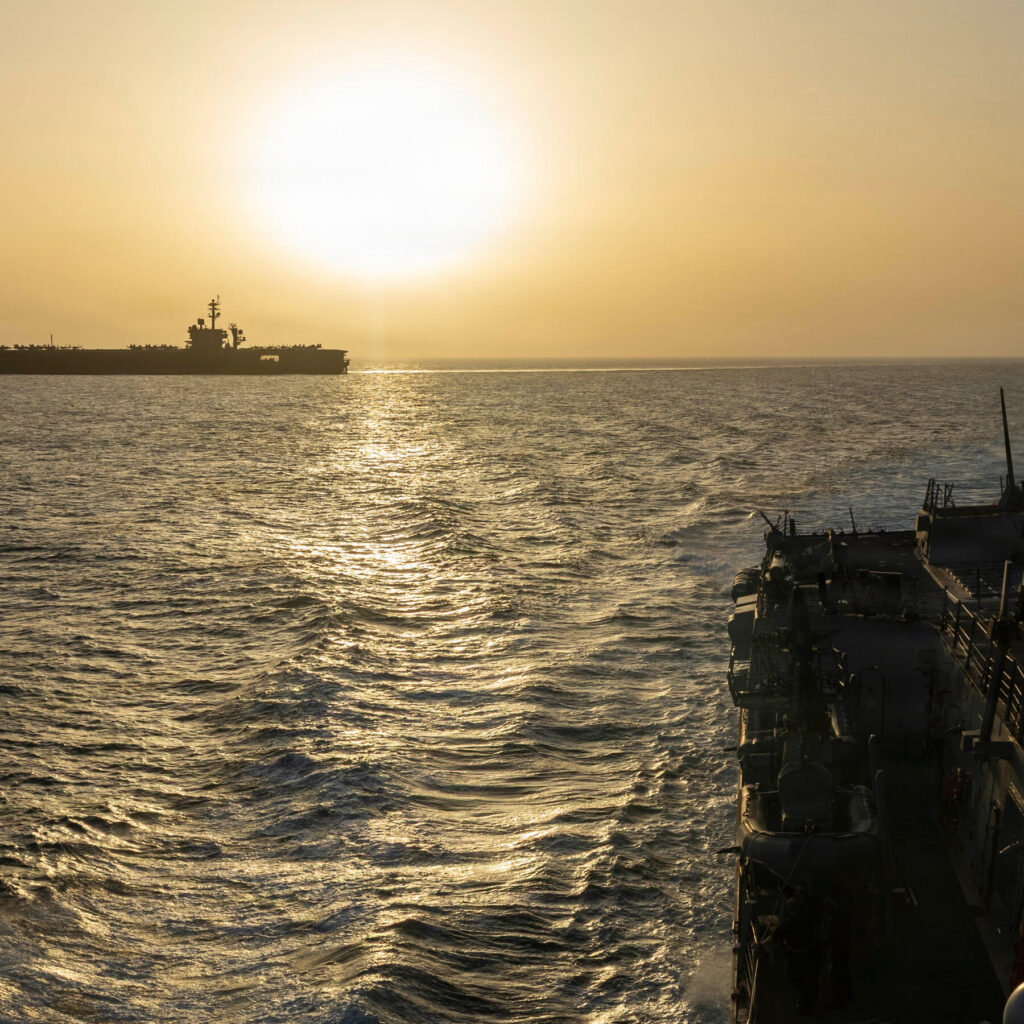
With Iran making ship traffic perilous, a U.S. operation offers a way out for some energy exports, stealthily shepherding tankers on dangerous journeys. The Strait of Hormuz has long ranked among the world's most consequential maritime passages. When tensions rise in the region, the narrow waterway becomes an especially dangerous artery for the oil tankers that carry much of the global energy supply. The arrangement does not eliminate risk, but it gives certain tankers a better chance of moving through the strait while avoiding confrontation.
The operation centers on a discreet effort by U.S. naval forces to help tankers transit the Strait of Hormuz despite Iranian threats. Rather than announcing escort routes or drawing public attention, the Navy is accompanying selected vessels in a low-profile manner, keeping potential attackers uncertain about which ships are under watch and reducing the chance of an incident.
The Strait of Hormuz sits between Oman and Iran and connects the Persian Gulf with the Gulf of Oman and the open ocean. Because several major oil-producing states border the Persian Gulf, a large share of globally traded crude oil and liquefied natural gas passes through this chokepoint. Any disruption to traffic there ripples outward through energy markets, shipping schedules, and national economies. Even temporary delays or heightened insurance costs can affect prices far beyond the Middle East.
The geography of the strait amplifies the danger. At its narrowest points, the waterway squeezes shipping into confined channels where vessels travel slowly and have limited room to maneuver. Tankers are large, difficult to stop quickly, and laden with volatile cargo. In such conditions, even a small confrontation can escalate quickly, threatening not only the targeted ship but also nearby traffic and the wider shipping lane.
Iran has repeatedly demonstrated the ability to complicate commercial navigation in and around the strait. Its forces have stopped vessels, flown drones overhead, and used small boats to shadow or intercept tankers. These actions create a climate of uncertainty that makes insurers nervous, raises voyage costs, and forces ship operators to weigh the risk of every passage.
The threat is not limited to direct attacks. Harassment, boarding, and the possibility of seizure can be enough to slow the flow of energy exports. Ship owners must consider crew safety, cargo value, and the legal and financial consequences of an incident. A single tense encounter can send warnings through the entire maritime community, prompting some operators to reroute, delay, or cancel voyages through the region.
The term "shepherding" captures the essence of what U.S. forces are doing: staying close enough to deter interference without turning the escort into a public show of force. American warships and surveillance assets monitor the area, track suspicious activity, and position themselves so that would-be harassers know that intervention could follow quickly. The goal is to make the risk of interference outweigh the perceived benefit.
Stealth serves several purposes. If Iranian forces cannot easily identify which tankers are under U.S. protection, they are less likely to test the limits. A quiet escort also avoids the diplomatic and market reactions that might follow a high-profile naval convoy. By blending protection into routine patrols, the United States can extend security to selected exports while keeping the overall temperature lower than it would be with a declared escort mission.
Oil and natural gas exports moving out of the Persian Gulf help supply countries across Asia, Europe, and beyond. When those flows become unreliable, importers face higher costs, strained reserves, and difficult choices about alternative suppliers. Even the fear of disruption can lift prices before any cargo is actually lost. Helping to maintain some continuity in supply despite the surrounding tension is one of the operation's main contributions.
For exporting nations, safe passage is an economic lifeline. Revenue from hydrocarbons funds government budgets, social programs, and infrastructure plans. A blockade or sustained harassment campaign could cut off those revenues within weeks. The U.S. effort therefore serves broader interests beyond any single shipment: it reinforces the principle that vital waterways should remain open to lawful commerce and that no single power should hold global energy flows hostage.
The operation walks a careful line between deterrence and escalation. On one hand, a visible naval presence signals that the United States is prepared to defend commercial shipping. On the other hand, a quiet approach reduces the risk of being drawn into a direct clash with Iranian forces. The shepherding method is designed to provide security without provoking a wider confrontation.
Diplomatically, the arrangement allows Washington to support allies and partners that depend on Gulf energy without making dramatic commitments that could be interpreted as warlike. It also preserves flexibility: U.S. commanders can adjust the scale and visibility of shepherding based on the threat level, the importance of the cargo, and the political circumstances. This calibrated posture is likely to continue as long as Iran keeps using maritime pressure as a lever in the wider regional standoff.
The Strait of Hormuz remains a pressure point where geopolitics and energy security intersect. With Iran making ship traffic perilous, a U.S. operation offers a way out for some energy exports, stealthily shepherding tankers on dangerous journeys. The effort is unlikely to end the underlying tensions, but it can keep a portion of vital commerce moving while giving adversaries reason to think twice before interfering. In a region where small incidents can spiral quickly, that kind of measured protection may be the most practical form of stability available.
Originally reported by nytimes.com. Adapted for our readers with AI assistance.
Keep reading
Business
Nigeria's economic landscape in the second quarter of 2026 presents a mixed picture of fiscal press...
Business
Liverpool manager Andoni Iraola is confronting a significant selection headache as two key forwards, Cod...
News
Health News tamfitronics [Editor’snote:[Editor’snote: This transcript was generated using both transcription ...
TAMFIS NIG LTD
Electrical and instrumentation engineering, bid preparation and consulting, IT and software.