Business
Nigeria’s Economic Performance: Domestic Debt Rise and Agriculture Trade Shift in Q2 2026
Nigeria's economic landscape in the second quarter of 2026 presents a mixed picture of fiscal press...
TAMFIS NIG LTDRC 8067447CAC ACTIVEFinima, Bonny Island, Rivers State

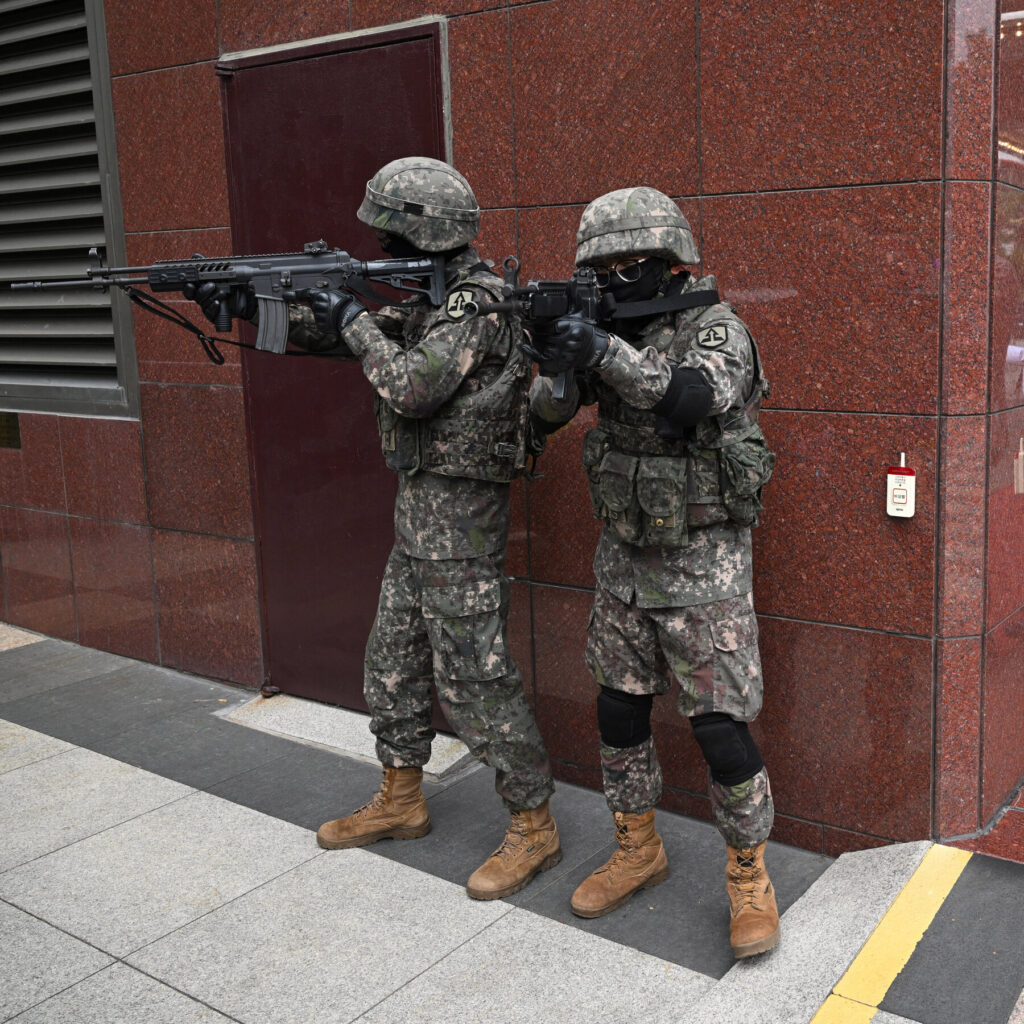
Kim Yo-jong, the sister of North Korean leader Kim Jong-un and one of the regime's most influential advisers, has publicly stated that she is "unaware" of any communication between Pyongyang and Washington. The remark directly contradicts President Donald Trump's claim that Kim Jong-un had responded to his outreach. Her carefully worded statement highlights the deep opacity that surrounds high-level contacts between the United States and North Korea and raises immediate questions about the actual state of dialogue between the two governments. Because Kim Yo-jong speaks from within the regime's inner circle, her comments are usually interpreted as authoritative signals of Pyongyang's official posture.
In a public statement, Kim Yo-jong said she was "unaware" of any communication with Washington. The phrasing is notable: rather than issuing an absolute denial that any message was sent or received, she framed the answer as a statement of personal knowledge. Such measured language is typical of North Korean official communications, which often avoid blunt refusals in order to preserve room for maneuver. By saying she was unaware, she both rebuts President Trump's suggestion of a response and leaves the door slightly ajar should circumstances change. The statement was delivered in her capacity as a senior representative of the regime, giving it far more weight than an ordinary diplomatic denial.
The comment stands in direct tension with President Trump's assertion that Kim Jong-un had responded to his outreach. Trump had suggested that his overtures to the North Korean leader had drawn a reply, implying some form of back-channel or direct exchange. Kim Yo-jong's statement undercuts that narrative by casting doubt on whether any response actually occurred. If the sister and close confidante of Kim Jong-un is unaware of such a reply, then either no communication took place, the exchange was handled outside her oversight, or the two sides are defining and interpreting contact in very different ways. Whatever the explanation, the public disagreement between a senior member of North Korea's ruling family and the American president is highly unusual and striking.
Kim Yo-jong occupies a distinctive position inside North Korea's tightly controlled political system. As Kim Jong-un's sister and a senior adviser, she has become one of the most visible and authoritative spokespeople for the regime, especially on matters involving the United States and South Korea. Her public statements are widely read as calibrated messages approved at the highest level, if not drafted on behalf of the leadership itself. When she addresses questions of diplomacy, observers generally treat her words as reflecting Pyongyang's considered view rather than a personal opinion. That makes her denial particularly significant: it comes not from a junior official or anonymous source, but from a member of the ruling Kim family and a trusted voice at the apex of North Korean power.
Conflicting accounts about whether Washington and Pyongyang are talking matter because the relationship has long been shaped by uncertainty. Both governments have incentives to shape perceptions. The United States may want to demonstrate openness to dialogue and the possibility of reducing tensions. North Korea, by contrast, may want to avoid appearing eager for engagement, which could be seen domestically or internationally as weakness. Kim Yo-jong's statement could therefore serve several purposes at once: correcting the record as Pyongyang sees it, reasserting North Korea's independence, and signaling that any future diplomacy must proceed on terms acceptable to the regime. It also serves as a reminder that public claims of outreach do not automatically reflect private realities, and that even senior officials may not be fully briefed on sensitive contacts.
The episode leaves the real state of US-North Korea contact unclear. Back-channel conversations, when they occur, are rarely acknowledged in real time by either side, and both capitals have a history of using ambiguity to test intentions or avoid domestic political fallout. Kim Yo-jong's intervention suggests that Pyongyang, at minimum, does not want the impression to take hold that it has already answered American outreach. Whether that reflects genuine ignorance, a decision to keep contacts secret, or a strategic effort to control the narrative remains an open question. For analysts and policymakers, the statement is a signal that any reported progress should be treated with caution until it is independently confirmed.
Until either side produces concrete evidence of contact, the contradiction between Kim Yo-jong's denial and President Trump's claim is likely to remain unresolved. The episode fits a broader pattern in which public statements from Washington and Pyongyang often diverge, sometimes for tactical reasons and sometimes because the two governments genuinely operate with different information. Kim Yo-jong's role as messenger ensures that her words will be scrutinized for clues about the regime's next moves. For now, her assertion that she is unaware of communication with Washington stands as the most authoritative North Korean response to the idea that Pyongyang has re-engaged with the United States.
Kim Yo-jong's carefully framed denial does not settle the question of whether Washington and Pyongyang are in contact, but it makes clear that North Korea is unwilling to let President Trump's claim go unchallenged. By choosing a senior member of the ruling family to deliver the message, Pyongyang signaled both the seriousness of the rebuttal and its desire to retain control over the public narrative. The episode is a useful reminder that diplomacy between the two countries remains opaque, adversarial, and heavily mediated through competing public statements. Observers will be watching closely to see whether either government produces evidence that resolves the contradiction or whether the uncertainty itself becomes a tool in the ongoing US-North Korea standoff.
Originally reported by nytimes.com. Adapted for our readers with AI assistance.
Keep reading
Business
Nigeria's economic landscape in the second quarter of 2026 presents a mixed picture of fiscal press...
Business
Liverpool manager Andoni Iraola is confronting a significant selection headache as two key forwards, Cod...
News
Health News tamfitronics [Editor’snote:[Editor’snote: This transcript was generated using both transcription ...
TAMFIS NIG LTD
Electrical and instrumentation engineering, bid preparation and consulting, IT and software.