
Business
Nigeria’s Economic Performance: Domestic Debt Rise and Agriculture Trade Shift in Q2 2026
Nigeria's economic landscape in the second quarter of 2026 presents a mixed picture of fiscal press...
TAMFIS NIG LTDRC 8067447CAC ACTIVEFinima, Bonny Island, Rivers State

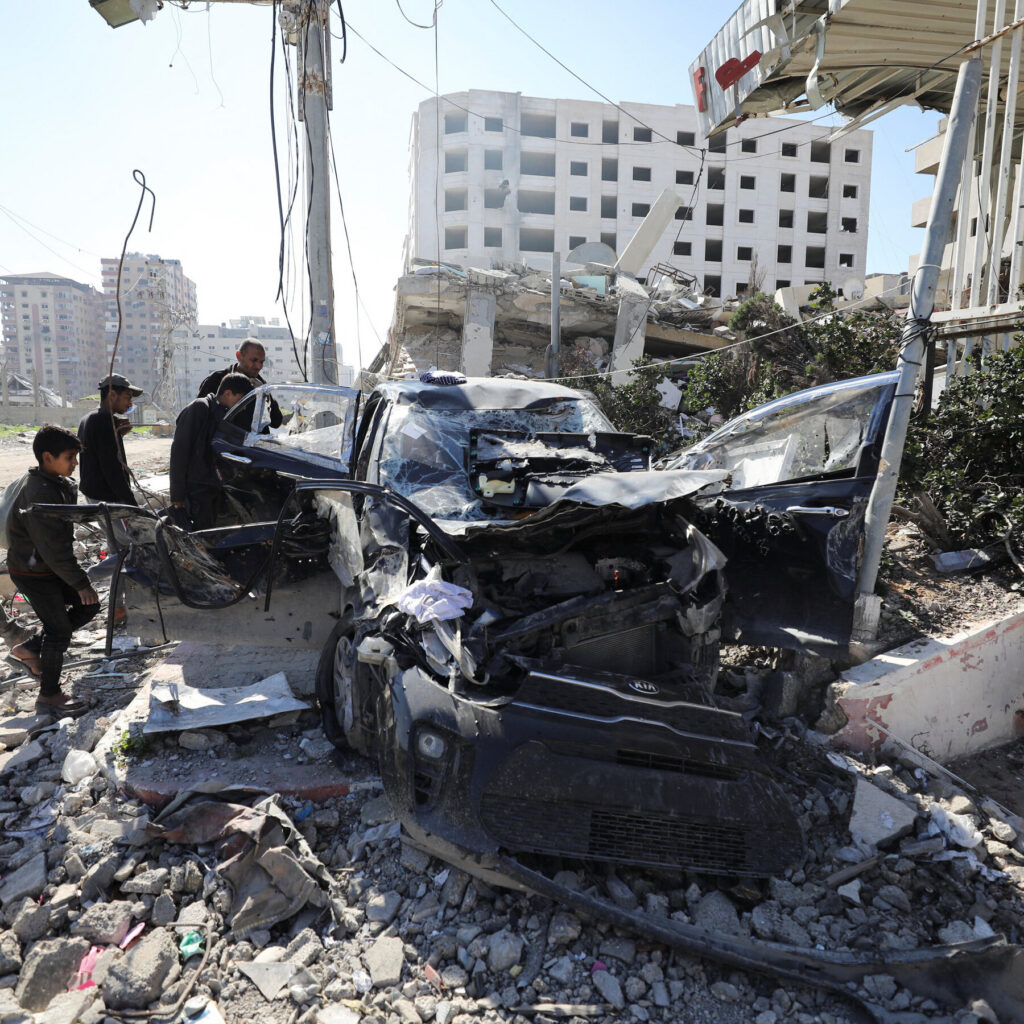
Israel has opened a criminal investigation into the killings of Hind Rajab and Gaza medical workers, two cases that had become flashpoints in international criticism of the country's conduct in the Gaza Strip. Both cases, which drew widespread condemnation abroad, have now been transferred to the military police for investigation. The move comes amid long-standing skepticism about whether such inquiries produce meaningful accountability. According to the available information, investigations of this kind have rarely led to convictions, leaving observers to watch closely whether this latest transfer signals a departure from that pattern or simply another procedural step in a familiar cycle.
The two cases now under criminal investigation involve the killing of Hind Rajab and the killing of Gaza medical workers. Both incidents had already attracted significant international attention before the decision to open formal inquiries. The cases stand out because they touch on the protection of civilians and humanitarian personnel during military operations in Gaza. Rather than remaining within routine operational review channels, they have been moved to Israel's military police, which handles suspected criminal conduct by soldiers and commanders. That transfer is notable because it means the allegations are being treated as potential criminal matters rather than only as operational or tactical incidents.
The available details indicate that the cases prompted condemnation of Israel's conduct in Gaza, though the source material does not specify the exact circumstances of each killing or the identities of all those involved beyond the references to Hind Rajab and Gaza medical workers. What is clear is that the international profile of the cases helped push them into a formal criminal track. High-profile incidents often carry greater diplomatic and public pressure, and the transfer to military police appears to reflect that pressure. Still, the factual record available for this report is limited to the core points: two prominent cases, international condemnation, and a decision to route them to military investigators.
These cases matter because they involve the deaths of a child and medical workers in Gaza, categories of victims that carry particular legal and moral weight under the laws of armed conflict. The killing of a minor raises immediate questions about proportionality, precautions in attack, and the protection of civilians. The killing of medical workers raises separate but related concerns about respect for protected humanitarian personnel and the functioning of health services in a war zone. Together, the two cases embody some of the most contested aspects of Israel's conduct in Gaza.
Because both cases had already spurred international condemnation, their handling carries reputational and diplomatic stakes beyond the courtroom. Governments, international organizations, and human rights monitors had already singled them out as emblematic of broader concerns. By transferring the cases to the military police, Israeli authorities are acknowledging, at least procedurally, that the allegations warrant criminal scrutiny. Whether that scrutiny leads to charges, trials, or convictions remains the central question, especially given the historical pattern that such investigations have rarely resulted in convictions.
In Israel, the military police are responsible for investigating alleged criminal conduct by members of the security forces during military operations. Transferring a case to the military police is the formal mechanism for shifting from operational debriefing to a criminal inquiry. It means investigators can collect evidence, take testimony, and ultimately recommend whether prosecutors should file charges. The step is significant because it opens the possibility, however distant, of individual soldiers or commanders facing legal consequences.
At the same time, the military police track record is a source of caution. The source material notes that investigations of this kind have rarely led to convictions. That history shapes how outside observers interpret the current transfer. A criminal investigation can satisfy immediate demands for procedural action without necessarily producing accountability. For critics, the pattern of rare convictions suggests that transferring cases to the military police often functions as a way to absorb pressure rather than to deliver justice. For defenders, it may reflect the genuine difficulty of proving criminal intent in the chaos of active combat.
The observation that such investigations have rarely led to convictions is the most important contextual fact available. It points to a systemic issue that predates the current cases and affects how the new inquiries will be judged. If the past is any guide, the transfer to military police may produce reports, recommendations, or closed files more often than trials and guilty verdicts. That pattern has fed cynicism among those who view Israel's accountability mechanisms as designed to protect soldiers rather than to punish wrongdoing.
The rarity of convictions also affects the evidentiary and political calculations surrounding the cases. For victims' families and international observers, the opening of an investigation is only meaningful if it can overcome the documented tendency of such inquiries to end without accountability. For Israeli authorities, the cases pose a test of whether the military justice system can credibly address incidents that have already damaged the country's international standing. The outcome will be measured against the established record, not merely against the procedural fact that an investigation has begun.
The next phase will depend on what the military police investigation uncovers and whether prosecutors decide to pursue charges. Because the available source material does not include details about evidence, witnesses, or timelines, any prediction must be hedged. The only firm guide is the historical pattern: investigations opened in comparable circumstances have rarely led to convictions. That pattern will weigh on the credibility of the process from its earliest stages.
What can be said with confidence is that the cases will remain under international scrutiny. Their high-profile nature means that decisions to indict, close the file, or issue a lenient sentence will likely attract renewed condemnation or, conversely, cautious praise. The transfer to military police is therefore not an endpoint but a procedural beginning. Its significance will be determined by whether it breaks with the past or repeats it.
The decision to open a criminal investigation into the killings of Hind Rajab and Gaza medical workers moves two of the most scrutinized incidents of the Gaza war into a formal accountability process. The transfer to the military police responds to the international condemnation that had already surrounded the cases, but it does not by itself guarantee justice. Given that such investigations have rarely led to convictions, the test will be whether this time produces a different result. Observers, diplomats, and victims' advocates will be watching less for the opening of the file than for its eventual outcome.
Originally reported by nytimes.com. Adapted for our readers with AI assistance.
Keep reading
Business
Nigeria's economic landscape in the second quarter of 2026 presents a mixed picture of fiscal press...
Business
Liverpool manager Andoni Iraola is confronting a significant selection headache as two key forwards, Cod...
News
Health News tamfitronics [Editor’snote:[Editor’snote: This transcript was generated using both transcription ...
TAMFIS NIG LTD
Electrical and instrumentation engineering, bid preparation and consulting, IT and software.