Business
Nigeria’s Economic Performance: Domestic Debt Rise and Agriculture Trade Shift in Q2 2026
Nigeria's economic landscape in the second quarter of 2026 presents a mixed picture of fiscal press...
TAMFIS NIG LTDRC 8067447CAC ACTIVEFinima, Bonny Island, Rivers State

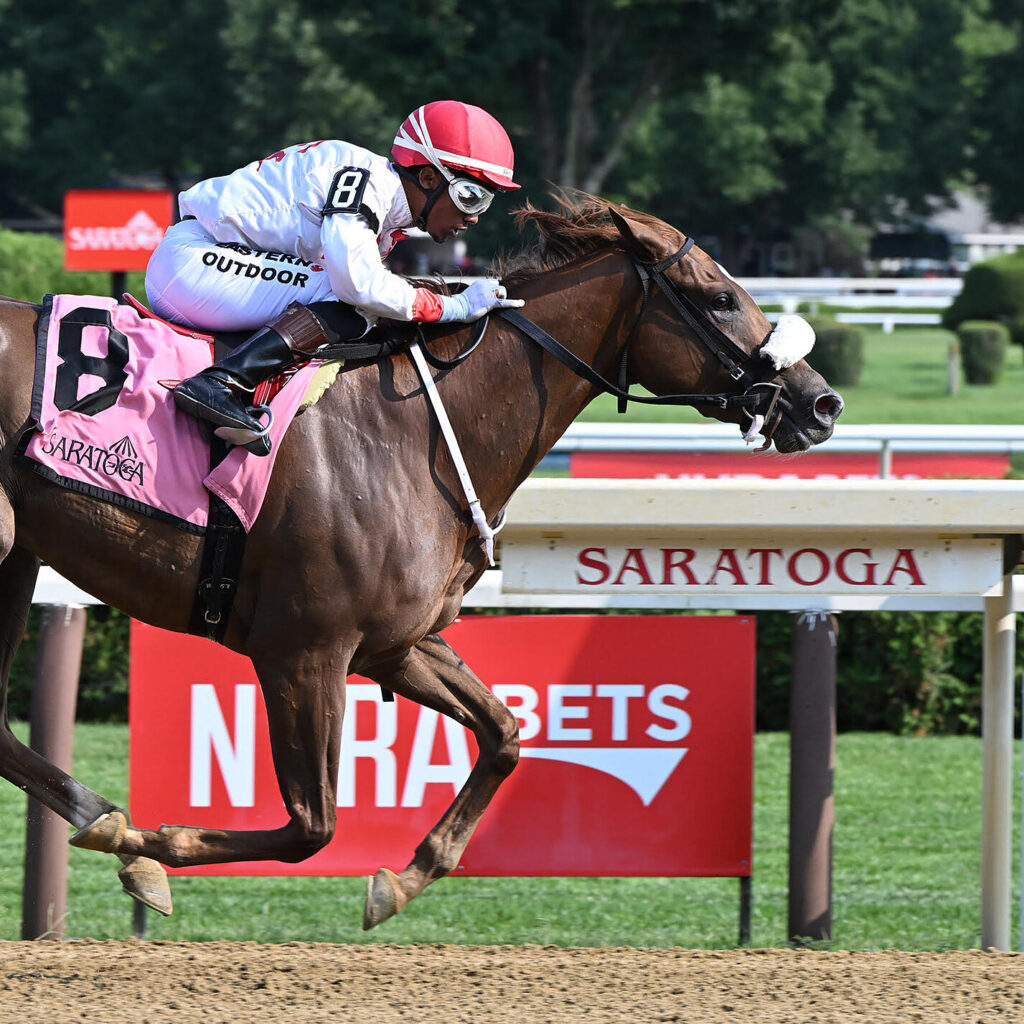
In horse racing, a heavily backed long shot whose form suddenly improves can upend both the parade ring and the balance sheets of bookmakers. That is precisely the scenario that industry observers describe after several horses ran far better than the odds suggested at tracks linked to Saratoga and the Jersey Shore. The unexpected form not only produced painful losses for bookmakers in London, where prices on U.S. races are offered to a large international audience, but also prompted speculation that the results were not mere chance. Instead, some watchers suspected an elaborate plot—a betting coup—designed to exploit gaps between trackside odds and the prices offered thousands of miles away.
The episode centres on a cluster of races at two American racing regions. Horses that started at long prices, or that the form book suggested had little chance, outperformed expectations by wide margins. Their efforts were strong enough to sting bookmakers operating in London, where odds on U.S. races are often offered to a large international audience. Because London bookmakers carry exposure across multiple time zones, a handful of unexpected outcomes on American dirt and turf tracks can translate into substantial liabilities. The common thread, as industry watchers saw it, was not a single lucky result but a pattern: several horses defied the market at Saratoga and Jersey Shore tracks, producing payouts that the odds implied were highly unlikely.
The source notes do not identify the horses, the races or the individuals involved, and they make no allegation that rules were broken. They do, however, describe a reaction: bookmakers were stung, and people who follow the industry suspected an elaborate plot. That suspicion alone can be enough to trigger wider questions about who knew what, and when they knew it.
A betting coup, in racing parlance, is an attempt to gain an unfair advantage by arranging bets at odds that do not reflect the true chance of a horse. The method can take several forms. A group of bettors may place money late, when pools or bookmaker prices have already been set, or they may exploit differences between local tote odds and the prices offered by overseas bookmakers. In other cases, concerns centre on information: individuals with knowledge of a horse’s improved fitness or changed tactics may bet before the market catches up. Whatever the mechanics, the aim is the same—to lock in value that the market has missed. Because modern racing involves tote pools, exchange markets and fixed-odds books spread across continents, a well-timed sequence of bets can move odds and produce large payoffs.
A coup does not always require wrongdoing. Sharp form study, stable gossip and quick execution can all produce legitimate profits. The difficulty for regulators is distinguishing a clever syndicate from a corrupt one. In the present case, the source material offers no evidence of a specific offence, only the suspicion that something more than luck was at work.
London sits at the centre of a global wagering network. British bookmakers routinely quote prices on races in the United States, Ireland, Australia and beyond, accepting fixed-odds bets hours or even days before a race. When the market in one jurisdiction fails to anticipate a sharp improvement in form, the resulting losses can accumulate quickly. In this case, the unexpected performances at Saratoga and Jersey Shore tracks appear to have left London operators holding tickets they had priced as long shots. Unlike pari-mutuel pools, where payouts adjust after the race according to total betting, fixed-odds bookmakers are locked into the prices they offered. That mismatch is precisely what can turn a few surprising finishes into a serious sting.
The distance between the track and the trading desk matters. A bookmaker setting a morning line in London may not have the same information as a handler at Saratoga, and once a price is posted it can be picked off by anyone who believes the horse is better than the odds suggest. When several such opportunities line up, the cumulative effect can be painful.
Whenever a series of long-priced horses over-performs, racing integrity bodies face the same set of questions. Was the form simply misread? Did a betting syndicate possess superior information? Or was there a deliberate attempt to influence the result? Regulators on both sides of the Atlantic have tools to investigate these questions. They can analyse betting patterns, review veterinary records, interview connections and compare the timing of wagers against stable information. Stewards and handicappers also look for unusual late money or sudden shifts in odds. Because the original source notes speak only of suspicion, not proof, the appropriate posture is one of inquiry rather than accusation.
The racing industry's response typically depends on cooperation between track officials, state gaming commissions, bookmaker trade bodies and international integrity partners. Sharing data quickly is essential, since betting evidence can fade and witnesses scatter. Even when no breach is found, the investigation itself sends a signal that the market is watched.
For everyday bettors, episodes like this are a reminder that odds are estimates, not guarantees. They also highlight how interconnected global racing markets have become: a race at a U.S. track can ripple through London betting shops within seconds. For the sport’s administrators, the lesson is that surveillance must keep pace with cross-border wagering. If a small number of unexpected results can hurt international bookmakers and spark talk of conspiracy, the integrity systems designed to reassure the public need to be visible, prompt and thorough.
Reputational damage can linger even when no wrongdoing is proven. Racing depends on the belief that the contest is genuine and the odds reflect a fair estimate of chance. Once that belief wavers, casual punters may take their money elsewhere, and regulators may demand tighter controls.
The reported betting coup has less to do with any single race and more to do with the fragility of confidence in a globally linked wagering industry. When long shots over-perform and distant bookmakers feel the pain, suspicion naturally follows. Whether the outcome was the product of sharp information, market inefficiency or something more sinister remains, on the basis of the available source notes, an open question. What is clear is that racing authorities and bookmakers now have another reason to watch cross-border betting patterns closely. In a sport where trust is the real currency, the cost of unanswered questions can be even higher than the losses on the day.
Originally reported by nytimes.com. Adapted for our readers with AI assistance.
Keep reading
Business
Nigeria's economic landscape in the second quarter of 2026 presents a mixed picture of fiscal press...
Business
Liverpool manager Andoni Iraola is confronting a significant selection headache as two key forwards, Cod...
News
Health News tamfitronics [Editor’snote:[Editor’snote: This transcript was generated using both transcription ...
TAMFIS NIG LTD
Electrical and instrumentation engineering, bid preparation and consulting, IT and software.